Last updated November 18, 2026



Free written scope consultation - allowances, timeline, and change-order rules on paper before a single trade is scheduled
Seasonal Construction Care for Inglewood: Year-Round Homeowner’s Guide
Inglewood gets fewer than 15 inches of rain a year, but those inches fall fast and hard. A driveway that looks flawless in September can be spider-webbed with cracks by February, and stucco that felt solid all summer starts bubbling at the seams after the first real storm. The mild climate here breeds a false sense of security: homeowners defer the small stuff because nothing seems urgent, then pay for it when the water finds a weak spot. This guide lays out a month-by-month care calendar built around Inglewood’s actual weather rhythm – the marine layer, the Santa Ana winds, the winter rain events, the summer UV – so you’re working ahead of the damage instead of chasing it.
Quick Answer
Seasonal home construction care in Inglewood follows four real cycles: a dry summer that bakes exterior surfaces under high UV, a fall window when Santa Ana winds accelerate coating wear, a compressed winter rainy season that stresses drainage and foundations, and a spring recovery period where you catch what the rain exposed. The single highest-value action most Inglewood homeowners skip is sealing concrete, pavers, and exterior wood in October, before the first storm – not in spring after the damage is done.
Styles & brands we work with
- Kitchen remodeling
- Bathroom remodeling
- Home additions & ADU
- Roofing
- Windows & doors
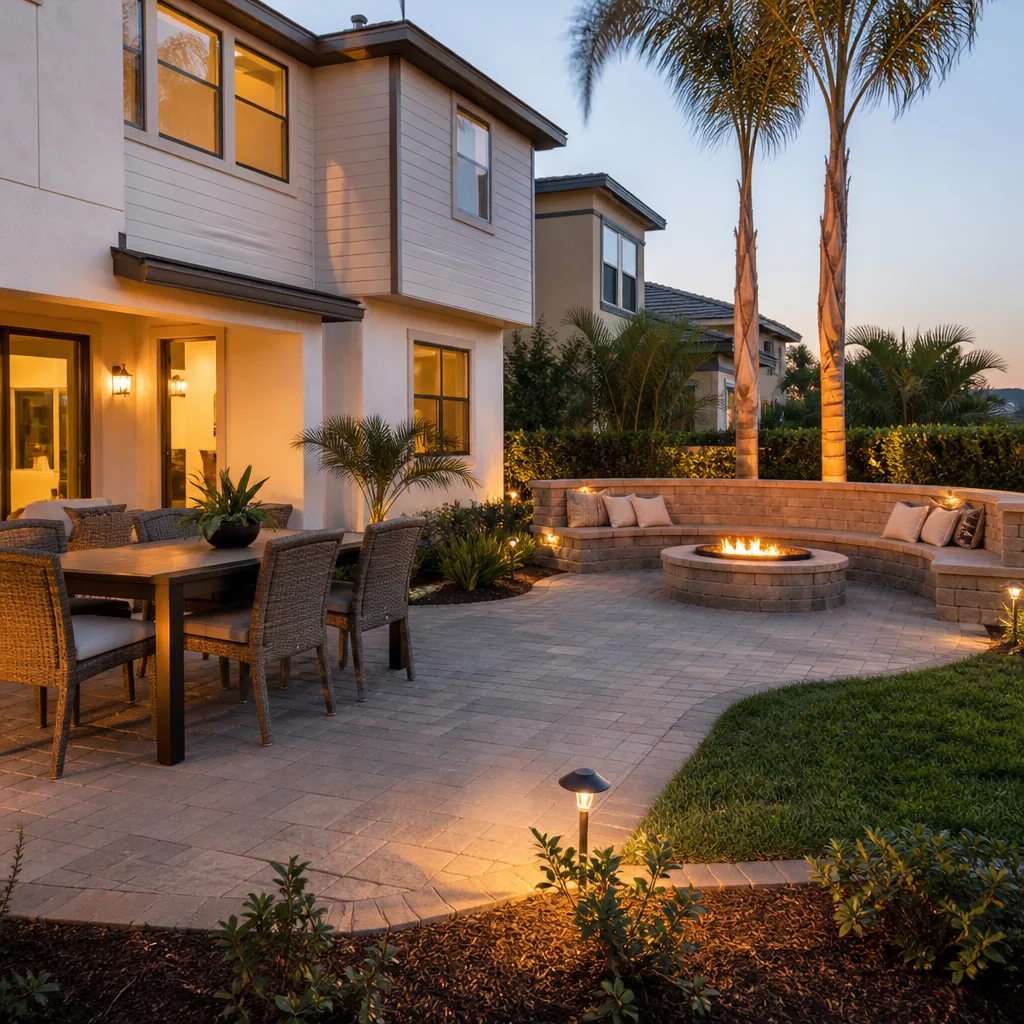
- Driveway & pavers
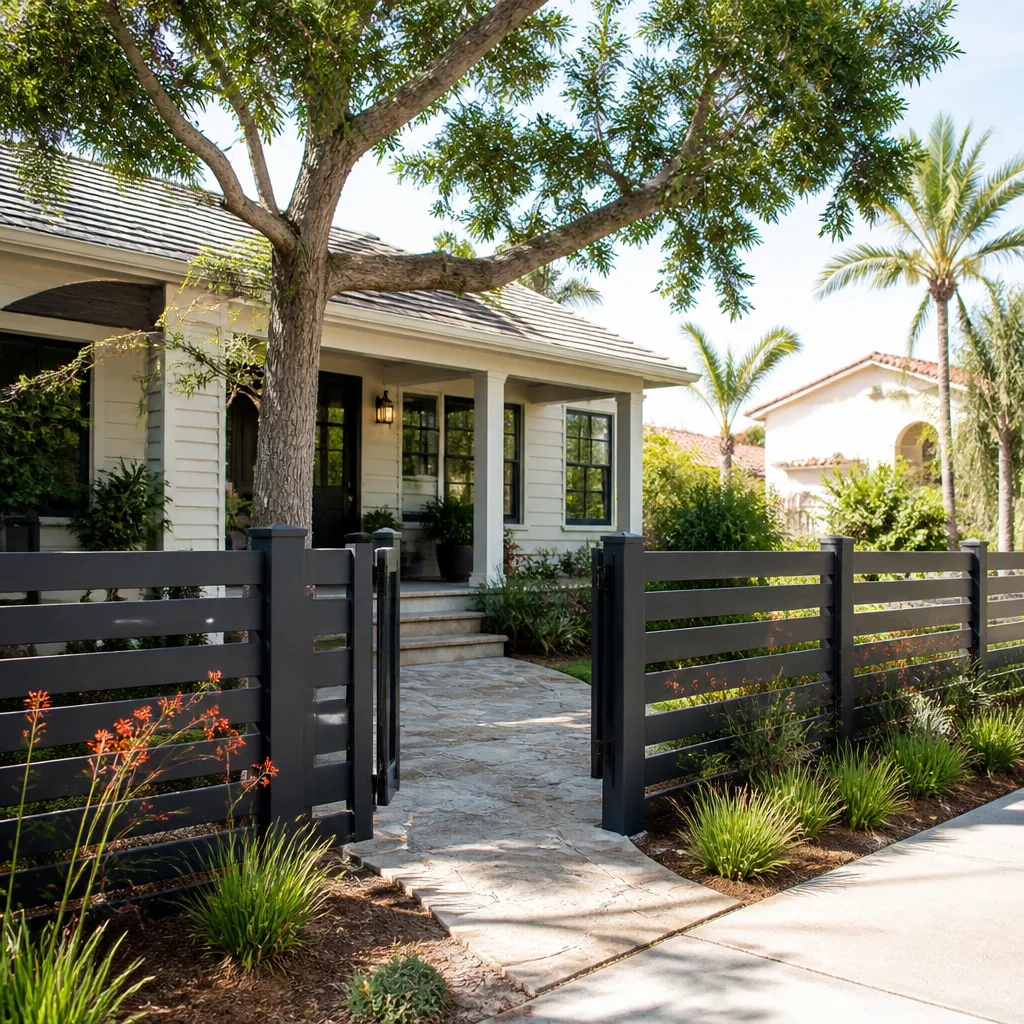
- Fence
Table of Contents
- Why Inglewood’s Climate Creates a Maintenance Trap
- Summer: UV Care for Concrete, Stucco, and Pavers
- Fall: Santa Ana Winds and the Pre-Rain Seal
- Winter: The Rainy Season and Foundation Drainage
- After Atmospheric Rivers: What to Check First
- Spring: Catching What the Rain Exposed
- Your Month-by-Month Inglewood Action Calendar
- Materials That Hold Up to Inglewood’s Cycles
Why Inglewood’s Climate Creates a Maintenance Trap
Most seasonal maintenance advice you find online was written for the Midwest or the Northeast, where the rhythm is snow, freeze, thaw, repeat. Inglewood doesn’t have that. What we have is subtler and, in some ways, harder to plan around. The city sits in the South Bay coastal plain, which means the marine layer rolls in most mornings and burns off by midday, keeping humidity high and daily temperature swings gentle. That’s comfortable to live in. It’s also the perfect condition for slow, invisible wear.
Here’s the trap. Because we don’t get a dramatic freeze that cracks things overnight, deterioration happens gradually and quietly. A hairline crack in a driveway, a lifted edge on a paver, a sealant joint that’s dried and pulled back from the stucco – none of these look alarming in July. But each one is an entry point, and when the first real storm arrives in late fall or early winter, water gets in and does its work fast. We’ve seen a $300 paver reseal pushed off in autumn turn into a $4,000 drainage correction by March because the water channeled under the driveway slab and undermined the base.
The four cycles that actually govern Inglewood homes are:
- Summer UV and heat: intense South Bay sun bakes exposed concrete, stucco, and wood from June through September.
- Fall Santa Ana winds: dry, hot, high-speed winds out of the northeast hit the region, especially September through November, and they strip and abrade exterior coatings.
- Winter rain events: a short but intense rainy season from roughly November through March, often arriving as stacked storm systems.
- Spring recovery: the window where you evaluate what the rain revealed and repair before the dry season sets it in place.
If you build your maintenance schedule around those four cycles instead of the national template, you stop reacting and start planning. That’s the whole idea behind this guide – and it’s what we think about when we look at a home in Morningside or along the quieter streets off La Cienega. If you want the full picture of how we approach a property from foundation to finish line, our Groundwork Construction Co. of Inglewood home page covers the scope.
Summer: UV Care for Concrete, Stucco, and Pavers
Inglewood summers are dry and bright, and the UV intensity here is higher than most homeowners expect – the same sun that bleaches a car dashboard cracks sealant and oxidizes exterior finishes. For exterior hardscapes and walls, summer is the “watch for wear” season, not a rest season. The heat accelerates the breakdown of protective coatings, and once a coating fails at a joint or edge, the material underneath starts absorbing moisture.
What to inspect in summer
- Concrete driveways and walkways: look for hairline cracks, sealed joints that have opened up, and any surface that’s gone chalky or faded. Chalky concrete is a sign the surface has lost its protective layer to UV.
- Pavers: check the polymeric sand in the joints. Summer heat and foot traffic wear it down, and gaps let water in. Ragged or washed-out joints mean the sand needs a top-off.
- Stucco: run your hand lightly along south- and west-facing walls. Crumbling or powdery patches, small hairline cracks, and stains around window corners are UV and thermal-stress signatures.
- Exterior wood (fences, pergolas, trim): wood grays and checks as the sun pulls moisture out. If a fence board has gone silver and the grain is opening, it’s already drying out.
The fix for most of this is straightforward: clean, seal, and reapply a proper protective coating. Concrete and pavers want a breathable sealer; stucco wants an elastomeric product that flexes with the daily temperature swing; wood wants a penetrating stain or oil, not a film-forming coat that will peel. Doing this in early summer, before the peak heat, protects the surfaces through the worst of the UV season.
We’ve watched summer-deferred stucco cracks turn into water intrusion during the first winter rain in Morningside more times than we can count. The crack itself doesn’t look like much in August. By January, water is behind the wall and the repair is a much bigger conversation involving the sheathing and possibly the drainage plane. If the surface care is more than you want to manage yourself – or you’re dealing with paver settlement and drainage issues – our team handles Driveway & Pavers in Inglewood and the full surface layer of a property.
Fall: Santa Ana Winds and the Pre-Rain Seal
This is the most important window on the entire Inglewood calendar, and it’s the one homeowners most often miss. September through November brings the Santa Ana winds – dry, hot, gusty events that blast the region from the northeast. Those winds are abrasive. They scrub loose sand and grit across surfaces, they carry away dust and debris, and they peel back any exterior coating that’s already losing adhesion. A sealer that was marginal at the end of summer is gone after a wind event.
What makes fall critical isn’t just the wind, it’s the timing. The first significant rain in Inglewood usually arrives in November or early December. That gives you a two-to-three month window, roughly September through early November, to do the pre-rain work. Get it done and you enter the rainy season with protected surfaces. Skip it and you enter the rainy season with everything the summer UV and the fall winds have left exposed.
What to inspect after a Santa Ana wind event
- Exterior coatings and sealants: check the caulk joints around windows, doors, and where siding or stucco meets trim. Wind-driven grit can open these up.
- Roof surfaces and flashing: granular loss on asphalt shingles, lifted or curled shingle tabs, and debris packed in valleys or gutters. Wind events accelerate all of it, and a GAF or Owens Corning system that’s only a few years old can still show granular shedding after a strong blow.
- Fences: check posts at the base for movement. Wind leverage on a long stretch of fence finds the weakest post, and a leaning post becomes a full fence failure the first time a rainy storm pushes against a loose panel.
- Gutters and downspouts: clear them of the debris the wind just dropped. Clogged gutters are the number-one cause of water sheeting down an exterior wall instead of away from the foundation.
Once the inspection is clean, this is the time to seal. Concrete gets a fresh coat. Pavers get re-sanded with polymeric sand and sealed. Stucco cracks get filled with an elastomeric sealant. Wood gets a fresh penetrating coat. This is the single most important thing you can do for an Inglewood home before winter, and it’s the one we push homeowners hardest on, because the math is so lopsided: a day of prep in October versus a seasonal mess of water damage by February. If wind has already knocked your fence around, our Fence Installation in Inglewood team can evaluate whether it needs repair or replacement.
Winter: The Rainy Season and Foundation Drainage
Nowhere is the “fewer than 15 inches a year” statistic more misleading than in the drainage conversation. Those inches don’t fall gently over four months. They arrive in concentrated events – a few inches in a day or two, sometimes stacked back-to-back – and that’s far harder on a foundation than a slow, evenly distributed drizzle. Water falls faster than the ground can absorb it, and it goes looking for the path of least resistance. That path is usually your foundation’s drainage system, or the gaps where there isn’t one.
This is why the dry-to-wet transition is the highest-risk window for foundation and drainage issues in Inglewood homes. The ground has been desiccated all summer and fall. It shrinks. The soil pulls away from foundations, from stem walls, from the base of retaining walls – tiny gaps the homeowner never sees. Then the first real rain hits and water shears right into those gaps, right up against the foundation. Some of it comes back out later. Some of it doesn’t.
What to do in winter
- Confirm your grading slopes away from the house. The ground should fall away from the foundation on all sides. Ponds against the house after a storm mean the grade has settled or reversed.
- Check gutters and downspouts during and after events. Downspouts should discharge at least several feet from the foundation, ideally onto a splash pad or into a drainage channel.
- Watch for foundation cracks that appear for the first time in winter. Stair-step cracks in masonry, horizontal cracks in a stem wall, or a crack that widens noticeably after a wet period is a drainage signal, not a cosmetic one.
- Inspect interior evidence: water stains on the base of a wall, dampness at the bottom of a garage, or sticking doors and windows can all point to moisture finding a path it shouldn’t.
- Keep the perimeter clear. Mulch, plantings, and debris piled against the foundation hold water against the wall instead of letting it drain away.
Winter is also when you’re most likely to see the consequences of skipped fall work. A paver driveway that wasn’t sealed, a cracked stucco wall, a fence that was already leaning – the rain finds all of it. If you’re noticing movement, settling, or drainage problems, don’t wait for spring to look closer. The longer water sits against a foundation in Inglewood, the more it costs to fix.
After Atmospheric Rivers: What to Check First
An atmospheric river is a long plume of moisture that dumps rain on the region in sustained, heavy bursts. Inglewood doesn’t get many of them, but when we do, they expose everything. The unfortunate pattern we see is that most homeowners wait too long to check – they do a quick scan, decide it “looked fine,” and only deal with it months later once the damage is obvious and expensive. The minor fix after the storm is far cheaper than the major repair before the next one.
Post-storm inspection order (do these in sequence)
- Roof and attic first. Get on the ground and look from outside, and check the attic for active drips or water stains on rafters. Do not walk a wet, steep roof to inspect it yourself – this is genuinely dangerous work that belongs to a trained professional.
- Gutters and drainage paths. Confirm gutters are discharging away from the house. If a downspout was overwhelmed, water sheeted down the wall and pooled at the foundation.
- Grade and standing water. Look for any spot where water is still standing more than a day after the storm – that’s a drainage failure, not a one-time event.
- Foundation and retaining walls. Check for new cracks, movement, or soil erosion at the base of walls and stem walls.
- Stucco and exterior finishes. Look for bubbling, blistering, or peeling, especially around windows and doors where the storm found a weak caulk joint.
- Fences and freestanding structures. Confirm posts are still plumb. A saturated post that was already leaning is now a hazard.
- Driveways, pavers, and walkways. Check for new settling, sunken spots, and washed-out paver joints.
The single most expensive mistake we see after an atmospheric river is treating a swale or a low spot near a walkway or driveway as “just a wet patch.” When paver systems and concrete walkways start to settle or hold water after a storm, the base underneath has been compromised. Waiting turns a re-level and re-drainage job into a full rebuild. If the storm has left you with questions about grading, drainage, or a structure that needs to grow, our Home Additions & ADU in Inglewood team can evaluate the site alongside any planned build.
Spring: Catching What the Rain Exposed
Spring in Inglewood is the recovery season. By March, the rainy season is mostly behind us, and that’s exactly when you’re supposed to be cataloguing everything the winter tested and the storms exposed. The work you do in spring is what protects you through the long dry season that follows and determines whether the next rainy season is a routine event or a major expense.
Spring is also when deferred repairs compound. A crack that opened during a rain event is stable in April. By July, with the ground drying and shrinking around it and the sun baking the exposed surface, it can widen. By the time the fall seal comes around, the surface around the crack isn’t worth sealing – it’s a full replacement. The spring window is your chance to close that gap.
Spring action list
- Re-inspect the foundation and grading once the ground has dried but before it fully shrinks. Note anything that moved during the wet season, and address drainage before summer hardens the ground.
- Repair stucco cracks and caulk joints so the arid summer doesn’t widen them and the fall seal is happening on sound material.
- Re-level settled pavers and re-sand joints. Compromised base material after a wet winter turns into a full paver rebuild if left, so this is the cheapest time to fix it.
- Check the roof after the last significant storm – especially shingle tabs and flashing that took the worst of the winter.
- Address wood rot on fences, trim, and decks while the seasonal moisture window is still relatively forgiving. A GAF or CertainTeed roof inspection now catches granule and flashing issues before summer UV makes them worse.
- Plan any larger work – a kitchen or bathroom update, a roof replacement, an addition. Spring is when a well-planned project can break ground with the driest weather ahead.
Spring is also the smartest time to get a full property assessment done, because it’s the moment when the wet-season evidence is fresh and the dry-season calendar is fully ahead of you. That’s the property maintenance thinking we bring to every project, and it informs how we sequence work from first site visit to the final walkthrough.
Your Month-by-Month Inglewood Action Calendar
Here’s the calendar we use. It’s tied to Inglewood’s actual seasons, not a generic national template – which means some months are heavy and some are light, and the heaviest concentration of work falls in the September-through-November pre-rain window. Print it, tape it inside a cabinet, and work the list.
September: Read the summer damage
- Walk the exterior and list every crack, lifted paver, and faded surface.
- Check the caulk joints around windows, doors, and trim for separation.
- Note shingle condition and any visible granular loss on the roof.
October: The pre-rain seal window
- Seal concrete driveways, walkways, and patios with a breathable sealer.
- Re-sand and seal pavers, replacing lost polymeric sand.
- Fill stucco cracks with elastomeric sealant and re-caulk joints.
- Apply a fresh penetrating coat to wood fences, trim, and pergolas.
November: Storm prep and first-rain readiness
- Clear all gutters and downspouts and confirm proper discharge away from the foundation.
- Verify grading slopes away from the house and correct any low spots.
- Check fence posts for movement and brace any that are already leaning.
- Confirm a GAF or CertainTeed roof system or its local equivalent has sound flashing at all penetrations.
December through February: Watch and document
- Inspect during and after storm events – photograph anything that looks new.
- Confirm no water is ponding against the foundation for more than a day.
- Note any new interior dampness, sticking doors, or window changes.
March: Post-season assessment
- Re-inspect the foundation, grading, and retaining structures after the ground dries.
- Repair any stucco or caulk damage the winter widened.
- Re-level any settled pavers and re-sand joints.
April and May: Spring repair and planning
- Address any roof, flashing, or wood rot the winter exposed.
- Get quotes on larger spring or summer work – windows, a roof, an addition, an interior remodel.
- Re-inspect exterior paint and stain and touch up before summer UV.
June through August: UV protection mode
- Re-seal any surface that shows chalking or fading.
- Top off paver joints where summer wear has opened them.
- Inspect stucco on sun-facing walls for powdery or cracked patches.
If you’d rather not build this calendar from scratch, the practical alternative is to get a property walkthrough in the fall that establishes the baseline for the whole year. That’s the day of work that makes the rest of the year simple.
Materials That Hold Up to Inglewood’s Cycles
Materials matter in any climate, but Inglewood’s four-cycle pattern – UV bake, wind abrasion, rain concentration, spring recovery – is harder on exterior finishes than a homeowner might expect from the mild weather. A few material choices earn their keep here.
- Roofing: premium architectural shingles from a manufacturer like GAF or CertainTeed hold color and granular integrity better against concentrated UV than builder-grade options. On a roof, the difference shows up as years of service life, not just aesthetics.
- Windows and doors: Andersen and Marvin products are built for the low-E, UV-blocking performance that matters in South Bay sun, and the right glazing reduces heat gain on sun-facing walls.
- Hardscape base: a properly compacted, well-draining base is the single biggest determinant of whether a driveway or paver system survives the wet season, regardless of the surface material itself.
- Sealants and coatings: breathable sealers for concrete and pavers, elastomeric products for stucco, and penetrating finishes for wood all need to be matched to the material and the season. Choosing the wrong one in fall is how you spend the winter watching it fail.
- Fencing: James Hardie and comparable fiber-cement options resist moisture and wood-boring insects better than standard wood in a coastal climate with a high marine layer.
Premium brand partnerships matter for one reason: in a climate with this much UV and this much concentrated rain, the difference between a manufacturer-spec product and a builder-grade substitute shows up over a decade, not a season. That’s the thinking behind the brands we work with – product quality tied to a long-horizon guarantee, the same logic as our 730-Day Done Right Promise.
Common Mistakes to Avoid
- Sealing in spring instead of fall. Spring sealing feels productive, but it’s a season too late – the winter rain has already found the cracks, and the seal has to protect against the next wet season, which starts in roughly six months. The pre-rain window is September through early November.
- Treating a ponding spot as a one-time event. If water is still pooled against the foundation or on a walkway more than a day after a storm, it’s a drainage failure. Waiting for it to “dry out” is the mistake that turns a minor grading correction into a foundation repair.
- Ignoring stucco cracks until they bubble. A stucco crack that’s still hairline in fall can be sealed with a $20 tube of elastomeric caulk. The same crack that’s been through a winter of water intrusion is a wall repair.
- Clearing gutters once a year. In Inglewood, Santa Ana winds fill gutters with debris in fall, and the rainy season is right behind them. If your gutters were cleared in spring, they’re full by the time the first storm hits.
- Assuming a mild climate means no maintenance. The opposite is true – the gentle daily temperature swings and high marine-layer humidity hide slow deterioration until the first hard rain exposes it all at once.
- Skipping the post-atmospheric-river inspection. Storm damage that’s never formally checked is storm damage you find months later, when the minor fix has become a structural repair.
- Doing roofing or high-work yourself. Steep-roof and height work is genuinely dangerous. A post-storm roof check belongs to a trained professional, not a homeowner on a ladder in wet weather.
| Season | Most Important Action | Typical Inglewood Timing |
|---|---|---|
| Summer | UV protection of concrete, stucco, pavers, and wood | June – August |
| Fall | Pre-rain seal and wind-event inspection | September – early November |
| Winter | Foundation drainage watch and gutter clearing | November – March |
| Spring | Post-season repair and planning | March – May |
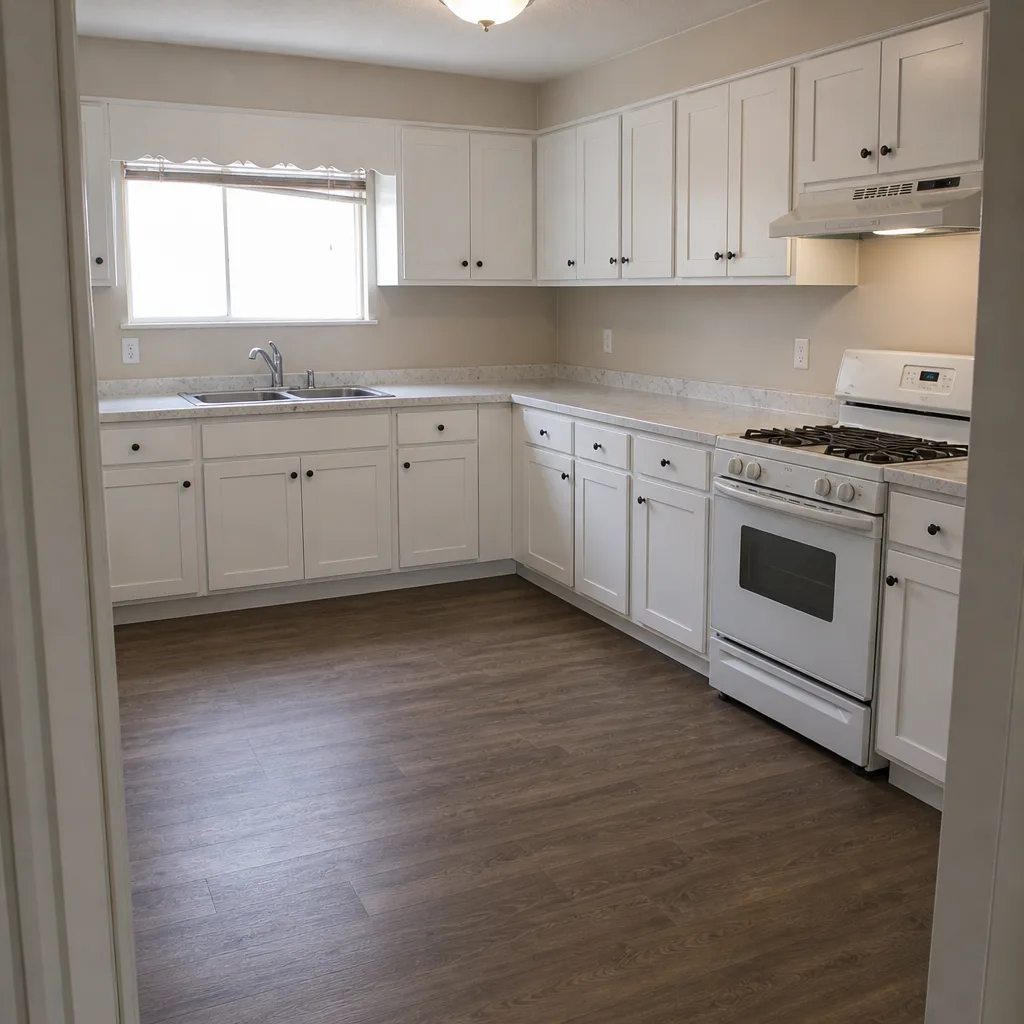
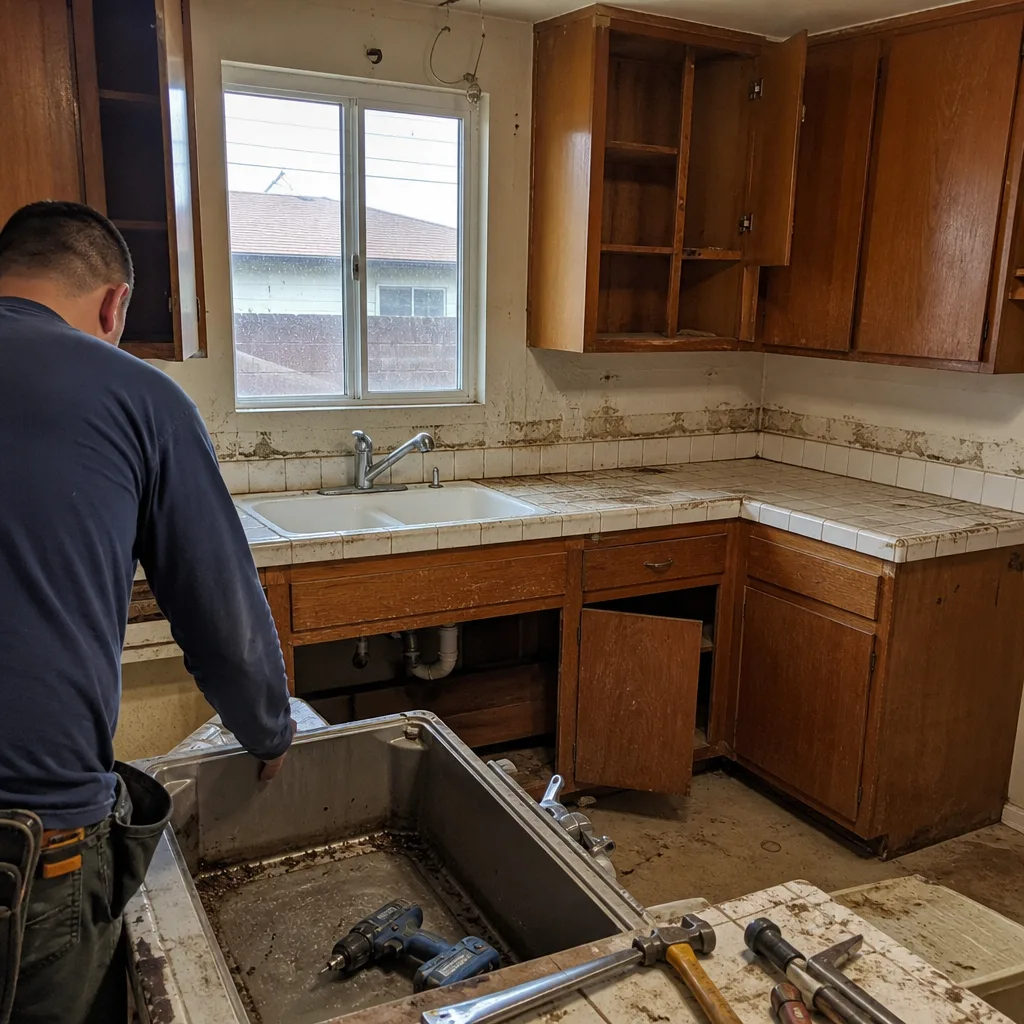
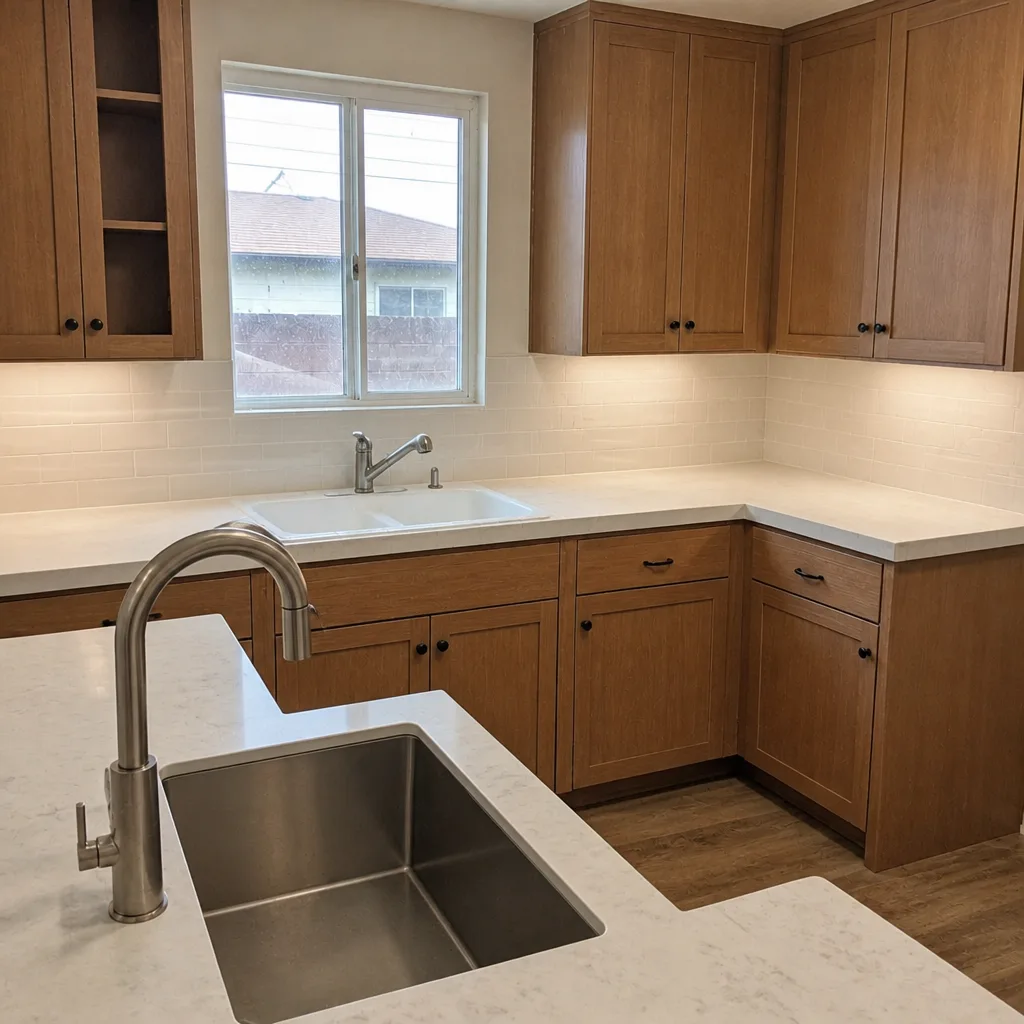
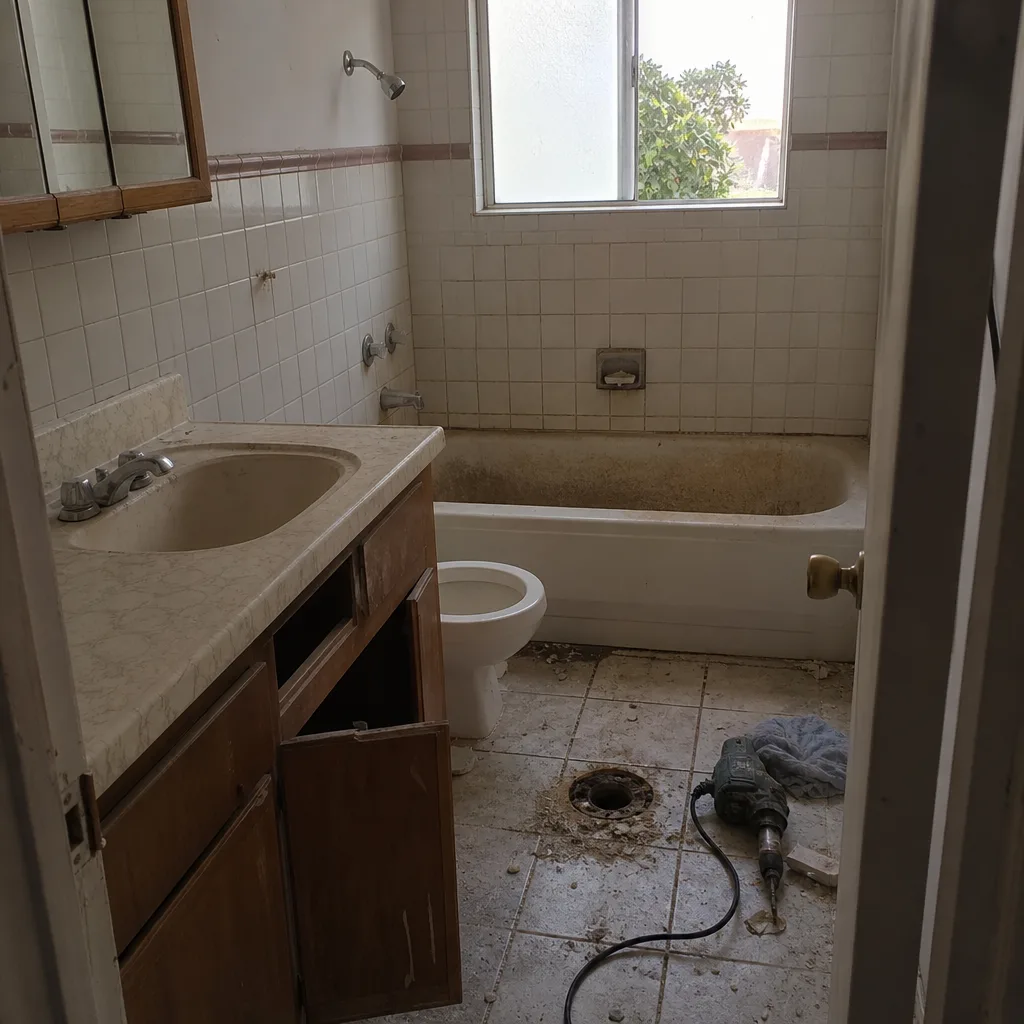
See the difference
 Before
 After
 Before
 After
 Before
 After
When to Call a Professional
Some of this is homeowner work – clearing gutters, topping off paver joints, watching for ponding. But several situations call for a trained professional, and skipping them is how a small seasonal issue becomes a major repair. Call a professional when you see new or widening foundation cracks, when water ponds against the house after a rain event, when a roof shows shingle damage or flashing failure, when stucco has bubbling or blistering, when a fence post has moved and the fence is now leaning, or when a paver or concrete system has visibly settled. High-roof and steep-slope work is genuinely dangerous and belongs to a trained professional, not a homeowner on a wet roof. Groundwork Construction Co. of Inglewood offers free estimates in Inglewood – call (833) 842-7204.
Frequently Asked Questions
Once a year is the right rhythm for most Inglewood homes, and the timing matters more than the frequency – do it in the fall, roughly September through early November, before the rainy season. A proper breathable sealer applied in that window protects the surface through the winter storms and the following summer UV, which is the whole point. Call (833) 842-7204 for a free estimate on sealing, resealing, or re-sanding paver systems.
Because the ground shrinks and pulls away from the foundation during the dry season, then water from the first concentrated rain fills those gaps and pushes against the foundation all at once. A hairline shrinkage gap that’s invisible in September becomes a water pathway in December. If cracks are new, widening, or horizontal, treat it as a drainage issue and get it inspected before the next rain. Call (833) 842-7204 – estimates are free and no-hassle upfront.
Start with the roof and attic for water stains, then gutters and downspouts, then any ponding against the foundation, then foundation and retaining-wall cracks, then stucco and caulk at windows, then fences and freestanding structures, then driveways and pavers for settling. The most important thing is not to wait – the minor fix after the storm is dramatically cheaper than the major structural repair before the next one. Call (833) 842-7204 for a post-storm inspection estimate.
Yes – Santa Ana events are abrasive and arrive in the fall, right before the rainy season, so they strip away protective coatings at the worst possible time. The wind drives grit across surfaces and peels back any sealant that was already weakening at the end of summer, leaving the surface exposed just as the rain arrives. Inspect exterior coatings and re-seal in October, not after. Call (833) 842-7204 for a pre-rain seal estimate.
No – the mild climate is actually the trap. There’s no dramatic freeze that forces action, so deterioration happens slowly and quietly until the first hard rain exposes it all at once. Homes that get proper seasonal care in Inglewood avoid the seasonal panic-and-repair cycle entirely, and they spend less on construction over a decade. Call (833) 842-7204 for a property walkthrough that sets your yearly baseline.
The dry-to-wet transition – roughly November through December – is the highest-risk window, because that’s when the first concentrated rain hits soil that has been shrinking and pulling away from the foundation for months. The single best protection is verifying grading slopes away from the house and gutters discharge properly before that first storm. Call (833) 842-7204 for a drainage assessment estimate.
The Bottom Line
Inglewood’s mild climate doesn’t mean your home gets a maintenance holiday – it means the wear is slower, quieter, and easier to miss until the first hard rain exposes it all at once. Build your year around the four real cycles: seal exterior surfaces in fall before the rain, protect against UV through summer, watch foundation drainage through winter, and repair what the winter exposed in spring. The single highest-value action on the whole calendar is the October pre-rain seal – skip it and you spend spring cleaning up. Get the seasonal rhythm right and you’ll spend less every year, not more.
Contact

If you’d rather not build this calendar from scratch, or the fall inspection has turned up work you want done right, call Groundwork Construction Co. of Inglewood at (833) 842-7204 for a free estimate. We’re the contractor for homeowners who refuse to gamble on their biggest investment – upfront pricing with no surprises, a curated set of brand partners from foundation to finish line, and the 730-Day Done Right Promise on every project. Calls are answered by a live person, 24/7, so you’re never stuck in a voicemail black hole. Call (833) 842-7204 to schedule your free estimate and design consult.
Written by the team at Groundwork Construction Co. of Inglewood.