Last updated November 18, 2026





Free written scope consultation - allowances, timeline, and change-order rules on paper before a single trade is scheduled
Bathroom Remodeling Warning Signs Every Homeowner Should Know
If your contractor skips the waterproofing membrane inspection before tiling, you won’t know it failed until a year later when your subfloor is rotting under a floor that looks perfect. That’s the hard truth about bathroom remodels: the failures that cost the most are invisible at the moment they happen. We’ve walked into Inglewood homes where a four-year-old tile shower looked flawless from the doorway and the drywall behind it was soft to the touch. This guide is about reading the job while it’s happening, not waiting for the damage to announce itself. You’ll learn the on-site red flags, the contractor behaviors that predict trouble, and the year-one symptoms that tell you whether you’re looking at normal settling or a genuine installation defect.
Quick Answer
The biggest bathroom remodeling warning signs are skipped waterproofing and drain inspections before tile goes down, vague or shifting timelines, resistance to pulling permits, cash-only change orders, and year-one symptoms like grout cracking at inside corners, a door that won’t seat flush, or a new drain that runs slow. Any one of these is worth a serious conversation with your contractor. Two or more together usually means the job is heading somewhere expensive.
Styles & brands we work with
- Kitchen remodeling
- Bathroom remodeling
- Home additions & ADU
- Roofing
- Windows & doors
- Driveway & pavers
- Fence
Table of Contents
- On-Site Red Flags During Active Construction
- Contractor Behavior Warning Signs Before the First Tile Goes Down
- Why Permit Resistance Is the Loudest Warning Sign
- Post-Remodel Warning Signs in Year One
- Normal Settling vs. Actual Defect: How to Tell the Difference
- What Documentation to Demand at Project Close
- Why Inglewood Bathrooms Fail Differently
On-Site Red Flags During Active Construction
Most of the warning signs you’ll ever get arrive while the job is still open. The problem is that homeowners don’t know what they’re looking at, and nobody on the crew is going to volunteer that something was rushed. Here’s what to watch for, in the order it usually comes up.
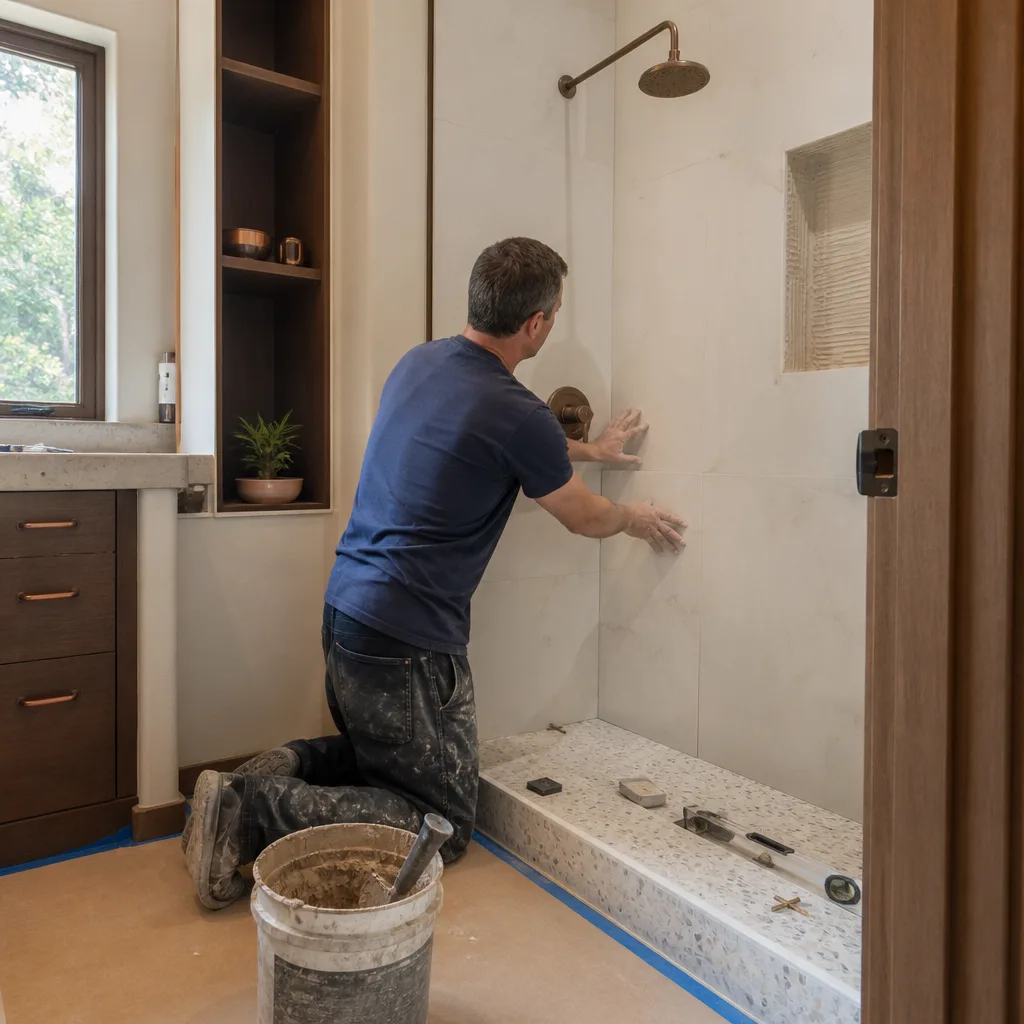
The single most important checkpoint in any bathroom remodel is the waterproofing inspection. In a properly built shower, the pan liner or bonded membrane gets flood-tested before a single tile is set. That test takes 24 hours and it’s the one step that a rushed schedule will quietly skip. Ask directly: “Has the shower pan been flood-tested, and can I see it hold water before you tile?” If the answer is vague or the tile is already going up, that’s a hard stop.
Six on-site signals worth writing down
- No flood test before tile. If you didn’t see standing water in the shower pan for a full day, the waterproofing was never verified.
- Drain not tested before tile. A drain that’s clogged with thinset or set too high is almost impossible to fix once tile is down. Test the drain with a bucket of water before the tile crew starts.
- Mismatched grout spacing. Uneven joints between tiles, especially in a running bond pattern, mean the tile was set in a hurry. Measure a few joints with a tape. Consistent 1/16″ or 1/8″ spacing is the norm; anything jumping between 1/16″ and 3/16″ is a problem.
- Missing cement board or backer board behind tile. Green drywall behind a shower is a defect. It should be cement board, foam board, or another approved waterproof substrate with a membrane over it.
- Flexible adhesive in wet areas. Thinset is the standard in showers. Mastic (the pre-mixed glue) has no business in a wet zone, and it’s a common shortcut when a crew is behind.
- The drain flange sits above the tile plane. A drain that’s proud of the finished floor will pool water and stain grout within months.
We’ve walked into Inglewood homes mid-remodel where the tile was already complete and the homeowner had no idea whether the waterproofing was ever inspected. That’s the situation this guide exists to prevent. If you’re still choosing your contractor, our Groundwork Construction Co. of Inglewood home page lays out how we structure every project so those checkpoints aren’t optional.
Contractor Behavior Warning Signs Before the First Tile Goes Down
The best time to spot a problem contractor is in the two weeks before the demolition starts. That’s when the signals are cheapest to read. After the job is underway, warning signs get expensive fast.
Timelines are the first tell. A vague schedule like “about four to six weeks” with no written phase breakdown is not a schedule – it’s a hopeful guess. A bathroom remodel is roughly 30 to 45 working days for a full gut in most Inglewood homes, and any contractor who can’t break that down into demo, rough-in, inspection, tile, finishes, and final walkthrough hasn’t done enough of them to quote it accurately.
The behavior checklist
- No written line-item quote. “We’ll figure it out as we go” is a warning sign. You want dollar amounts against specific line items: demo, plumbing, electrical, waterproofing, tile, vanity, fixtures, labor.
- Cash-only change orders. Any change should be documented in writing with a price and a new completion date before the work is done. Cash-only with no paper means you have no leverage if it goes wrong.
- Change orders that arrive fast and large. A legitimate change order from a real contractor will tell you exactly how the scope and price shift. A vague “we found rot, that’ll be another eight grand” phone call at 7am is not how it should happen.
- Pressure to sign today for a discount. Real contractors don’t hinge their pricing on your decision speed. The 730-Day Done Right Promise we put on every project doesn’t expire if you take a week to think.
- Resistance to a background check. If a crew is coming into your home for a month, background-checked personnel should be a given. It’s not a favor, and a contractor who treats it like one is telling you something.
- No physical address or one that changes. A contractor working out of a P.O. box or a phone number with no verifiable business presence is a warning sign.
- No references from jobs in the last 18 months. References from five years ago mean the crew is different now. Ask for two recent jobs in Inglewood or nearby.
One more: a contractor who can’t describe the waterproofing system by name. In our experience, a crew that says “we just use the usual stuff” has not read the manufacturer’s spec sheet. RedGuard, Schluter-Kerdi, and similar systems each have specific requirements. A pro should be able to tell you which one they’ll use and why.
Why Permit Resistance Is the Loudest Warning Sign
Permit resistance is the single loudest signal that a bathroom remodel is heading somewhere bad. If your contractor pushes back on pulling a permit for a bathroom remodel in Inglewood, understand what that pushback actually means: they’re worried an inspector will see something.
Almost every bathroom remodel that touches plumbing, electrical, or structural work needs a permit in Inglewood. A typical full-gut remodel pulls a plumbing permit, an electrical permit, and often a building permit. Cosmetic-only jobs – swapping a vanity top, repainting, replacing a shower head – sometimes don’t. The line is not always obvious, and any contractor who wants to skip the permit without explaining that line to you in detail is not doing the job right.
Resistance shows up in a few predictable forms:
- “Permits just slow things down.” They do. That’s the point of the inspection – someone in authority is verifying the waterproofing and the plumbing rough-in before the walls go back up. A contractor who treats the inspector as the enemy is telling you what they think of oversight.
- “We don’t need a permit for that.” Sometimes true. Often not. Ask them to put it in writing which parts of the job don’t require a permit and why.
- “I know a guy at the city.” A permit pulled by a licensed contractor through the normal process is the only version that protects you. A permit pulled under someone else’s name, or an “arrangement,” is a defect waiting to surface.
- “We’ll pull the permit after demo.” Permits should be pulled before the job starts. After demo, the rough-in is already buried.
A passed final inspection is one of the few documents in your remodel that actually means something when you sell the house. An unpermitted bathroom in Inglewood is a disclosure item – and in a slow market, an unpermitted bathroom in Inglewood is the one that sits. If your contractor won’t pull the permit, the buyer will find out.
We’ve written more about how full-scope projects get structured at Home Additions & ADU in Inglewood, and the same permit discipline carries over into every bathroom we touch.
Post-Remodel Warning Signs in Year One
Year one is when the honest installation separates from the rushed one. A well-built bathroom may show minor settling lines at the drywall, a single grout crack where two materials meet, and nothing else. A poorly built bathroom starts telling on itself within four to six months. Here’s the pattern.
Months 1 to 3: the first honest look
- Grout cracking at inside corners. Grout at a change-of-plane joint should not be a hard grout line – it should be a flexible sealant (caulk) because corners move. If grout is cracking at the corner of a shower bench or the floor-wall joint, the wrong material was used. This one alone is a low-cost fix but a warning about the rest of the job.
- Door not seating flush. A new bathroom door that swings in but doesn’t seal at the strike plate is usually a wall that wasn’t plumb or a frame that was set square to a floor that wasn’t level. It’s a sign of precision issues elsewhere.
- Slow drain with new plumbing. A drain that slows within weeks of a remodel is usually a construction debris clog – thinset or grout poured down the drain during the job. It’s fixable, but it should have been caught on day one.
- Vanity doors that don’t line up. On a KraftMaid or similar cabinet, the doors should be adjustable. If the installer didn’t level the cabinets behind them or adjust the hinges, the doors will “hang” within weeks.
Months 4 to 12: the expensive stuff
- Grout darkening or efflorescence near the shower base. This is moisture finding a way through the waterproofing. It’s the slow-drip version of the failed shower pan, and it’s the one that turns into a $6,000 to $12,000 rebuild if left for two years.
- Soft spots in the floor near the shower or toilet. Press with your thumb. If the floor gives, the subfloor is wet, and moisture has been coming from somewhere for months.
- Peeling paint or bubbling drywall on the wall opposite the shower. Water is getting behind the tile and traveling. This is not a paint problem.
- Tile lifting or hollow-sounding. Tap a few tiles gently with a screwdriver handle. A hollow sound means the thinset didn’t bond – a rushed installation, not a manufacturer defect.
- Mold coming back in the same corner after cleaning. The problem isn’t the mold. The problem is the moisture source behind it.
For the wider version of this pattern in a different room, our Driveway & Pavers in Inglewood page covers the same “install it once, install it right” logic on a different surface. The installation discipline doesn’t change with the square footage.
Normal Settling vs. Actual Defect: How to Tell the Difference
Not every crack in a new bathroom is a defect. Wood framing shrinks and settles. Inglewood homes sit on soil that expands and contracts with the seasons, and a 1920s bungalow that hasn’t moved in decades will move a little when you gut the bathroom and rebuild it. The question is whether you’re seeing the movement a well-built bathroom can weather, or the start of a failure.
A quick comparison
- Normal settling: A hairline crack (under 1/32″) at a drywall corner where two pieces of drywall meet. A single grout line crack where a shower bench meets the wall. A door that sticks slightly in the first wet season. These are all fixable with a tube of sealant and a screwdriver.
- Actual defect: Cracks that keep widening over weeks. Grout coming out in chunks, not crumbs. Tile that sounds hollow. A door that won’t close at all after 12 months. Water staining anywhere it shouldn’t be. Any of these means the installation didn’t account for movement properly.
Here’s the diagnostic we use: look at the crack over 60 days. Take a photo today and a photo in two months. A defect will widen visibly. A settling crack stays where it is.
Three defense-in-depth questions
- What was the substrate? A bathroom built on cement board with a bonded membrane should not have moisture problems. A bathroom built on green drywall with a paint-on membrane is at risk no matter how well the finish looks.
- What was the slope on the shower pan? The floor should slope toward the drain at a consistent 1/4″ per foot. A pool of standing water in the corner after a shower is a slope problem, not a drainage problem.
- What was the tile setting material? Thinset is the standard. Mastic is not acceptable in wet areas. If you have the receipts, check.
The most expensive way to answer this question is to wait for a visible failure. If you’re at the 12-month mark and something feels wrong, that’s exactly when a pro should take a look. Inglewood homeowners deserve a free estimate for any follow-up work, and calling (833) 842-7204 reaches a live person any hour of the day.
What Documentation to Demand at Project Close
The final walkthrough is where a well-run project locks in its protection for the next ten years. A weak contractor will treat it as a handshake and an invoice. A serious one will hand you a folder. Here’s exactly what should be in that folder – and if any of it is missing, you’re within your rights to hold final payment until it’s provided.
The closeout package
- Signed, dated final inspection card. The city inspection card with the inspector’s signature is the single most important document you’ll get. Without it, the permit may still be technically open, which is a problem when you sell.
- Manufacturer warranty papers. Every tile, grout, membrane, faucet, toilet, and vanity has a manufacturer warranty. A Kohler faucet has a limited lifetime warranty; a KraftMaid cabinet has a specified warranty period. If the installer doesn’t give you the papers, you’ll be hunting them down later.
- The waterproofing system spec sheet. The name and model of the membrane or liner used in the shower. This matters because the warranty is tied to the proper installation, and the installer’s record of which system they used is your only proof.
- Photos of the rough-in. Before the walls closed, someone should have photographed the plumbing and electrical rough-in. This is the map you’ll want in 8 years when you want to hang a mirror on that wall.
- Floor plan or sketch of what was actually built. A short hand sketch of where the new plumbing chase runs and where the shutoff valves are. Not a CAD drawing – just the practical map.
- The workmanship warranty in writing. Ours is the 730-Day Done Right Promise – if it’s not done right, we make it right. It’s one of the longest workmanship guarantees in the residential construction space, and it’s written into every project, not buried in an asterisk.
- A punch-list sign-off. Every item on your original list should be marked resolved with the date. If something is deferred, get the date it will be done.
If you have to chase any of the seven items above, that’s a warning sign too. A contractor who can’t produce a closeout package is telling you they don’t expect to be needed again – which is not the same as being accountable.
Why Inglewood Bathrooms Fail Differently
Inglewood has its own bathroom failure patterns, and they don’t match what a contractor from outside the area will be prepared for. This is not a marketing line. It’s what we’ve seen across the city.
Start with the housing stock. The bulk of Inglewood’s single-family homes were built between the 1920s and the 1960s. That means furring strips, lath and plaster, cast-iron drains, and galvanized supply lines. When a bathroom is gutted, the crew finds 2×4 framing that was sized for lath, not for cement board and tile. A contractor who brings a standard modern install without checking the framing ends up with a waterproofing system that flexes and cracks. In Inglewood, the substrate is often the story.
Then there’s the climate. Inglewood is coastal-adjacent, and the marine layer keeps humidity in the air most mornings. Bathrooms that vent poorly in Inglewood develop mold problems faster than the same bathroom would in Palm Springs. The exhaust fan is not optional – it should move at least 80 CFM in a standard bathroom, and it should vent to the exterior, not into the attic. We’ve seen fans vented to the attic in Inglewood crawl spaces more than once.
And Inglewood is a market where unpermitted work has been common for decades. That means when you buy a home, the bathroom you’re standing in may have been remodeled twice without a permit – once in the ’80s, once in the 2010s, sometimes with two different tile systems layered on top of each other. When a contractor opens the wall and finds “surprises,” that phrase can mean a lot. A well-prepared bid from a contractor who knows Inglewood’s housing stock will build in a contingency line for the discoveries, and you should expect it. A bid that doesn’t is a bid that will change.
If you want to see how we handle exterior build scope in the same market, Fence Installation in Inglewood is a useful parallel – the code quirks and setback rules in Inglewood don’t change with the trade.
Common Mistakes to Avoid
- Skipping the flood test to save a day. The 24-hour shower pan flood test is the single most important checkpoint in the entire remodel. Skipping it to keep the schedule on track is the mistake that most often leads to a five-figure rebuild two years later.
- Letting tile go up before the rough-in inspection passes. The city has to see the plumbing and electrical rough-in before it’s covered. Once tile is down, that inspection is gone, and the inspection card comes back incomplete.
- Paying in cash with no paper trail. Every change order, every material upgrade, every schedule shift should be a written document. In Inglewood, unpermitted and undocumented work is a nightmare at resale.
- Choosing the lowest bid and then being surprised at the change orders. The low bid is low because something was left out of the scope. Every $1,000 missing from the original bid returns as $2,000 to $3,000 in change orders once the job is open.
- Not checking the exhaust fan on the final walkthrough. A bathroom fan that doesn’t vent to the exterior will fail within three years in Inglewood’s coastal air. Bring a tissue to the final walkthrough; if it doesn’t stick to the grille, the fan isn’t pulling.
- Ignoring year-one symptoms until year three. A grout crack at the shower bench in month four is a $75 fix. The same crack at year three is a $2,000 rebuild of the bench tile and the framing behind it.
- Buying a house with a remodeled bathroom and no closeout package. If the seller can’t produce the permit card and the workmanship warranty, treat the remodel as unverified and price accordingly. This is common in Inglewood’s older neighborhoods, and it’s negotiable.
See the difference
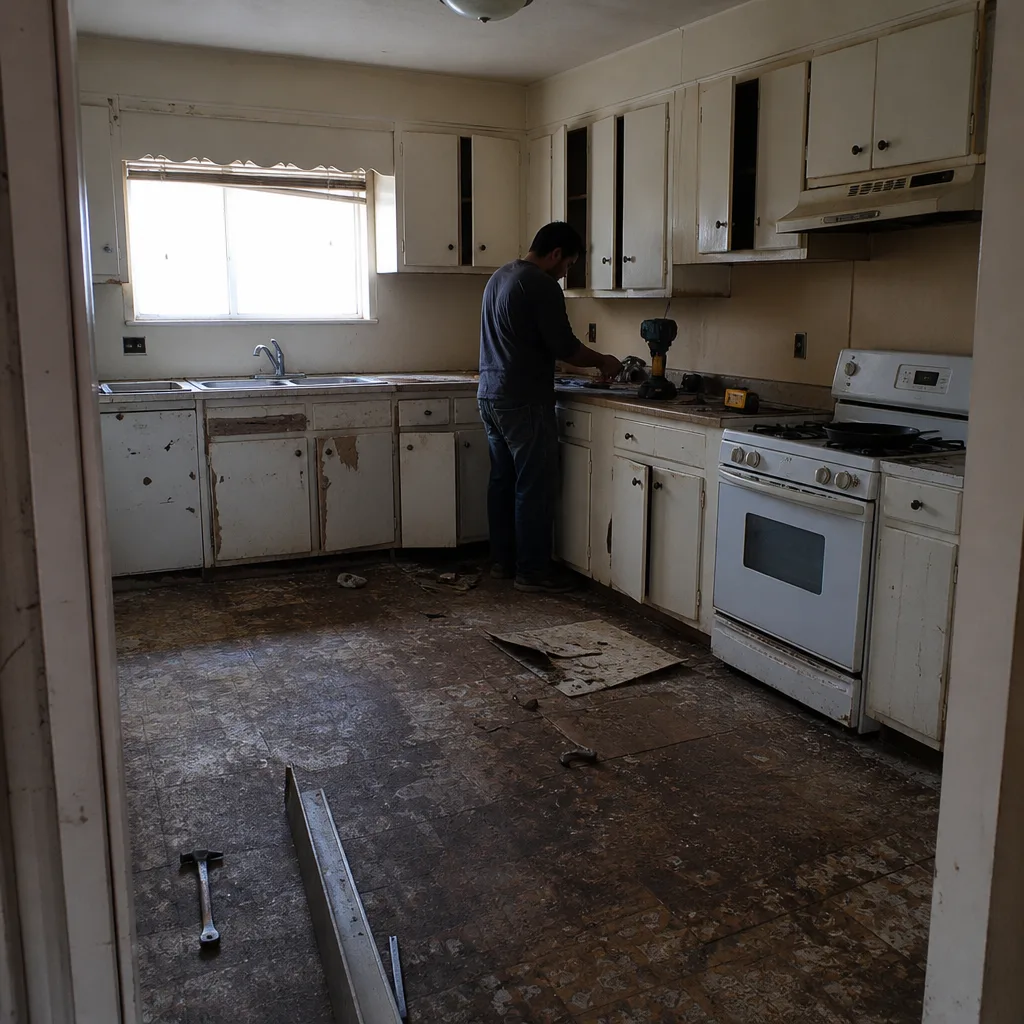 Before
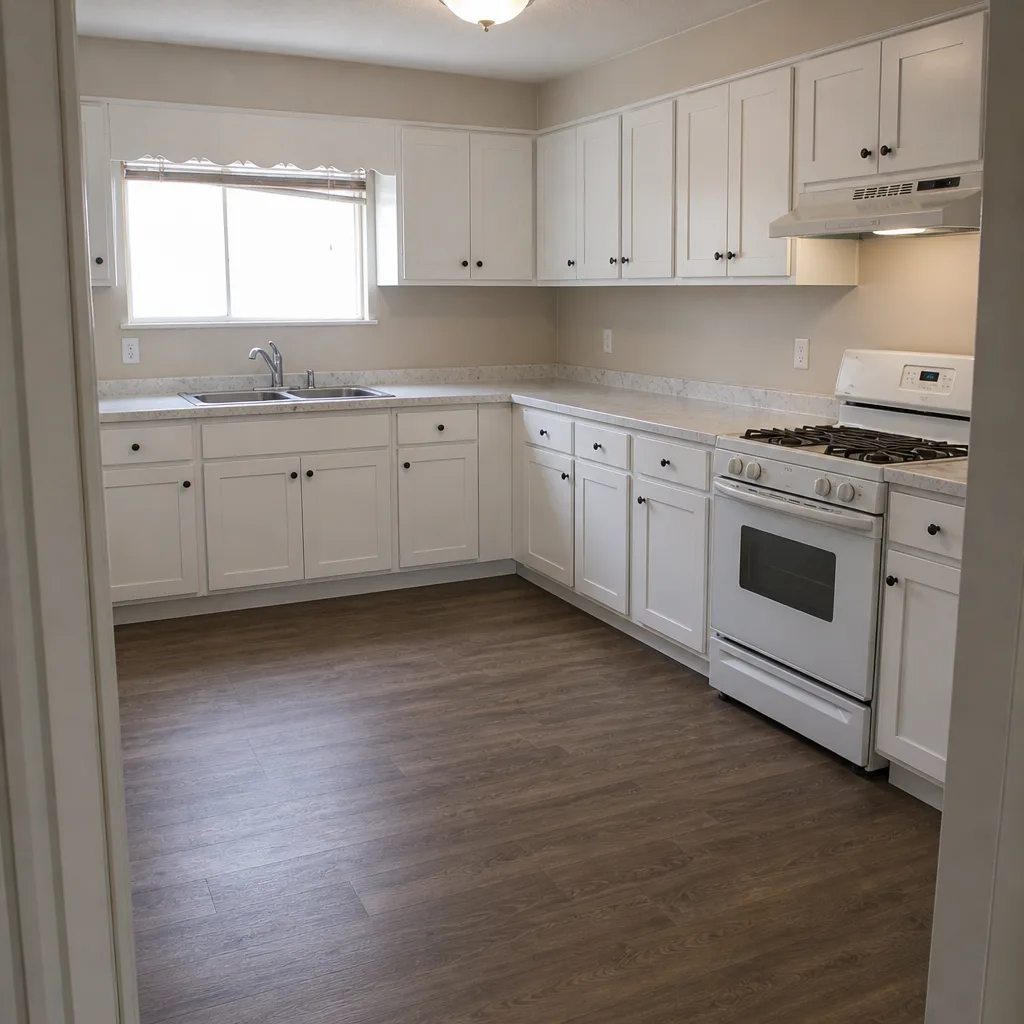 After
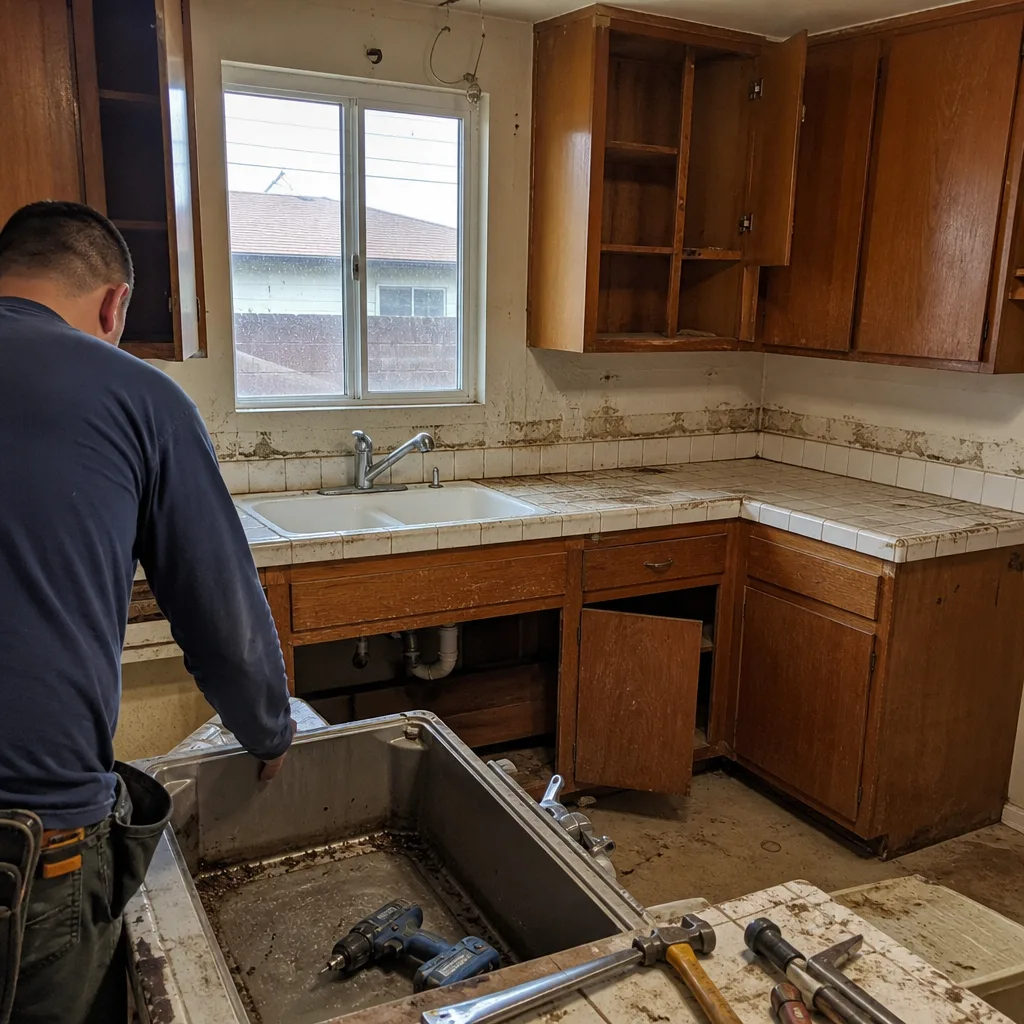 Before
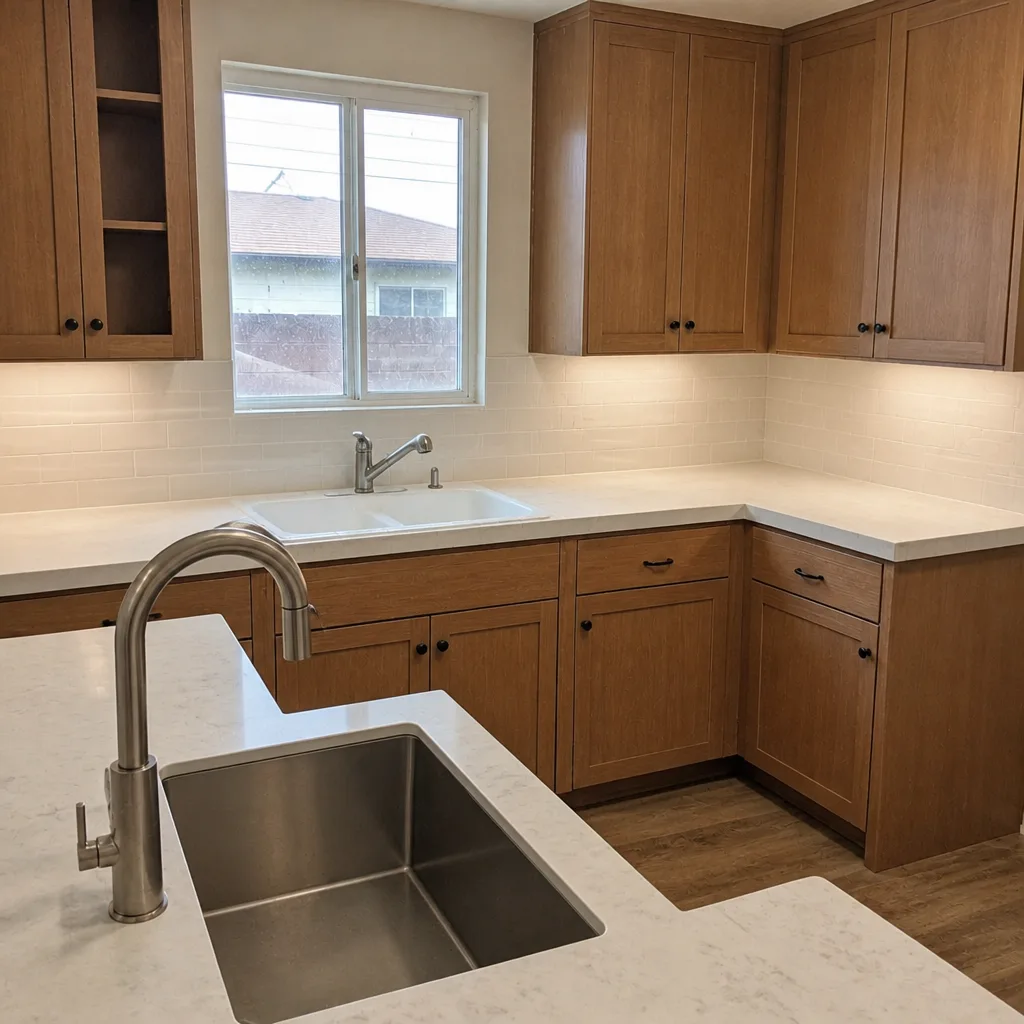 After
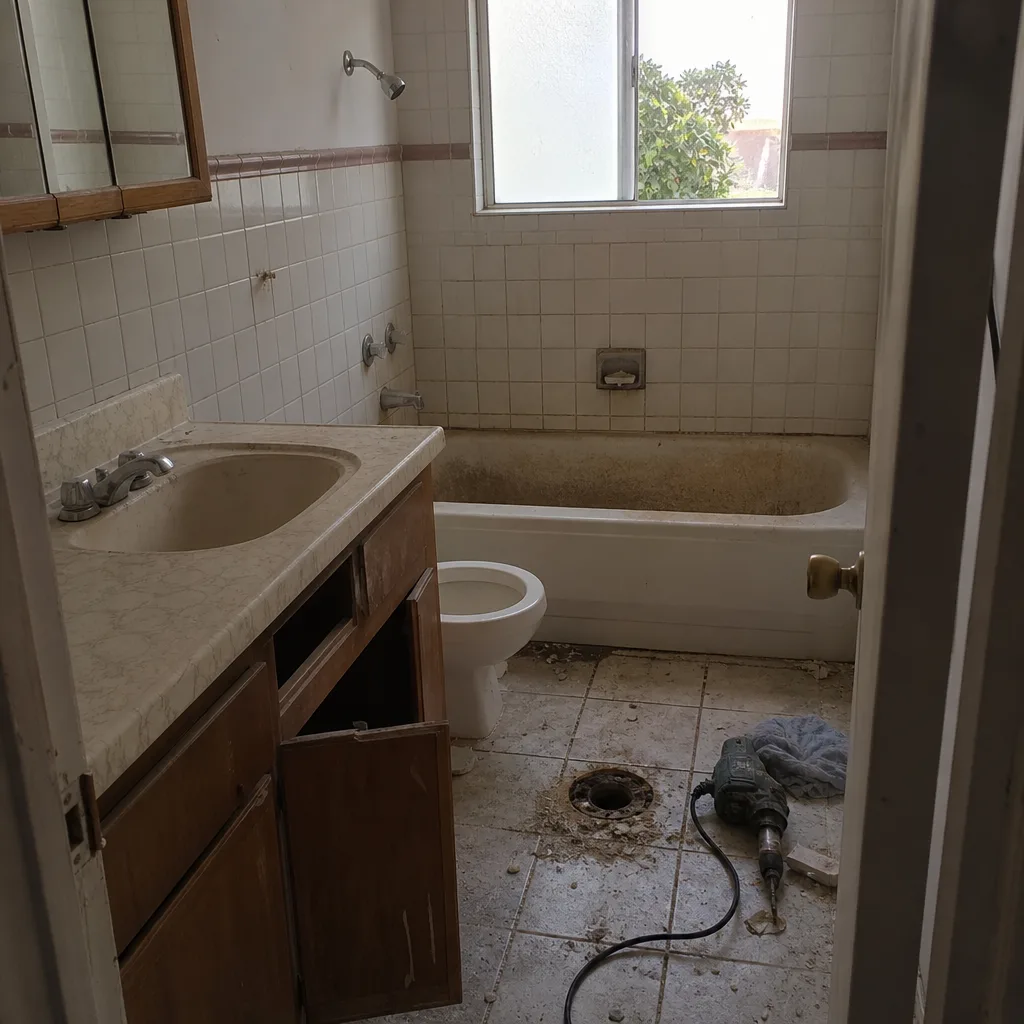 Before
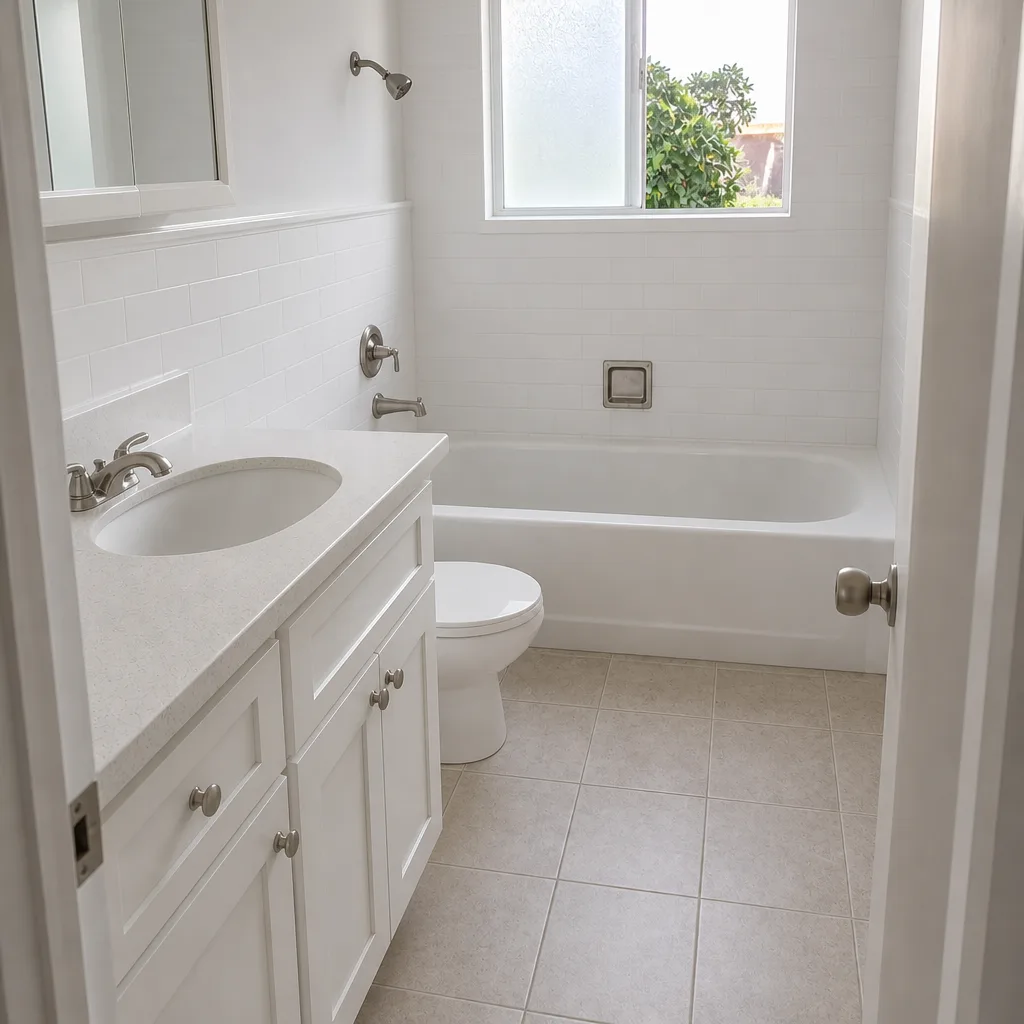 After
When to Call a Professional
Some warning signs are worth a phone call to your existing contractor. Others should go straight to a new one. Call immediately if you have water staining on a wall opposite the shower, a floor that’s soft to the touch near the drain or the toilet, tile that sounds hollow when tapped, or any on-site red flag before tile goes down – a missing flood test, a drain that wasn’t checked, uneven grout spacing. A second opinion on an active job is cheap; a rebuild is not. We’ve seen jobs go sideways just because nobody asked the question at the right moment, and a five-minute conversation on day 15 would have solved it. Groundwork Construction Co. of Inglewood offers free estimates in Inglewood – call (833) 842-7204 to schedule one.
Frequently Asked Questions
The top three are a skipped shower pan flood test before tile, a contractor who resists pulling permits, and vague change orders that show up after the work is done. Any one of those is worth a serious conversation. Two or more together almost always means the job will cost more than quoted or fail inside three years.
Tap a few tiles with a screwdriver handle. A hollow sound means the thinset didn’t bond and the tile is separating from the substrate. Also look for grout that’s cracking at inside corners (should be flexible sealant, not grout), and darkening of grout lines near the shower base, which usually means moisture is getting behind the tile.
Repairing a failed shower waterproofing system in Inglewood typically runs $6,000 to $12,000 for a full rebuild, because the tile has to come out and the substrate has to be redone. A cosmetic fix – re-grouting a small area – runs $300 to $800. Call (833) 842-7204 for an exact quote – estimates are free.
No. An unpermitted bathroom remodel in Inglewood becomes a disclosure item at resale and can hold up a sale. The permit is not a formality; it’s the mechanism that puts a city inspector on the waterproofing and plumbing before it gets buried under tile. If your contractor pushes back, that’s a warning sign, not a cost savings.
No. A bathroom door that doesn’t seat at the strike plate within the first few months is usually a sign that the door frame was set square to a wall that wasn’t plumb, or a wall that wasn’t square to the floor. It’s fixable with hinge adjustment, but it’s a signal that precision was rushed elsewhere in the job.
You should get the signed final inspection card, the manufacturer warranties for tile, membrane, fixtures, and cabinets, a photo record of the plumbing and electrical rough-in before walls closed, a short sketch of where the shutoffs are, and the workmanship warranty in writing. If any of these are missing, hold final payment until they’re provided.
A full-gut bathroom remodel in Inglewood typically takes 30 to 45 working days, and a partial remodel takes 10 to 20. If your contractor gives you a vague “about a month” without a written phase schedule, push for one. The schedule itself is a warning sign – a real contractor can break it down into demo, rough-in, inspection, tile, finishes, and final walkthrough.
The Bottom Line
The warning signs of a bad bathroom remodel show up early – most of them before the first tile is set. Watch for the skipped flood test, the permit resistance, the vague timeline, the cash-only change order. Then watch for the year-one symptoms: grout cracking at inside corners, doors that don’t seat, drains that slow, walls that stay damp. If you find any of these, don’t wait for the failure. Get it checked, and get it in writing. That’s the pattern every honest contractor follows, and it’s the pattern we hold ourselves to on every Inglewood bathroom we touch.
Ready for a Bathroom You Don’t Have to Worry About?
If you’re planning a bathroom remodel in Inglewood or you’re mid-job and something feels off, we offer a free project estimate and design consult. That means a written line-item quote, upfront pricing with no surprises, and the 730-Day Done Right Promise on every project we take on – if it’s not done right, we make it right. Our technicians have up to 12 years of experience, they’re background-checked and arrive in uniform, and every call is answered by a live person, 24/7. New customers also get $1,000 off projects over $10,000 and 0% financing for 18 months, so a real bathroom renovation doesn’t have to wait for a better year. Call (833) 842-7204 to schedule your free estimate. Built to last, backed in writing.
Written by the team at Groundwork Construction Co. of Inglewood.