Last updated November 18, 2026


Free written scope consultation - allowances, timeline, and change-order rules on paper before a single trade is scheduled
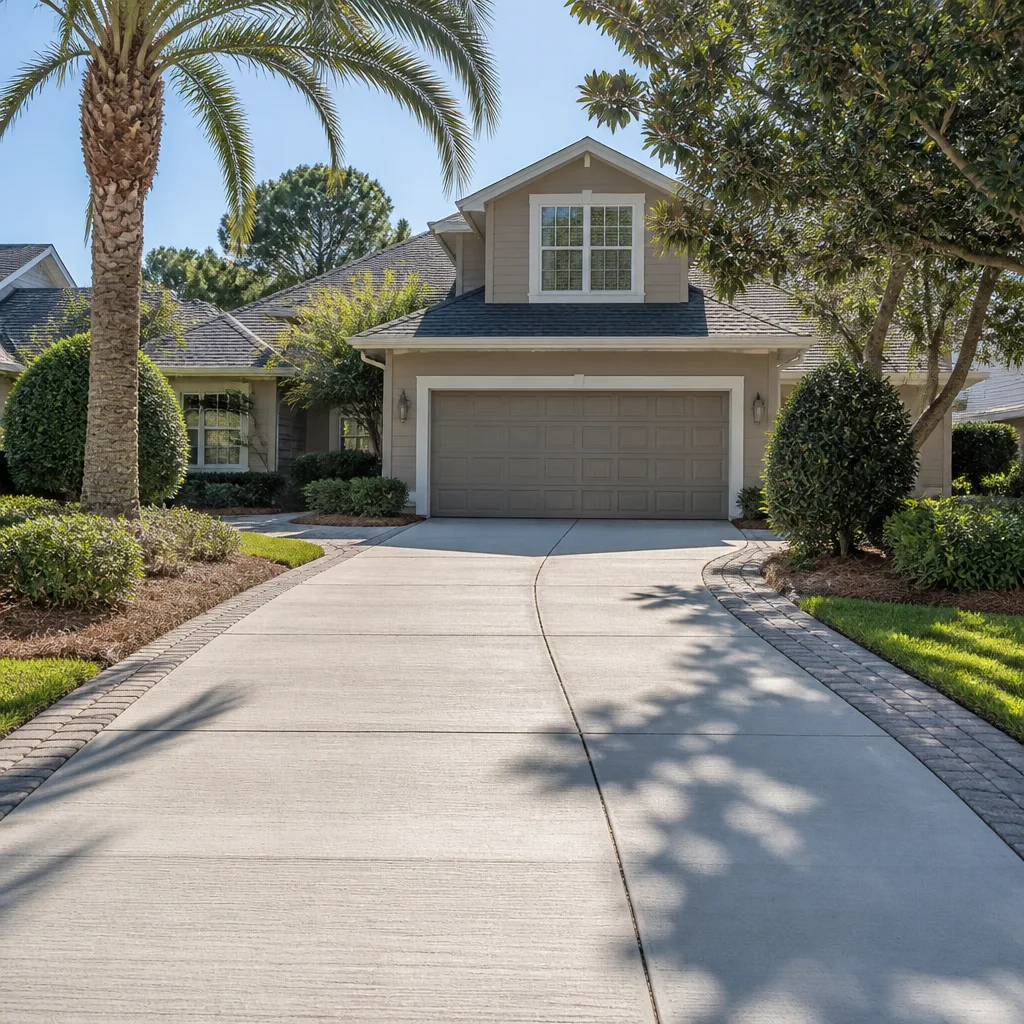
Driveway & Pavers Warning Signs Every Homeowner Should Know
Your driveway pavers will tell you they’re failing long before they actually fail. Most homeowners don’t hear the message. Edge creep is the one we see ignored most often in Inglewood: the border of your driveway slowly migrates outward over a season or two, so gradually that it reads as cosmetic until the day a section of pavers slides into the planting bed. By then the base is already compromised. This guide walks through the seven visual indicators of paver failure ranked from cheap-to-fix to call-the-crew, how to tell settling from true base failure, what ponding water tells you about compaction, and the exact thresholds where you should stop watching and start calling.
Styles & brands we work with
- Kitchen remodeling
- Bathroom remodeling
- Home additions & ADU
- Roofing
- Windows & doors
- Driveway & pavers
- Fence
Quick Answer
Driveway paver failure almost always starts below the surface, in the base layer, and shows up at the edges and joints first. The warning signs that matter most are edge creep, progressive settling that doesn’t stop, joint sand washing out repeatedly, standing water longer than 24 hours after rain, and weeds or ant colonies returning to the same joints every season. Catching these in the first year or two typically costs a fraction of what a full tear-out and rebuild charges once the failure becomes structural.
Table of Contents
- The Seven Visual Warning Signs, Ranked Early to Late
- Settling vs. Base Failure: How to Tell the Difference
- Edge Creep: The Most Ignored Sign in Inglewood Driveways
- What Standing Water After Rain Is Telling You
- The Weed and Ant Colonization Timeline
- Joint Sand Loss and What It Predicts
- Monitor-and-Wait vs. Call a Pro: The Specific Thresholds
- A Five-Step Paver Inspection You Can Do This Weekend
- Common Mistakes to Avoid
- When to Call a Professional
- Frequently Asked Questions
- The Bottom Line
The Seven Visual Warning Signs, Ranked Early to Late
Not all paver problems cost the same to fix. The order below runs from early-stage signals you can address with joint sand and re-leveling to late-stage symptoms that mean the base needs to be rebuilt. We’ve walked hundreds of Inglewood driveways with a clipboard and a level, and this ranking holds up.
- Sand washing out of joints after rain. The earliest sign. Means water is getting under the pavers faster than it should.
- Minor edge migration. Border pavers creeping 1/8″ to 1/4″ outward over months. The edging restraint has started to fail.
- Recurring weeds in the same joints. Not a weed problem. A moisture and voids problem.
- Ant mounds between pavers. Ants colonize voids. If they’re back every spring, the sand bed under the surface is opening up.
- Ponding water more than 24 hours after rain. Grade has shifted and water is no longer sheeting off the surface.
- Visible depression or crowning over 1/2 inch. The base is failing underneath. Pavers are following the dip.
- Paver cracking or rocking underfoot. Late stage. The base is gone. A tear-out is coming.
Anything in the first three is fixable cheaply. Anything in the last two is structural. The middle three are the window where a professional assessment saves you the most money. In Inglewood, where clay-heavy soils under older properties hold water after the winter rains, that window tends to close faster than homeowners expect.
Settling vs. Base Failure: How to Tell the Difference
Every paver driveway settles a little in the first year or two. That’s normal. The system is finding its resting point as the base sand compacts and pavers nest into place. What separates normal settling from progressive base failure is whether the movement stops.
Here’s the distinction:
- Normal settling: Minor dips appear in the first 12 to 24 months, then stop. The pavement feels solid underfoot. No water ponds. Joints stay filled.
- Base failure: The dip gets deeper each season. You can feel the pavers give a millimeter when you step on them. Water starts pooling in the low spots. Joint sand keeps washing away.
The test we use on site is simple. Note the low spot today. Come back in six months. If the spot is the same depth, the driveway is stable. If it’s deeper, the base is failing and it isn’t going to stop. In Inglewood, we see this most often on driveways installed over older, compacted lots where the original sub-base was never stripped and re-graded. The pavers go down around a problem that was set before the first one was laid.
Pavers themselves are essentially indestructible when supported. When they fail, the failure is almost always the base, the edging, or the drainage pitch.
Edge Creep: The Most Ignored Sign in Inglewood Driveways
Edge creep is exactly what it sounds like. The border pavers of your driveway slowly migrate outward, away from the body of the pavement, over the course of months. The line that was crisp at install becomes a millimeter wider, then a centimeter, then a finger’s width. It looks like nothing. It is not nothing.
Paver edges are held in place by a restraint – typically a spiked aluminum or plastic edge or a soldier course set in a concrete curb. When that restraint works, the pavers don’t move. When it starts to fail, two things happen at once: the border pavers march outward, and the joints between them open. That opens a channel for water to reach the sand bed and the base. Once the sand bed starts moving, the whole field of pavers can shift.
We see edge creep in Inglewood on driveways with mature trees in the parking strip, where roots push against the buried restraint. We see it on properties with a steep crown-to-edge slope, where the drive takes the full brunt of runoff from winter storms. And we see it on older installs where the original plastic edge has become brittle from years of southern California sun.
What to do: walk the entire border of your driveway and sight along the edge like you’re aiming down a rifle. A straight line means healthy. A bow or wave means the restraint is failing. If the bow is 1/4 inch or more in any one section, that section needs to be re-set and re-spiked before the field can move.
What Standing Water After Rain Is Telling You
Ponding water is the single most reliable early indicator of two failures at once: sub-base compaction failure and drainage grade loss. If water is still standing on your paver driveway 24 hours after the rain stops, the pavement is no longer shedding water at the designed pitch.
Paver driveways are built on a slope. Usually 1.5% to 2%, meaning 1.5 to 2 feet of fall per 100 feet of length, directed toward the street or a drainage swale. When the sub-base compacts unevenly – which happens when it wasn’t properly compacted in lifts at install, or when water has been infiltrating through failing joints for years – the surface follows the base and creates low spots. Those low spots pool water. Pooled water infiltrates faster. The compaction gets worse. The cycle is self-reinforcing.
In Inglewood, we watch for this especially in the neighborhoods closest to the old flood-control infrastructure, where the local soils are heavier and clay content holds water longer. Flood-control channel improvements over the last decade helped the surface hydrology, but they didn’t change what’s under your driveway.
What to check after the next rain:
- Note every spot where water is deeper than 1/4 inch.
- Time how long it takes to drain. Under 24 hours: fine. 24 to 48 hours: monitor. Over 48 hours: the base is failing.
- Check whether water runs off the driveway or toward it. If your neighbor’s runoff or a nearby downspout is discharging onto your pavers, that’s a source problem to fix first.
The Weed and Ant Colonization Timeline
Weeds and ants between pavers are not the problem. They’re the symptom. Both move into voids – the air pockets that open up in the sand bed and base when the system starts to degrade. If you’re pulling the same weed out of the same joint every spring, that joint has an open void under it.
The timeline usually looks like this:
- Year 1 to 2: Joint sand stays filled. No weeds. No ants. The system is sealed.
- Year 2 to 4: A few weeds appear in one or two joints after heavy rain. Ants show up in a mound or two. Sand washes out of the same joints repeatedly.
- Year 4 to 6: Weeds return to 10 or more joints every season. Ant mounds expand. Water begins to pond in low spots.
- Year 6+: Weeds in every joint along one edge or in one field section. Depression visible. Pavers starting to rock.
Any point beyond year 2 is a signal, not a nuisance. The right response isn’t more herbicide – it’s asking why the void is there. In Inglewood, ant colonies in paver joints are common because the local species (mostly Argentine ants) will follow moisture channels through the sand bed. If they’re back every season, the sand bed is no longer doing its job.
Joint Sand Loss and What It Predicts
Joint sand is what locks the pavers together and what channels water off the surface. When it stays put, the driveway holds. When it washes out after every rain, the whole system is losing structural integrity. This is the earliest and cheapest signal to catch.
Here’s how to read it:
- Fill your joints once a year with polymeric sand. If the joints stay full for 12 months, the system is intact.
- If joints need refilling two or three times a year, water is moving through the surface faster than the sand can hold. That’s an early warning.
- If joint sand washes out in the same 5 to 10 joints every rain, the sand bed under that section is probably compromised. The void is pulling sand down into the base.
Polymeric sand holds up better than plain mason sand, and we recommend it for Inglewood driveways because the summer heat and winter rains work on the joints fast. If your driveway was built with plain sand and hasn’t been re-sanded in three or more years, that’s a maintenance point to address before it becomes a structural one.
Monitor-and-Wait vs. Call a Pro: The Specific Thresholds
Every homeowner wants to know, “Is this the kind of thing I watch, or the kind of thing I call about?” Here are the specific thresholds we use.
Monitor and wait if:
- You see one or two small dips that haven’t gotten deeper in six months.
- Weeds appear only in a handful of joints annually, and joints stay full otherwise.
- Water ponds in a low spot for under 24 hours after rain.
- Edge creep is under 1/8 inch along any single section.
- The driveway is under 12 months old and hasn’t been re-sanded yet.
Call a professional now if:
- A dip is deeper than 1/2 inch.
- Pavers rock when you step on them. This means the sand bed is gone; the paver is spanning a void.
- Water ponds for 48 hours or more after rain.
- Edge creep exceeds 1/4 inch in any section.
- Weeds are returning to more than 10 joints every season.
- You see cracking in pavers themselves (not to be confused with chipping at the edges, which is cosmetic).
- Any joint sand washes out fully in the same section more than twice in a season.
We tell Inglewood homeowners to think of it this way: if the warning sign is going away on its own or holding steady, monitor. If it’s getting worse, call. The sign isn’t going to reverse itself. Only the schedule and the bill change.
When you’re ready to get a professional eye on it, Driveway & Pavers in Inglewood is where we cover how we assess and rebuild failing paver systems in this market.
A Five-Step Paver Inspection You Can Do This Weekend
This takes 30 minutes and a garden hose. Do it once now, note the answers, and repeat in six months.
- Walk the perimeter. Sight down the full length of every edge. Note any bow, wave, or migration. Measure the widest gap between the field pavers and the edge restraint.
- Walk the field. Step on every third paver across the driveway. Note any that rock, wiggle, or sound hollow.
- Check the joints. Look at every joint for sand loss, weeds, or ant activity. Mark problem areas with chalk.
- Hose test. Run water for two minutes over the crown of the driveway. Watch where it flows. If it flows toward the house, a downspout, or a planting bed instead of toward the street, your pitch has shifted.
- Note the low spots. After the next real rain, check for standing water at 2, 6, 24, and 48 hours. Write down depths and durations.
Repeat the inspection on the same day every spring. Growth (or lack of it) in each finding tells you far more than a one-time snapshot. If you want a baseline before you start tracking, we offer free project estimates to homeowners across Inglewood, and the technician will show you exactly what a healthy system vs. a failing one looks like on your property.
Common Mistakes to Avoid
- Treating edge creep as cosmetic. Homeowners see a slightly wavy border and assume it’s a design quirk. By the time they call, the restraint has been failing for two seasons and the field pavers have started to move.
- Refilling joints with sand and hoping for the best. Sand is a bandage, not a cure. If joints need refilling three times a year, the sand bed is compromised. Adding more sand accelerates the loss.
- Killing weeds instead of reading them. Herbicide stops the weed. It doesn’t stop the void that let the weed in. The next season it’s a bigger void.
- Assuming a small dip will “settle back.” Pavers don’t settle back. They settle down. A dip that’s deepening season to season is base failure in progress, and it doesn’t reverse on its own.
- Ignoring standing water on the assumption that “it always drains eventually.” Water that sits 48 hours is infiltrating through joints at a rate that damages the sub-base. Each season of this makes the eventual repair more expensive.
- Fixing the pavers, not the drainage. A contractor who replaces the pavers on top of the same failing base is selling you the same problem in new materials. The fix has to start at the base layer and the drainage pitch, especially on Inglewood lots where runoff from a neighbor’s slope or a downspout is a factor.
- Trusting a driveway that “looks fine” on the surface. We’ve torn out Inglewood driveways where every paver was intact and the base below was a mud pit. Surface appearance tells you almost nothing about base condition. The warning signs are the tell.
When to Call a Professional
Call a professional when any of the following is true: pavers rock underfoot, a dip exceeds 1/2 inch, standing water persists beyond 48 hours after rain, edge creep exceeds 1/4 inch in any section, or joint sand washes out fully from the same section more than twice per season. Any of those signals means the base is failing and the fix is not a homeowner fix. Adding sand, herbicide, or stronger sealers won’t reverse base failure – those are cosmetic responses to structural problems.
If you want a professional assessment on your Inglewood driveway, Groundwork Construction Co. of Inglewood offers free estimates in Inglewood – call (833) 842-7204. We walk the property, take measurements, and give you an upfront written quote with no surprises. The technician will tell you whether your pavers need a re-sand and re-edge, or a full tear-out and rebuild, and why. Our 730-Day Done Right Promise backs every rebuild we do: if something isn’t right, we make it right. Estimates are free, and the call is answered by a live person, 24/7.
Frequently Asked Questions
The simplest test is whether the movement stops. Normal settling stabilizes within 12 to 24 months and the low spots stop deepening. Base failure gets worse season to season. If the same dip gets deeper each year, if pavers rock when you step on them, or if water ponds for more than 24 hours after rain, it’s a base failure and not settling. Call (833) 842-7204 for a free assessment – we’ll tell you which one you’re looking at.
Weeds and ants are indicators of voids and moisture under the pavers, not a sign the pavers are failing on their own. In Inglewood, Argentine ants follow moisture channels through the sand bed, and weeds take root where joint sand has washed out and left a void. If you’re seeing them in more than 10 joints every season, the base below that section has likely lost compaction. Get an estimate to confirm before refilling the joints again.
Standing water that lasts more than 24 hours after a rain means the drainage pitch has shifted and the sub-base is no longer compacted evenly enough to shed water. Because pooled water infiltrates through joints faster, the problem gets worse each season. If water is still there at 48 hours, call us for an assessment at (833) 842-7204.
You can absolutely handle the maintenance-level items: re-sanding joints once a year with polymeric sand, pulling weeds, and tracking your low spots across a season. You should not handle anything involving the base layer, the edge restraint, or the drainage pitch. Those need a pro. A full re-sand of a 20×40 driveway is a weekend project for some homeowners; re-setting an edge restraint or rebuilding base is not. If you’re unsure which category your sign falls into, get a free estimate and ask directly.
Cost depends on which stage you’re at. Re-sanding and re-sealing a driveway is a few hundred dollars. Re-setting an edge restraint along one or two sides is more. A full tear-out and rebuild of a driveway with failing base runs into the thousands depending on square footage and access. The gap between the first number and the last is the whole reason this guide exists – catching warning signs in the first year or two typically saves thousands on Inglewood paver work. Call (833) 842-7204 for an exact quote – estimates are free.
It can, yes. Inglewood sits on heavier clay-type soils in many parts of the city, and those soils hold moisture after winter rains instead of draining quickly. Combined with summer heat cycling through expansion and contraction, that soil behavior stresses base layers more than sandy-soil markets. Driveways near older drainage infrastructure or mature trees tend to show warning signs earlier, which is why we recommend the spring inspection as a standard part of homeownership in Inglewood.
The Bottom Line
Your pavers want to stay where they are. When they don’t, they telegraph it through surface signals long before they collapse. The homeowners who save money are the ones who learn to read edge creep, recurring weed growth, joint sand loss, and post-rain ponding as early warning. The homeowners who spend the most are the ones who wait for a paver to crack. Run the five-step inspection once this weekend, repeat it every spring, and act on any finding that gets worse rather than steady. If you want a professional baseline on an Inglewood property, or you’re ready to rebuild a driveway that’s past the warning stage, our team at Groundwork Construction Co. of Inglewood is here to help. We stand behind every paver install with our 730-Day Done Right Promise, we show up in uniform, and we put the price in writing before we lift a paver. If your project expands to a full exterior scope, Fence Installation in Inglewood and Home Additions & ADU in Inglewood cover how we handle the rest of the property, foundation to finish line.
Call (833) 842-7204 for your free project estimate and design consult. The call is answered by a live person, 24/7 – not a voicemail box.
Written by the team at Groundwork Construction Co. of Inglewood.
See the difference
 Before
 After
 Before
 After
 Before
 After