Last updated November 18, 2026


Free written scope consultation - allowances, timeline, and change-order rules on paper before a single trade is scheduled
Fence Installation Warning Signs Every Homeowner Should Know
A fence that leans six months after installation wasn’t installed badly on day one. It was bid badly on day zero. The red flags were there before the first hole was dug, buried in a quote that skipped the math, a crew that never called for utility marking, and a conversation that never touched permits. Most homeowners don’t know to look for them, so by the time the sag starts, the contractor is long gone and the phone number goes to voicemail. We’ve walked dozens of Inglewood properties where the story was the same: a low bid, a fast install, a slow collapse. This guide teaches you to read the job before the job starts. You’ll learn the pre-bid signals, the on-site tells, and the 30-to-90-day checks that separate a fence built to last from one built to look finished.
Quick Answer
The biggest fence installation warning signs are a quote with no property-line measurement, no DigAlert or utility-marking discussion, no permit conversation, and no written post-depth or concrete spec. On site, watch for posts set without a string line or level check and concrete mixed too wet. Within 30 to 90 days, sagging gates, widening panel gaps, and concrete that traps water against the posts confirm the job was done wrong.
Styles & brands we work with
- Kitchen remodeling
- Bathroom remodeling
- Home additions & ADU
- Roofing
- Windows & doors
- Driveway & pavers
- Fence
Table of Contents
- Pre-Bid Red Flags: What a Bad Fence Quote Leaves Out
- Reading Post Depth Into a Quote
- DigAlert and Utility Marking: The Step That Gets Skipped
- Permits and Property Lines in Inglewood
- On-Site Warning Signs During Installation
- The 30-to-90-Day Red Flags
- Your Final Walkthrough Checklist
- Common Mistakes to Avoid
Pre-Bid Red Flags: What a Bad Fence Quote Leaves Out
The warning signs start before anyone picks up a shovel. A fence quote should read like a short construction plan: linear footage, material list, post spacing, footing depth, concrete type, gate hardware, and a line for utility marking. When we see bids that homeowners bring us for comparison, the missing pieces are almost always the same. The quote is one paragraph. The price is a single lump. There’s no mention of where the fence will sit relative to the property line. There’s no note about the side you’re facing or how the posts will be set.
That’s not a shortcut. That’s a decision the contractor is making for you, silently. A bid without a site measurement means the contractor is pricing your job off an eyeball. They may have walked the yard once, kicked a post, and written a number from the truck. On a 100-foot run of cedar privacy fence, a 5% footage error is a $200 swing the homeowner eats later or the crew covers with thinner material.
Compare quotes on these lines, not just the total:
- Total linear footage, measured on site and written down
- Post spacing (8 feet is standard for most wood; 6 feet for taller panels)
- Post depth and footing diameter, in inches
- Concrete mix type and quantity per post
- Gate width, hardware brand, and hinge style
- Utility marking (DigAlert) named as part of the job
- Permit or plan-check line, even if the answer is “not required for this height”
- Haul-away of old fence and soil
- Written workmanship warranty length
If two of those lines are missing, the bid is not a bid. It’s an estimate with no accountability attached. We’ve seen Inglewood homeowners pay for a redo on a fence less than two years old because the quote they accepted never mentioned footing depth, and the crew set posts in soil that swells through the rainy season. The fix was a full dig-out and reset. The savings from that low bid evaporated in under 24 months.
Reading Post Depth Into a Quote
Post depth is the single most important number on a fence quote, and it’s almost never there. For a wood privacy fence in Southern California soil, the general rule is one-third of the post length below grade. On a standard 6-foot fence with an 8-foot post, that means roughly 2.5 to 3 feet buried in a concrete footing. On stiffer clay, some crews will run 2 feet with a wider footing; on sandy stretches closer to the coast, deeper is safer. The math exists for a reason: wind load, soil movement, and gravity all push against the buried part, not the top.
Here’s where the lowball bid gets its margin. It skips the math. When a quote doesn’t mention depth, ask directly. The answer you get tells you everything. “About 18 inches” on a 6-foot privacy fence is the warning sign: shallow posts are cheaper to dig, cheaper in concrete, and stand for two to three years before they start leaning. On a windy Inglewood property near the old airport edges, 18 inches is the difference between a fence that stands and one that folds in the first Santa Ana season.
What post depth should look like on a written quote:
- Post size stated in inches (typical: 4×4 for 6-foot fences, 6×6 for gates and taller panels).
- Depth below grade stated in inches, tied to the post length.
- Footing diameter named (typically 8 to 12 inches).
- Concrete mix named (bag mix vs. truck mix, and the PSI rating).
- A note about crown or slope of the footing so water drains away from the wood.
We write each of those five lines into every fence bid we put together, and it’s the fastest way a homeowner can compare two contractors side by side. When the number is on paper, the crew has to build to it, and you have something to point at if the build falls short. That’s the whole point of the Fence Installation in Inglewood page we keep live: the spec comes first, the price follows, not the other way around.
DigAlert and Utility Marking: The Step That Gets Skipped
Every fence job involves digging, and every dig in California runs a risk of hitting a buried utility. DigAlert, the state’s free utility notification service, exists so crews know where the gas, water, electric, and fiber lines run before they break ground. A reputable contractor calls it in, waits for the markings, and plans post placement around them. A bad bid never mentions it. That’s the signal.
Why does this matter beyond safety? Because the crew that skips DigAlert is the same crew that will drill straight into a private irrigation line or a low-voltage landscape wire and either cover the damage or hand you the bill. We’ve seen Inglewood properties where a fence post went through a private water line to a hose bib, and the homeowner didn’t find out until the water bill spiked two months later. The contractor was long since gone. DigAlert covers public utilities; private lines (sprinklers, low-voltage lighting, gas stub-outs) need to be marked by the homeowner or a private locator. A good bid spells out which side handles what.
Ask these three questions before signing anything:
- Will you call DigAlert for this job, and when?
- Do you need me to mark my private irrigation or landscape lighting, or do you handle that?
- What happens if a post location conflicts with a marked utility?
Any bid that treats utility marking as an afterthought is telling you the whole job will run that way. Utility marking takes two business days in most California jurisdictions, and a contractor who can’t build that into a schedule is either unaware of the process or cutting it to save time. Neither is a contractor you want holding a post hole auger over your gas line.
Permits and Property Lines in Inglewood
In Inglewood, fence rules follow the general California pattern, with local specifics that vary by zoning. Fences below a certain height near the front property line can usually go up without a permit; taller privacy fences, fences on corner lots, and fences near a driveway or alley way often need plan review. The exact height threshold and setback depend on your parcel’s zoning, and any contractor who claims a blanket answer without looking at yours is guessing. The point isn’t the rule itself. The point is whether the contractor even raised it.
A bid that never mentions permits or property lines is a bid that’s assuming your fence will go exactly where the old one was. On a lot that’s been subdivided, or a property with a boundary that’s been in dispute, “the old fence line” is a starting assumption, not a fact. We’ve seen jobs where a fence was installed 8 inches over a neighbor’s line and had to be torn out and rebuilt at the contractor’s cost, after a survey. The survey would have been a $600 line on the bid. The rebuild was several thousand.
Before a fence crew sets a single post, you should have:
- A written acknowledgement of your parcel’s zoning requirements, or a referral to check them.
- A permit line in the bid if your fence height or location requires one.
- Clarity on property lines, ideally from county records or a recent survey if there’s any doubt.
- A note about any HOA restrictions (some Inglewood-adjacent neighborhoods in the Ladera Heights and View Park corridor have rules that override city code).
- Confirmation the contractor will pull the permit if one is required, not leave it to the homeowner.
When a contractor shrugs off the permit question, they’re also usually shrugging off the inspection. A fence that’s never inspected for setback compliance is one call from a neighbor away from being a problem, and the cost of tearing out a noncompliant fence falls on whoever’s check paid for it. Get it in writing that permits and inspections are handled, and ask who’s paying for them. The answer should be built into the bid, not billed after.
On-Site Warning Signs During Installation
Installation day is your best chance to catch a bad job. The work is visible, the crew is on site, and the signs don’t need any special knowledge to spot. You don’t need to be a builder to notice a crew that never strings a line or a batch of concrete that looks like soup.
The string line is the one to watch for first. A professional crew sets a string line for the post run before they dig, so that every post lands on the same straight line and at the same height. Skip it, and you get a fence that looks straight when you squint but wanders by two inches corner to corner. The same goes for a level check at each post. A good builder sets each post with a level at two axes, checks it after the concrete starts to cure, and adjusts. A bad crew eyeballs it and moves on.
On-site red flags to watch for:
- No string line visible along the post run
- No level on the post at the time of setting
- Concrete mixed too wet (soupy consistency that puddles; weak curing and post shift)
- Posts set with no footing, or footings far smaller than a written spec
- Crew working without a plan sheet or printed spec
- Gate posts set at the same depth as fence posts (gate posts need to be deeper and heavier)
- No topping on the concrete crown, so water pools against the wood
Concrete that’s too wet is the silent failure. It’s easier to pour and level, so a crew in a hurry pushes the mix to a higher water ratio. Once cured, that concrete is weaker, and the post has less grip. On Los Angeles-area soil with the shrink-swell that comes with the dry season, a weak footing translates to a post that rocks by the second summer. We’ve seen a full run of posts pulled and reset because of over-wet concrete, and every one of those problems was visible on day one to anyone who knew what to look for.
If something on site looks off, ask. A good crew will explain the step. A bad one will tell you to trust them and move on. Trust gets you nothing on a fence job. A written spec gets you a fence.
The 30-to-90-Day Red Flags
The fence is up, the crew is gone, and the first month passes without a thought. Then the gate starts grazing the ground. The panel gaps widen a quarter inch. The concrete at a post base starts to crown up like a volcano, and water pools around the wood. None of these are old age. All of them are the install talking.
Gate sag is the most reliable early warning sign. A gate that drags or rubs at the latch within 60 days is usually a gate post that wasn’t set deep enough or a hinge that’s bearing load the post can’t hold. On a driveway gate or a double swing, it’s often both. The fix is a post reset and new hardware, and it should be covered by a written workmanship warranty. If your contractor’s warranty is 90 days or “for materials only,” the gate sag becomes your problem and your cost.
Post-installation signs to inspect for at 30, 60, and 90 days:
- Gate sag: does the gate swing freely, or drag at the ground?
- Panel gaps: are the gaps between pickets or panels wider than they were on day one?
- Concrete crown: does water pool against the post, or does the footing shed it away?
- Post movement: grab a corner post and push gently. Rocking is a footing problem, not a fence problem.
- Fastener backing: are the screws or nails still tight, or is the wood pulling away from the rail?
- Wood checking: some surface cracking is normal as wood dries, but deep splits along a post grain are not.
- Gate latch alignment: if it doesn’t close cleanly after 90 days, something has moved.
Concrete crowning is the one most homeowners miss because it looks fine. A footing that crowns up above grade traps water against the wood post base, which is the fastest path to rot in a rainy season. A proper crew forms the footing so the top slopes away from the post, or sets a cap. When the water can drain, the post lasts. When it pools, the post rots from the bottom up, and by the third or fourth year the fence is leaning again.
If a fence on your Inglewood property shows two or more of the signs on this list within 90 days, document them with dated photos and call the installer. A contractor with a real workmanship warranty will fix them. One without will stall, and the stall is the final warning sign.
Your Final Walkthrough Checklist
Before you sign off on final payment, walk the job with the same discipline a good contractor uses at the end of the day. Take a tape measure, a level, and your phone. This is your last lever to get problems fixed before the money leaves your hands.
The walkthrough isn’t about finding fault. It’s about closing the loop on the things that were promised in the bid. Every line in the original quote should be checkable, and if it isn’t, you ask why. Do this in daylight, with the crew’s foreman present, and take photos as you go.
Final walkthrough checklist:
- Measure the total footage with a tape and compare to the bid. If it’s short, ask why before paying.
- Check the post alignment: run a string line, or sight down the fence from one corner to the other. It should be straight.
- Check post heights with a level and confirm they match the spec.
- Push gently on every corner and gate post. Any rocking is a footing issue to fix before close-out.
- Open and close every gate. It should swing freely, latch cleanly, and not drag on the ground.
- Check the footing tops: confirm they slope to drain water away from the post, not toward it.
- Confirm the material list matches what was installed (panel type, post size, hardware brand).
- Verify all fasteners are flush. No protruding screws or nails at chest or head height.
- Confirm cleanup: haul-away of old fence, soil, and debris is complete.
- Get the written warranty in hand, with terms and a phone number to call for service.
If something fails on that list, you don’t refuse payment. You write it down on the final invoice, both parties initial it, and the contractor schedules a fix. A contractor who hesitates at that step is telling you what their warranty is really worth. Ours is the 730-Day Done Right Promise, and it’s in writing for exactly this reason: if it’s not done right, we make it right. When you compare that to the standard “30-day workmanship” language most fence bids carry, the difference is the whole point.
Common Mistakes to Avoid
- Comparing bids on the total only. Two bids that differ by $900 usually differ in footage, post depth, or concrete spec. Compare the line items, not the bottom number, before you pick.
- Signing a one-page quote. On a job that’s going to stand for 20 years, a one-paragraph quote is a red flag on its own. Push for a spec sheet, or walk.
- Assuming the old fence line is the property line. In Inglewood, lot lines shift with subdivisions and older surveys. A fence crew that treats the old fence as gospel is asking for a neighbor dispute.
- Skipping the utility call because “it’s just a fence.” Digging is digging. A post through a private irrigation line or a gas stub is a repair bill the day of, and a safety issue the same hour.
- Missing the concrete cure. Pouring on a wet mix and backfilling early saves an hour on install day and costs the post’s grip for its lifetime. Ask the crew what mix they’re running and how long the footings cure before rails go up.
- Not walking the job on day one of install. The string line, the level, and the concrete mix are all visible the day the crew digs. Once the panels are up, those signals are gone.
- Paying in full before the walkthrough. Final payment is your last hold on the job. Do the walkthrough, get the punch list in writing, then release the balance.
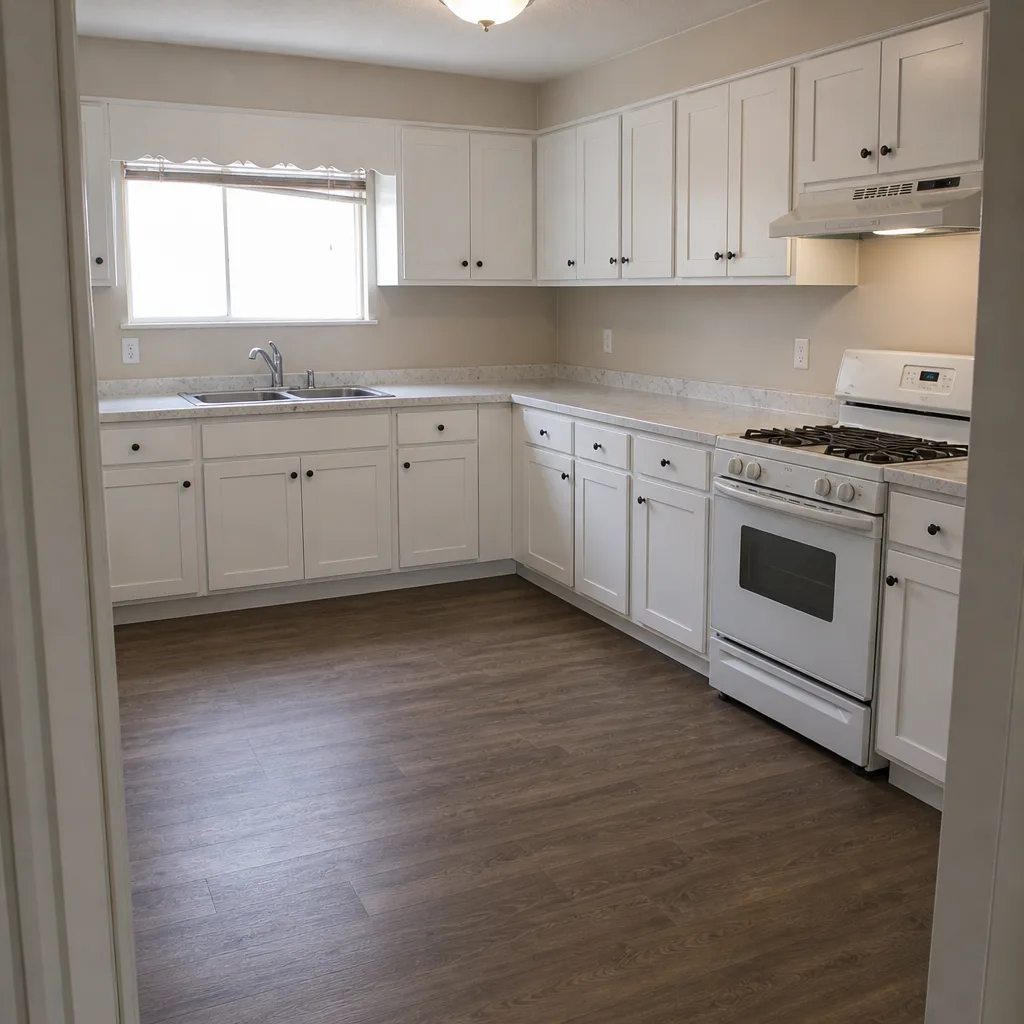
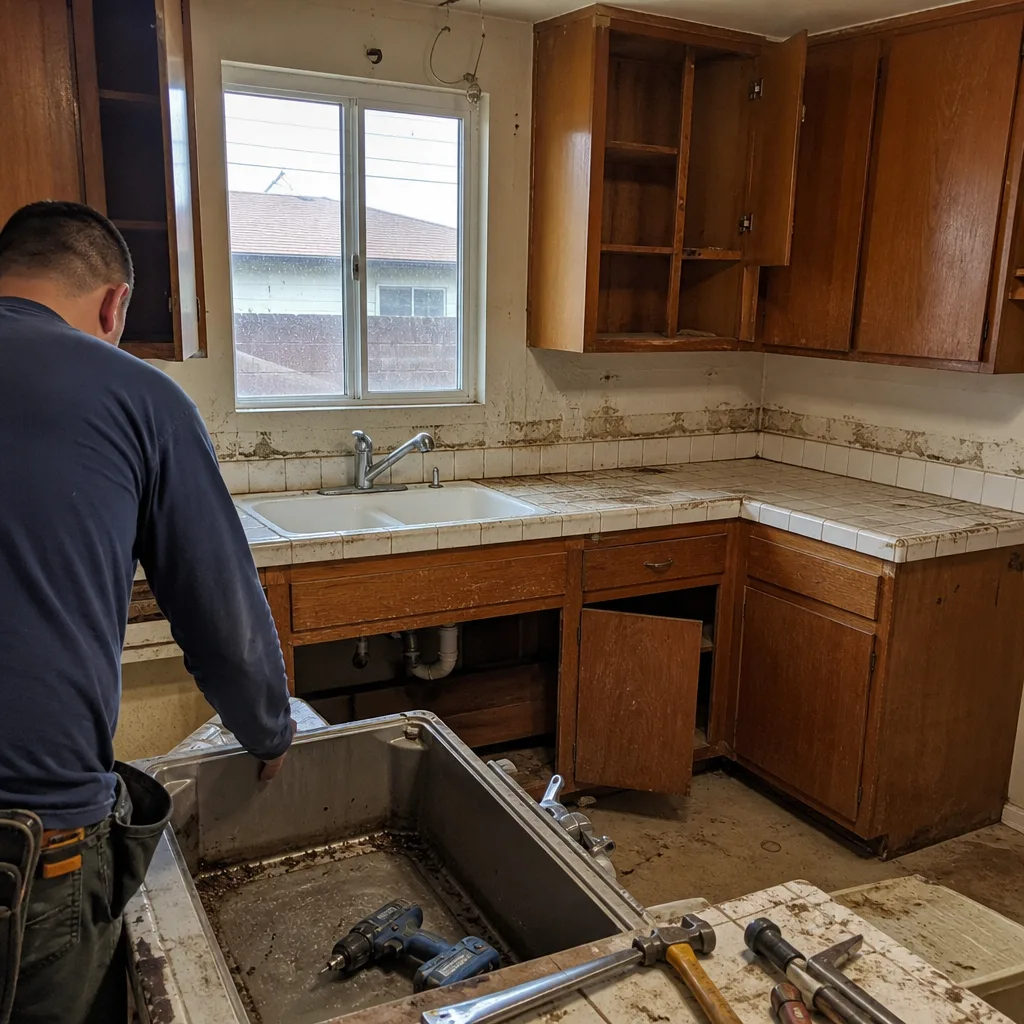
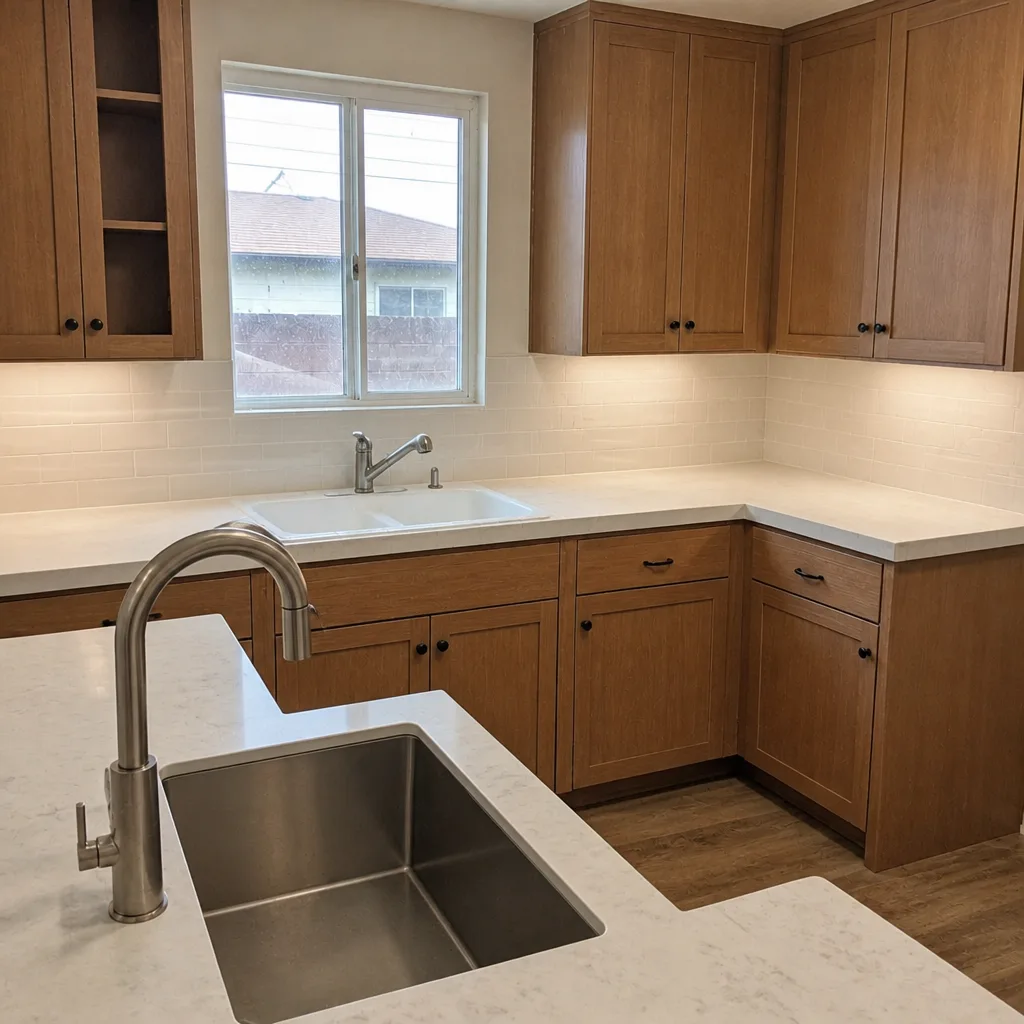
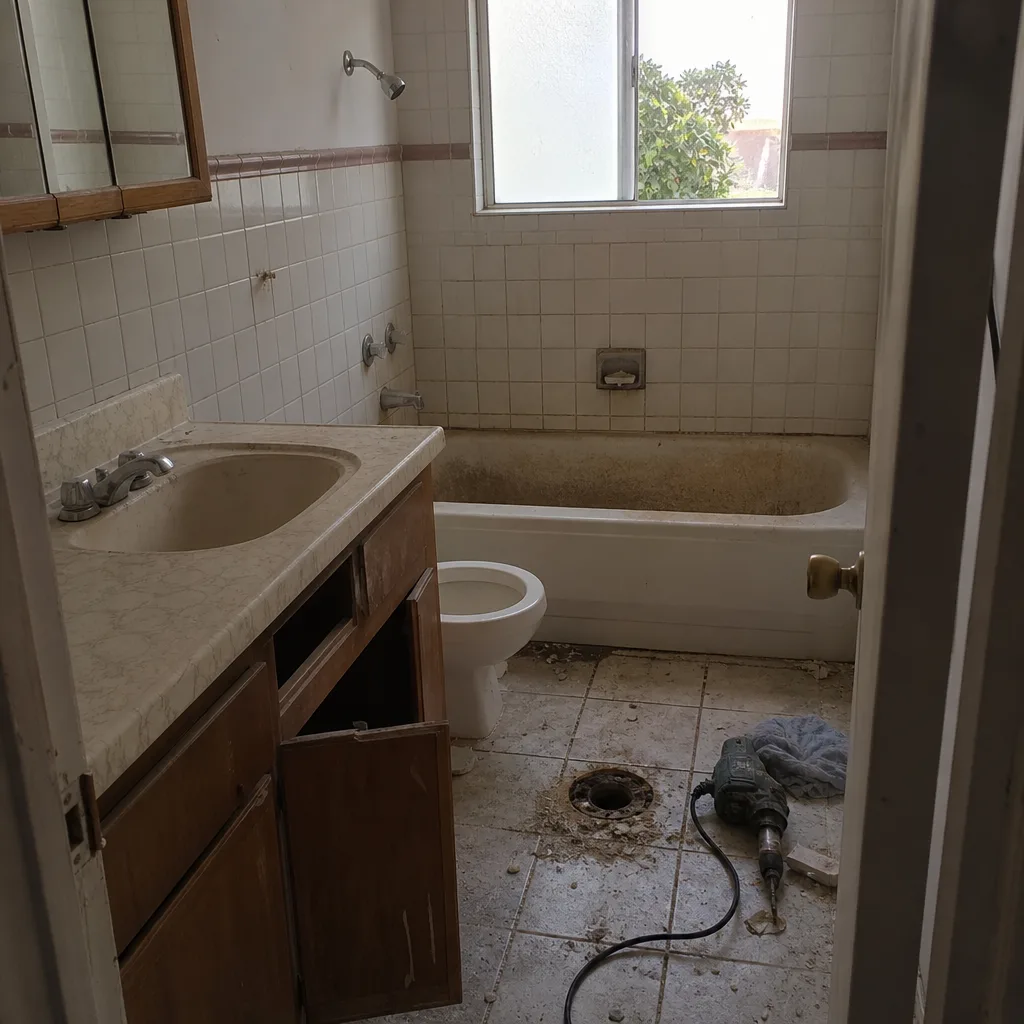
See the difference
 Before
 After
 Before
 After
 Before
 After
When to Call a Professional
Some fence work is worth a contractor, and some definitely isn’t. If the fence shares a property line you’re not certain about, or your parcel’s zoning requires a permit, or the run includes a gate that has to swing cleanly for a decade, call in a pro. Same if the site has a slope, a retaining wall, or a corner post that has to carry a full panel load. Those are jobs where a bad install shows up in three months and a good one shows up in three decades. We’ll also flag this: on any dig, treat buried utilities as live until proven otherwise, and never break ground on a line marked by DigAlert. Groundwork Construction Co. of Inglewood offers free estimates in Inglewood, and our team walks the property, measures the actual line, and puts post depth and permit requirements on paper before a price goes on a page. That’s the difference between a bid you can compare and one you have to trust. Call (833) 842-7204 to schedule yours.
Frequently Asked Questions
The biggest warning sign is a quote with no post depth or footage line. A contractor who doesn’t name the depth in inches and the total linear footage on paper has either not measured the job or is leaving room to cut corners on install day. Ask for both, and ask what concrete mix and footing diameter they’ll use. If any of those four numbers are missing, get a second bid before you sign.
Roughly one-third of the post length below grade is the working rule for wood fences in Inglewood and the surrounding Los Angeles area. On an 8-foot post, that’s 2.5 to 3 feet in the ground with an 8-to-12-inch footing. Sandy or fill-heavy soil near the coast may need deeper. If a bid says 18 inches on a 6-foot privacy fence, that’s the lowball tell.
Yes, on any dig that could cross a public utility line, and the contractor should call it as part of the job. DigAlert marking takes around two business days, and a good bid builds that into the schedule. Private lines on your property (sprinklers, landscape lighting, gas stub-outs) need to be marked separately, usually by the homeowner or a private locator. If your contractor never raised this, that’s a real red flag.
Gate sag and post movement usually show up within 30 to 90 days, and full leaning shows up by the second or third rainy season. Concrete that’s too wet and posts set too shallow both fail slowly, then suddenly. If you see a gate dragging at 60 days and the installer stalls on the fix, that’s the moment to document with dated photos and get a written punch list.
It depends on the height and location on the lot. Fences below a certain height along the front property line often go up without one, while taller privacy fences, corner-lot fences, and fences near driveways or alleys may require plan review. The rules vary by zoning, so the correct answer is to check your parcel, not to assume. A contractor who says “no permit ever” without looking at your address is guessing, and that guess becomes your cost if an inspector disagrees.
It covers our workmanship for two full years from the date of install. If the gate sags, a post moves, or a footing fails inside that window, we come back and fix it. That’s more than a decade and a half longer than the typical fence workmanship window most contractors carry. It’s stated in writing, it’s in the contract, and it’s the reason to compare warranties when you compare bids. Call (833) 842-7204 for a free estimate and we’ll walk you through what’s covered on your specific job.
The Bottom Line
The fence that fails in six months was failing in the bid. Post depth, footage, concrete mix, DigAlert, permits, and property lines are the six things that separate a real quote from a guess with a price tag. Read the bid for those six, watch the string line and the level on install day, and walk the job with a tape measure before you pay. If a contractor can’t put the details in writing, they can’t build to them. That’s the whole test, and it works on every fence job from a 40-foot side yard to an 800-foot perimeter. Groundwork Construction Co. of Inglewood is proud to serve homeowners across Inglewood with written specs, live-person answers 24/7, and a 730-Day Done Right Promise that backs every job in writing. Call (833) 842-7204 for your free estimate and design consult.
Written by the team at Groundwork Construction Co. of Inglewood.