Last updated November 18, 2026
Free written scope consultation - allowances, timeline, and change-order rules on paper before a single trade is scheduled
The Complete Windows & Doors Guide for Inglewood Homeowners
If your house sits within a couple of miles of LAX, your single-pane windows are quietly costing you money every month. We’re talking HVAC efficiency losses that run into four figures across a year, and most Inglewood homeowners never hear a number attached to it. Here’s the part that surprises people even more: the same address that leaks conditioned air to the flight path also sits inside a utility rebate zone that a lot of window contractors either don’t know about or don’t bother to explain. Replacing windows and doors in Inglewood is a different calculation than it is in Pasadena or Malibu, and this guide walks through the climate, the noise corridor, the permits, and the products that actually make sense for the homes in this city.
Quick Answer
Replacing windows and doors in Inglewood typically runs $850 – $1,900 per opening for quality dual-pane units and $2,400 – $6,500 per entry door, with sound-rated (STC 35+) glass adding 15 – 25% for homes under LAX flight paths. Homes in the city’s designated utility rebate zone can offset $200 – $800 per qualifying window upgrade through LADWP and SoCalGas efficiency programs, and most standard like-for-like replacements only require a building permit, not a structural review.
Styles & brands we work with
- Kitchen remodeling
- Bathroom remodeling
- Home additions & ADU
- Roofing
- Windows & doors
- Driveway & pavers
- Fence
Table of Contents
- Why Inglewood Is a Different Window & Door Market
- STC Ratings and the LAX Noise Corridor
- Utility Rebates for Inglewood Addresses
- Inglewood Permit Requirements and Structural Triggers
- Frame Materials in Inglewood’s Climate
- Matching Inglewood’s Architectural Styles
- Realistic Cost Estimates for Inglewood Homes
- What the Installation Timeline Looks Like
Why Inglewood Is a Different Window & Door Market
Most window replacement conversations get written for a generic Southern California climate, and that’s where the advice falls apart for Inglewood. This city sits in what’s called a coastal-influenced inland basin: cooler than the San Fernando Valley on summer afternoons but warmer and drier than Santa Monica or Culver City. The result is a temperature swing across a typical year that runs from the mid-40s on winter nights to the upper-90s during heat events, plus the marine layer that rolls through most mornings.
That swing matters more than most homeowners realize. Every degree of difference between inside and outside pushes conditioned air toward the weakest seal in your envelope, and older frames in Inglewood homes have had a lot of decades to work themselves loose. We see it in Morningside Park properties from the 1940s, in the 1950s ranch houses near Darby Park, and in the newer townhome builds closer to the Crenshaw line.
There’s a second layer specific to Inglewood: the noise. Flight paths from LAX pass directly over parts of the city, and the low-frequency rumble from departing aircraft penetrates glass differently than the higher-frequency traffic noise Caltrans studies usually measure. Standard dual-pane windows that perform fine in Torrance can feel barely better than single-pane in a house off Prairie Avenue under a runway departure lane.
- Marine layer humidity: faster frame degradation if drainage channels aren’t spec’d right
- Summer heat events: thermal expansion that stresses older vinyl extrusions
- Flight-path low-frequency noise: requires acoustic glass, not just dual-pane
- Salty air from the coast (milder here than at the beach, but present): accelerates hardware corrosion
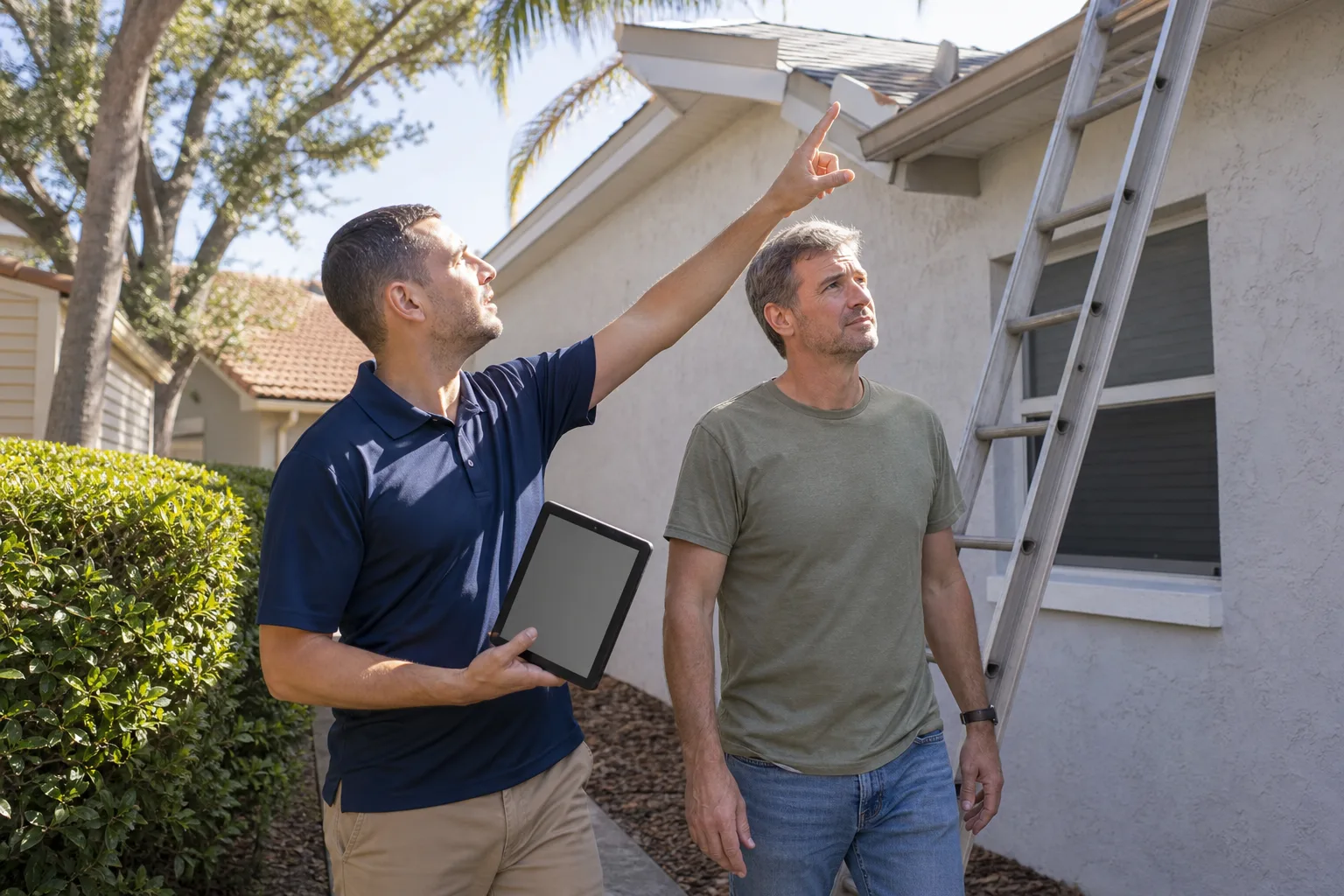
When we look at a windows and doors replacement project in Inglewood, we start with a walk-through that identifies exactly which rooms face the noise corridor and which face the sun. Those two orientations get different product specs. A kitchen facing the flight path needs a higher STC than a bedroom facing the interior courtyard.
STC Ratings and the LAX Noise Corridor
STC stands for Sound Transmission Class, and it’s the number that actually predicts how much aircraft noise you’ll hear inside after the swap. It’s measured on a scale where each 10-point increment roughly halves the perceived loudness. A single-pane window from 1962 typically scores in the STC 25 – 28 range. Basic dual-pane gets you to STC 30 – 33. Acoustic laminated glass with a dissimilar-pane configuration lands at STC 38 – 42. The jump from a 1960s single-pane to a well-spec’d acoustic unit is dramatic, and the difference between STC 33 and STC 40 is the difference between “I can hear the planes” and “almost silence.”
Here’s what that translates to on the ground in Inglewood. Homes in the flight path immediately north of Century Boulevard, along the Manchester Square and Morningside Park edges, benefit most from STC 38+ laminated glass. Homes further south, in the neighborhoods closer to downtown Inglewood and the new SoFi corridor, can usually satisfy comfort with STC 32 – 35 dual-pane because the aircraft noise is attenuated by distance and intervening structures.
A few practical notes from our installs:
- Laminated glass beats tempered for noise: it’s a plastic interlayer that damps vibration, and it also offers better security glass performance
- Asymmetric panes (e.g., 3mm outer / 6mm inner) outperform symmetric setups by 3 – 5 STC points at the same cost
- Frame quality matters more than glass quality for real-world performance: a gap around a sealed acoustic pane kills the rating
- Double-hung windows lose 3 – 5 STC vs. fixed or casement because of the sliding sash interface
- Door seals on entry doors need to match the window spec or you’ve built an acoustic wall with a hole in it
When we spec acoustic windows in Inglewood, we ask for the manufacturer’s certified STC test data, not just the marketing claim. Some brands label a unit “sound-rated” when it clears STC 31, which isn’t going to cut it in a flight path. Andersen and Marvin both offer certified acoustic configurations with published test reports; we’ve used both on Inglewood projects where the homeowner wanted documented performance.
Utility Rebates for Inglewood Addresses
This is the section that most Inglewood window contractors skip because the paperwork takes time. But the dollars are real. Inglewood addresses fall within LADWP’s service territory for electricity and SoCalGas’s for natural gas, which means a given home can qualify for both efficiency incentive streams depending on the improvements.
What we’ve seen reliably apply to Inglewood replacement projects:
- LADWP residential efficiency rebates for qualifying high-performance windows and sliding glass doors, generally in the $200 – $800 range per opening depending on U-factor and SHGC thresholds (U-factor ≤0.30 and SHGC ≤0.25 often unlock the top tier)
- SoCalGas incentives for envelope improvements that reduce heating load, occasionally stackable with LADWP programs in high-performance whole-home upgrades
- Federal 25C tax credits for qualifying windows and doors meeting current ENERGY STAR Most Efficient criteria, capped annually at the federal level
- Utility financing for projects bundled with HVAC or other efficiency work
The catch: rebates are tied to specific product certification numbers, and not every window you’d want for noise also qualifies for peak efficiency rebates. There’s often a trade-off where the acoustic-optimized glass carries a U-factor a hair above the rebate threshold. Our approach on Inglewood projects is to spec the glass for the room’s actual dominant problem (noise vs. heat gain vs. solar control) and then structure the rebate paperwork around what legitimately qualifies. We tell homeowners up front: the rebate check arrives weeks after install, not on the day of sale, so budget accordingly.
The current 0% financing for 18 months and the standing $1,000 off projects over $10,000 can take care of the cash-flow gap while the rebate works through the system, which is one of the practical reasons we mention those programs on any Inglewood windows and doors project over that threshold.
Inglewood Permit Requirements and Structural Triggers
Standard replacements in Inglewood require a building permit when the opening size or configuration changes, when the unit’s attachment method changes, or when the property sits in a designated historic overlay. Like-for-like replacements in the same rough opening with the same glazing area often qualify for an over-the-counter permit, but Inglewood’s Building & Safety division has become more precise about what counts as “like-for-like” in the last few years, and what used to be a handshake now needs documentation.
Here’s what actually triggers a full plan review rather than an OTC permit:
- Enlarging or reducing the rough opening by more than a couple of inches in either dimension
- Changing from a fixed window to an operable type (or vice versa) if egress or ventilation calculations shift
- Adding or relocating a door in an exterior wall, which brings in egress, landing, and header framing checks
- Structural modifications to the wall framing, header, or cripple studs beyond simple replacement
- Historic district properties where exterior appearance is regulated separately
- Balcony or second-story sliding doors with new egress requirements
- Any change to a load-bearing wall opening (this is the big one, and it requires a licensed structural engineer)
One detail worth flagging: Inglewood follows the current California Building Code and Title 24 energy compliance requirements, and Title 24 compliance on replacement windows is verified through the permit process. If a bid comes in without any mention of the Title 24 compliance form (the CF1R for prescriptive or the performance path documentation), that’s a red flag. The permitting isn’t a bureaucratic annoyance; it’s how you make sure the window you buy actually performs as specified by code and that a future buyer’s inspector won’t find a stack of unpermitted work.
We pull permits and pass inspections on every Inglewood project that requires them, because a permit-less install creates a disclosure headache at resale. That’s not a sales line; it’s the reality of selling homes in this market.
Frame Materials in Inglewood’s Climate
Frame material choices get made in showrooms on a sunny Saturday, but they perform in the real Inglewood climate on a Tuesday in August and a Thursday in January. Each material has a different behavior profile here that doesn’t show up in the marketing materials.
Vinyl (uPVC)
Vinyl is the most common choice in Inglewood for cost reasons, and quality vinyl performs fine. But this isn’t Palm Springs or Long Beach. The temperature swing in Inglewood is moderate enough that mid-grade vinyl won’t crack or warp, but the marine layer humidity means drainage channel design matters more than in drier inland markets. Look for multi-chamber extrusions with weeps, and reject any vinyl that doesn’t have a decent thermal expansion coefficient spec.
Fiberglass
Fiberglass has become the sleeper pick for Inglewood homes in the flight path because it’s dimensionally stable and the frame itself can be filled with acoustic insulation. On a north-of-Century property we worked on, a fiberglass frame paired with laminated glass outperformed a wood frame at the same price. Fiberglass also holds paint better than vinyl in a climate that runs through repeated wet-dry cycles.
Wood and Wood-Clad
Wood and wood-clad aluminum are the options for Inglewood’s historic and mid-century properties where HOAs or the city’s design review call for period-appropriate appearance. The maintenance load in this climate is moderate: the marine layer dries out fast enough that rot isn’t the problem it would be in Santa Cruz, but annual sealing is non-negotiable.
Aluminum and Steel
Thermally broken aluminum is the right call for modern builds near downtown Inglewood and for view-heavy installations; it takes the slimmest sightlines and holds its finish longest. Steel is rare in single-family work here but shows up in some 1960s commercial-to-residential conversions.
The short version: fiberglass and wood-clad for homes under the flight path and in historic zones; quality vinyl for cost-focused projects on the south side; thermally broken aluminum for modern builds and additions.
Matching Inglewood’s Architectural Styles
Inglewood has a genuinely mixed housing stock. There are 1920s Spanish Colonial bungalows in Morningside Park, 1950s ranch-style homes throughout the central flats, mid-century modern builds near the old aerospace corridors, and a wave of newer townhome and infill construction closer to the transit line. Matching the window style to the architecture isn’t a vanity; it’s the difference between a replacement that reads as an upgrade and one that reads as a renovation reminder.
The performance of that matching problem in Inglewood specifically comes down to these style pairings:
- Spanish Colonial: rectangular single-hung or fixed units with a shallow arch, wood or wood-clad frames, painted or stained dark; avoid modern vinyl profiles that disrupt the period proportion
- Ranch-style 1950s: aluminum slider and single-hung units with a horizontal emphasis; thermally broken aluminum or slim-profile fiberglass reads correctly here
- Mid-century modern: the toughest to match, because the originals were often floor-to-ceiling and use minimal framing; fixed panes with slim mullions and modern performance glass is the honest approach
- Contemporary infill: large fixed panes with operable casements or awning windows, dark powder-coated aluminum, high solar-heat-gain control
We’ve seen Inglewood homeowners try to force a period look with modern double-hung vinyl units and end up with something that looks off in photos and pricey to undo. The right answer is almost always to match the original massing and let the glass do the modern performance work. You can have a window that looks period-correct from the street and delivers STC 38 inside.
If you’re thinking about windows as part of a bigger addition, that same architectural continuity carries through to Home Additions & ADU in Inglewood, where new openings need to tie into existing style and existing structural loads.
Realistic Cost Estimates for Inglewood Homes
Here’s a line-item sense of what Inglewood windows and doors replacement actually runs in this market. Numbers reflect install, disposal, permit where required, and standard hardware. Historic, acoustic, or oversized units add on top.
- Standard dual-pane fixed or slider window (up to 20 sq ft): $850 – $1,400 installed
- Standard dual-pane operable window (single-hung, casement, awning): $1,100 – $1,900 installed
- Acoustic laminated window (STC 35 – 40, flight-path spec): $1,400 – $2,400 installed
- Oversized or architectural featured window (30+ sq ft, non-standard): $2,800 – $6,500 installed
- Standard entry door (fiberglass or steel, pre-hung): $2,400 – $4,200 installed
- Premium entry door (wood, fiberglass with sidelights, or tall): $4,200 – $8,500 installed
- Sliding glass patio door (standard 6-foot): $3,200 – $5,800 installed
- Sliding glass patio door (acoustic spec, flight path): $4,800 – $8,200 installed
- Permit filing (varies by scope, Inglewood jurisdiction): $350 – $1,200
- Rebate offsets (LADWP + federal stacked): ($200) – ($1,200) per opening when qualified
A typical whole-house Inglewood replacement of 12 – 16 openings lands in the $18,000 – $32,000 range for standard dual-pane, and $26,000 – $48,000 for acoustic-spec units on a flight-path property. Bigger entry-door and patio-door work tacks on top. Whole-house replacements that come in under $14,000 for a 12-opening home are either single-pane, low-end commodity, or missing something from the scope that you’ll pay for later.
The Groundwork Construction Co. of Inglewood home page has the current promotional framework, but the short version is this: 0% financing for 18 months and the standing $1,000 off projects over $10,000 change the timing math on a whole-house swap. We also offer a free project estimate and design consult, so you can compare a real line-item bid against whatever else you’re shopping.
What the Installation Timeline Looks Like
Most Inglewood window projects run in a predictable sequence. Here’s how we walk a homeowner through it, week by week, because surprises happen when the timeline is a mystery.
- Week 1: On-site measure and product selection. We measure every opening, walk the house with you, and lock the spec per orientation (noise vs. solar). This is when the acoustic decision gets made room by room.
- Week 1 – 2: Permit filing. For Inglewood jurisdiction, filing takes a few days to a couple of weeks depending on whether it’s OTC or over-the-counter with plan review. Title 24 documentation gets submitted with the permit.
- Week 3 – 6: Manufacturing lead time. Standard sizes arrive in 3 – 4 weeks; acoustic and custom units can run 5 – 7 weeks. This is the biggest unknown and where some contractors over-promise.
- Week 6 – 7: Installation. A 12 – 16 opening whole-house swap typically installs in 2 – 4 working days. Interior trim and exterior flashing happen the same visit as the unit install.
- Week 7 – 8: Inspection and closeout. Inglewood building inspection on the permit, final walkthrough with you, rebate paperwork submitted, warranty documentation handed over.
Doors follow the same rough schedule. Entry doors and patio sliders install in a single day for a single unit. If your timeline needs to compress, we work backward from when you want the install to be complete, and if the lead time can’t be hit we tell you up front rather than after the deposit.
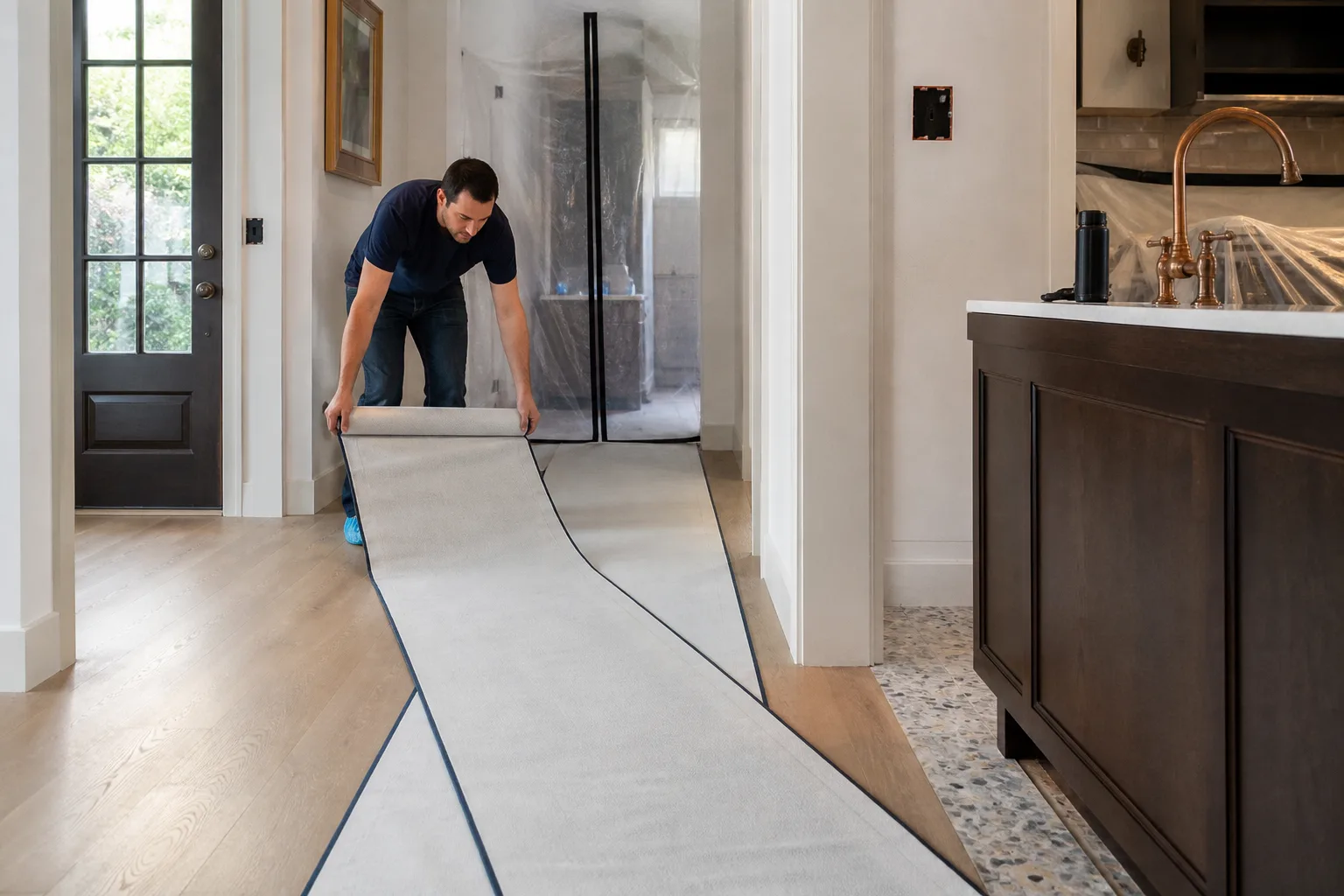
One detail: most jobs here are completed in a single visit per opening group, which means each day’s crew finishes a room or a floor before moving on. You’re not living in a sealed-off construction zone for weeks, and the home stays usable throughout. Every one of our technicians is background-checked and arrives in uniform, and if you’re considering a larger scope where windows tie into exterior work, Fence Installation in Inglewood and Driveway & Pavers in Inglewood are the projects most often sequenced with envelopes.
We back all of it with the 730-Day Done Right Promise: if anything isn’t right, we make it right, and the guarantee runs two full years past the install.
Common Mistakes to Avoid
- Buying on U-factor alone without considering STC. A window that hits the rebate tier but scores STC 30 will leave a flight-path home still listening to planes at 5 a.m. Spec each opening for its dominant problem.
- Skipping the permit because “it’s just a replacement.” Inglewood inspections catch unpermitted swaps at resale, and the retroactive permit is more expensive than the original one. Plus the Title 24 compliance verification never happens without it.
- Mixing acoustic and non-acoustic windows in the same room. A single STC 32 opening in a bedroom otherwise equipped with STC 38 units sets the room’s performance floor. The weakest link wins.
- Assuming vinyl behaves the same everywhere. Inglewood’s marine layer and summer heat swings stress vinyl drainage differently than coastal or desert zones. Cheap extrusions fail fast here.
- Forgetting to file the rebate paperwork before install. Most LADWP and SoCalGas incentives require pre-approval or certified product documentation locked in before installation. Once the units are in, some rebates close.
- Buying “sound-rated” windows without a certified STC report. Some brands label units STC 30+ as sound-rated; a certified report names the test method and the configuration tested.
- Letting architectural style dictate lower performance. Period-correct appearance and modern acoustic/thermal performance can coexist. Wood-clad aluminum and fiberglass both allow it.
See the difference
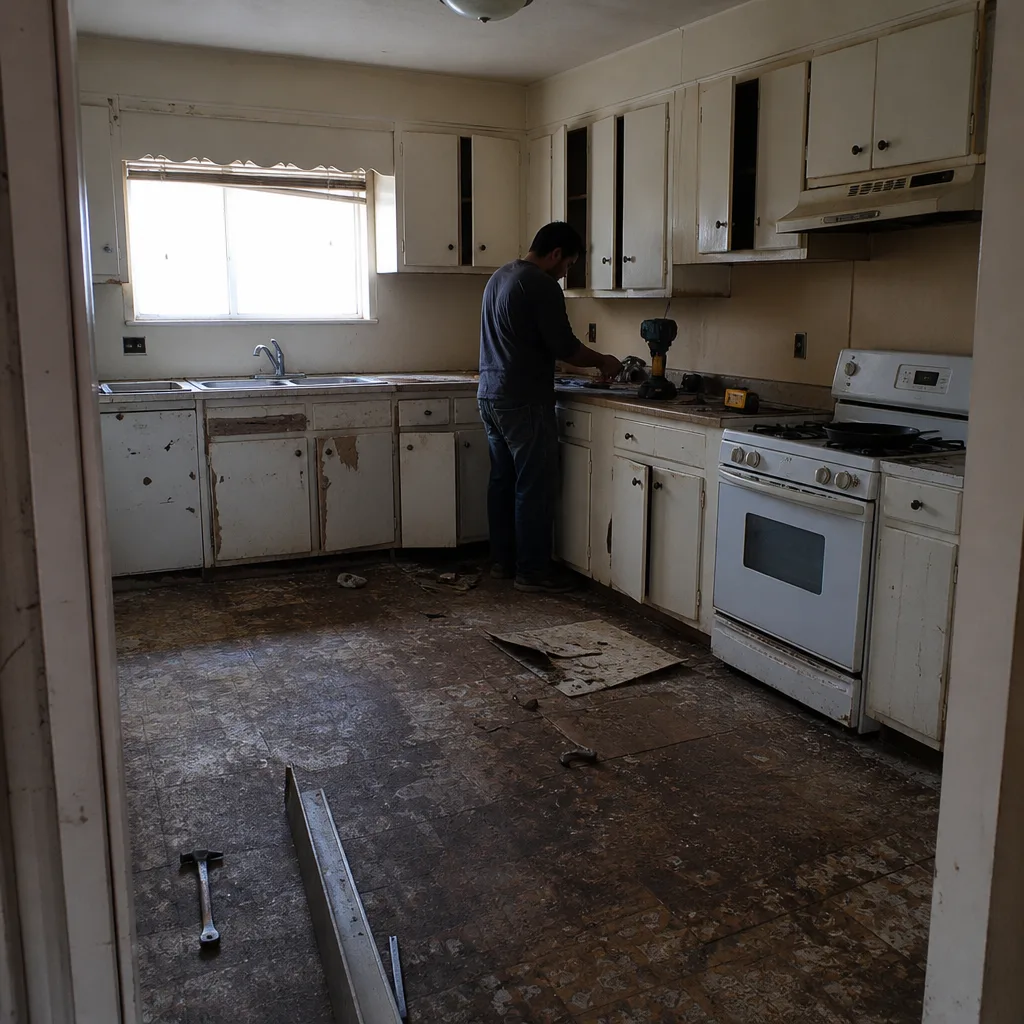 Before
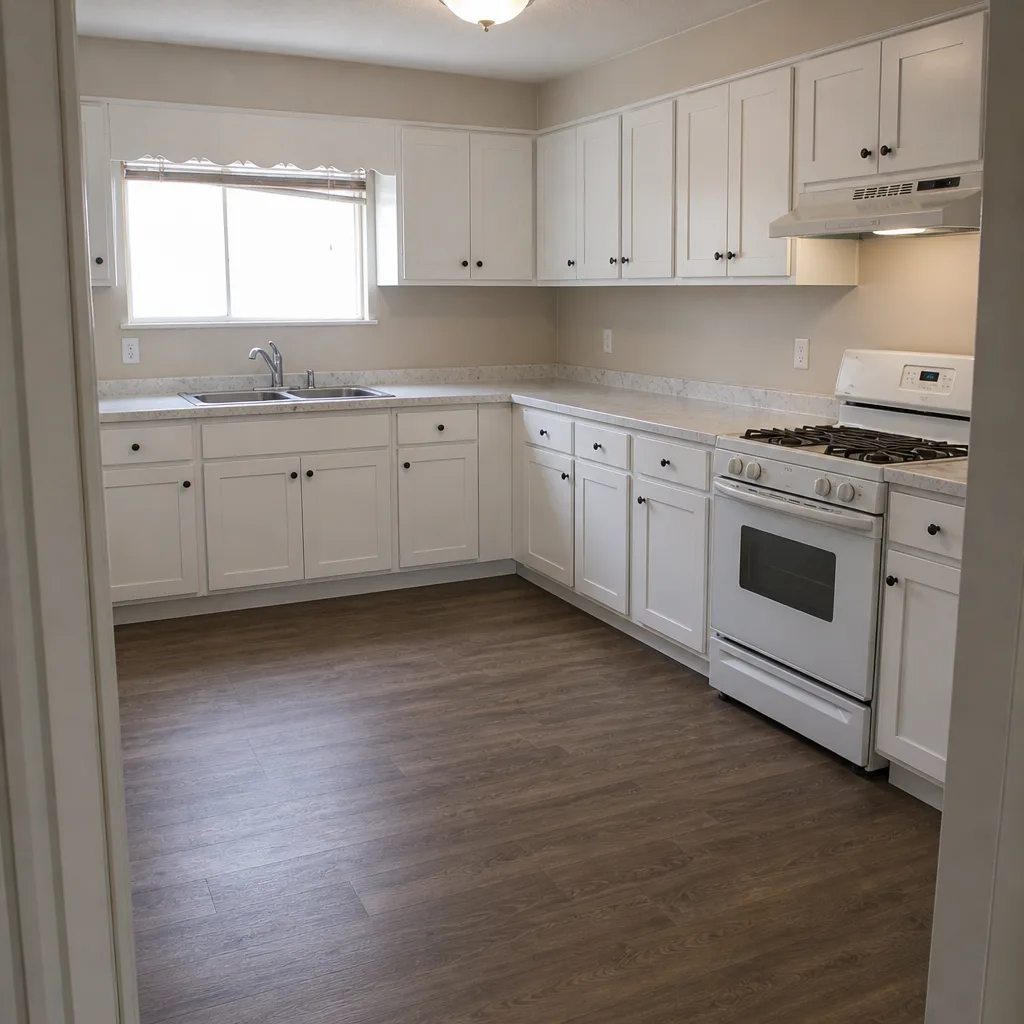 After
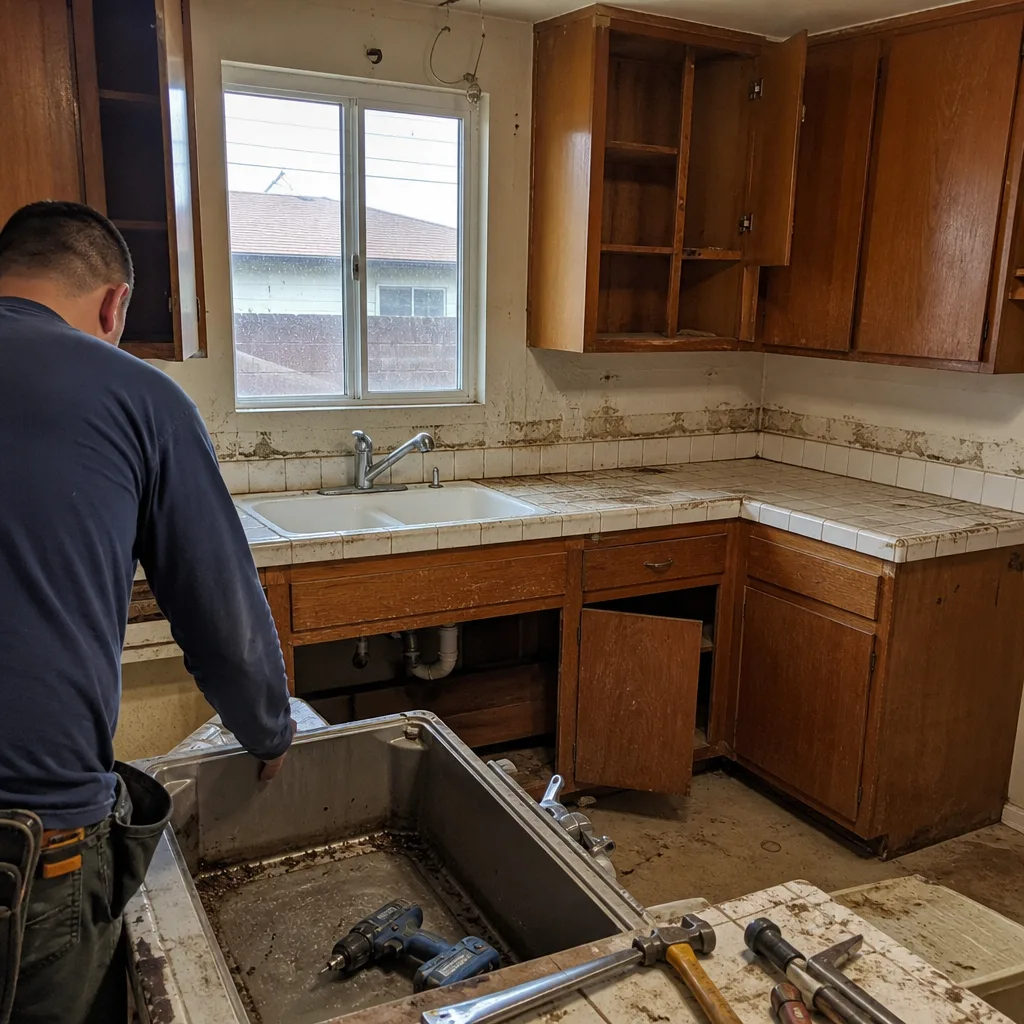 Before
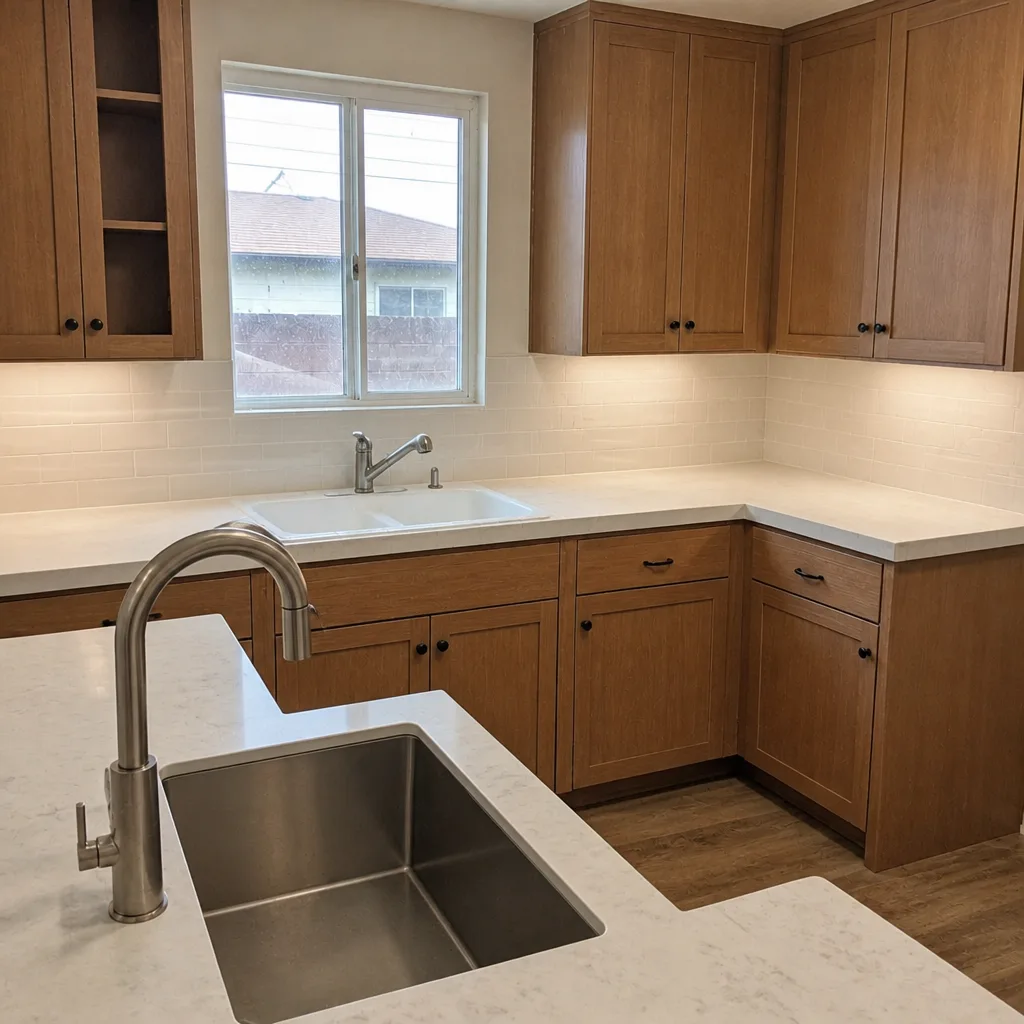 After
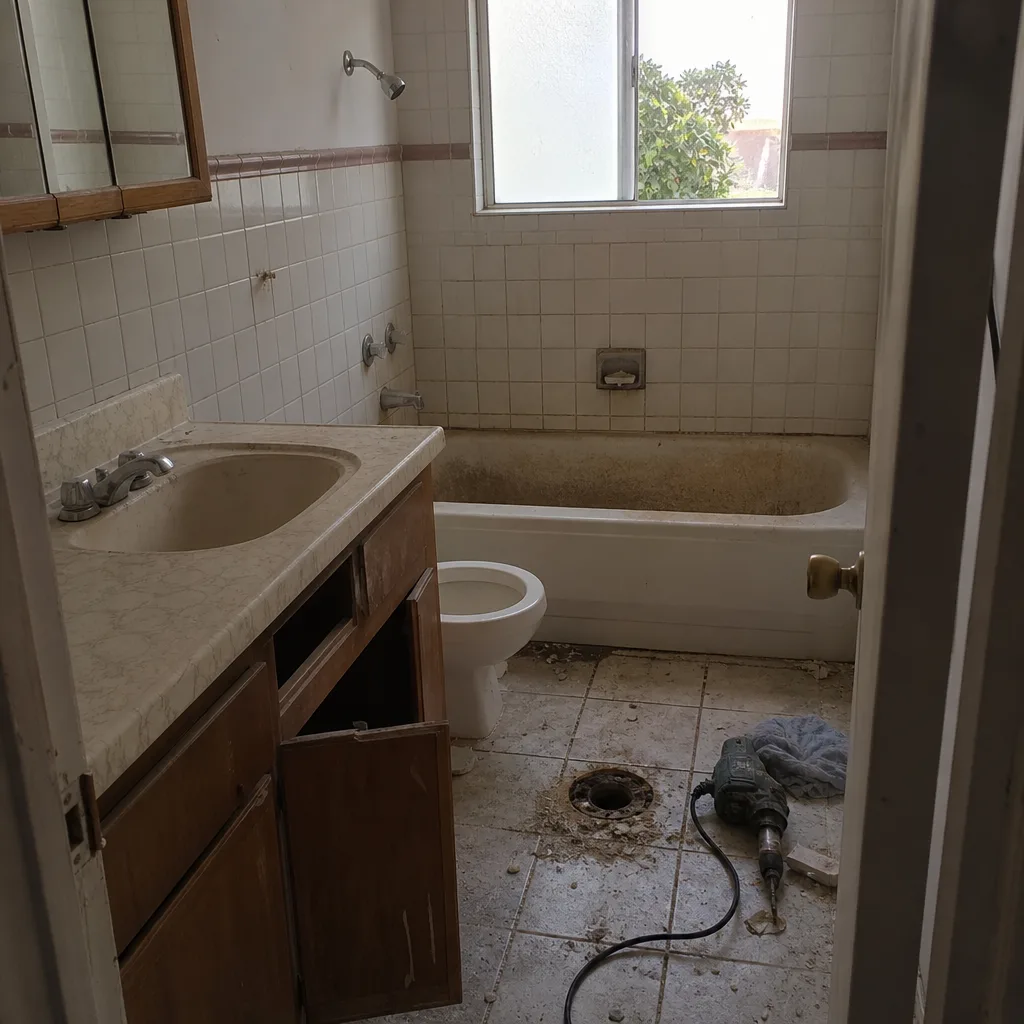 Before
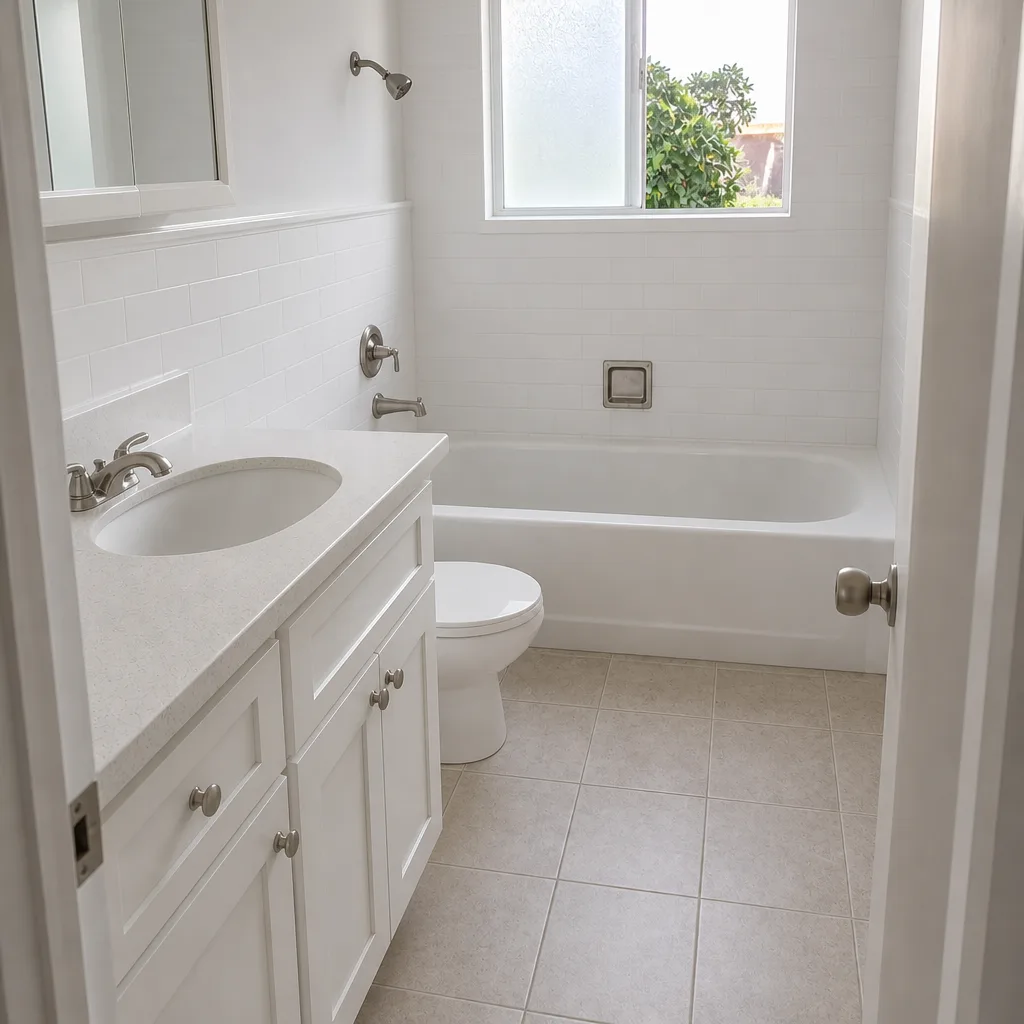 After
When to Call a Professional
Window and door replacement is not a job where a YouTube video bridges the gap. If any of these describe your situation, you want a professional on site: your openings are larger than standard, the wall is load-bearing, you’re in a historic overlay, the existing frame is showing rot or water damage, the installation needs Title 24 compliance documentation, or you’re trying to hit an STC rating on an LAX flight-path home. Doors that involve thresholds, side lights, or sealing against weather intrusion also fall into pro territory for the same reason. The cheap out is almost always a re-do, and the re-do costs more than the professional install would have.
Groundwork Construction Co. of Inglewood offers free estimates in Inglewood and a design consult with every project. Call (833) 842-7204 to schedule a walk-through. Calls are answered by a live person, 24/7, with no voicemail and no waiting until Monday morning.
Frequently Asked Questions
Windows and doors replacement in Inglewood runs $850 – $1,900 per standard opening and $2,400 – $6,500 per entry door, with acoustic glass adding 15 – 25% on flight-path homes. A typical whole-house project of 12 – 16 openings comes in around $18,000 – $48,000 depending on spec. Call (833) 842-7204 for an exact quote, with a free line-item estimate and no change orders once work begins.
Yes, in most cases you need an Inglewood building permit for window replacement, even for like-for-like swaps, and the permit process verifies Title 24 energy compliance. Enlarging openings, changing window types, or adding doors triggers a fuller plan review that can require a licensed structural engineer. We pull the permits and pass the inspections on every Inglewood project that requires them.
For homes directly under LAX departure lanes, we recommend STC 38 – 42 windows with laminated glass, while homes further south in Inglewood can typically reach comfort at STC 32 – 35. Each 10-point STC increase roughly halves perceived loudness, so the jump from an old single-pane to STC 40 is dramatic. Specifying frame and door seals to match the glass is what actually delivers the rating; call (833) 842-7204 to have us evaluate your specific location.
Many Inglewood addresses qualify for LADWP and SoCalGas window efficiency rebates, generally $200 – $800 per qualified opening depending on the U-factor and SHGC thresholds met. Federal 25C tax credits can stack on qualifying units. Pre-approval and product certification paperwork must be filed before install for most programs, so it’s worth locking in the spec early; call (833) 842-7204 and we’ll walk through the rebate math on your project.
A whole-house Inglewood window replacement of 12 – 16 openings typically runs 6 – 8 weeks from contract signing to final inspection, with about 2 – 4 days of actual installation on site. Standard-size units arrive in 3 – 4 weeks, acoustic and custom units in 5 – 7 weeks, and permit filing adds 1 – 2 weeks. We walk every homeowner through the schedule up front so there are no surprises mid-project; call (833) 842-7204 to get a project-specific timeline.
Replacing single-pane windows with high-performance dual-pane units typically cuts HVAC-related heat gain and loss by 20 – 30% in Inglewood homes, and the impact is largest in flight-path properties where old frames leak both air and noise. The exact savings depend on the size of your home, the age of the HVAC system, and the orientation of the largest glazed areas. Call (833) 842-7204 and we’ll ballpark the impact during a free estimate.
The Bottom Line
Windows and doors replacement in Inglewood isn’t the same job it is in Pasadena or Malibu. The LAX noise corridor, the utility rebate zone keyed to LADWP and SoCalGas, the Inglewood permit requirements that attach to Title 24 compliance, and the mixed architectural stock that runs from Spanish Colonial through mid-century modern all change which products make sense per opening. Spec each window for the room’s dominant problem, file rebate paperwork before install, pull the permit, and match the architecture. Groundwork Construction Co. of Inglewood handles all of it with upfront pricing, background-checked technicians in uniform, and a 730-Day Done Right Promise on the workmanship side. Call (833) 842-7204 to schedule your free estimate and design consult.
Written by the team at Groundwork Construction Co. of Inglewood.