Last updated November 18, 2026






Free written scope consultation - allowances, timeline, and change-order rules on paper before a single trade is scheduled
Construction Emergency Preparedness Guide for Inglewood Homes
When a retaining wall shows active movement after a rain event, most homeowners waste 48 critical hours trying to figure out who to call and whether it’s really an emergency. That delay is expensive. In our experience across Inglewood, the difference between a $3,000 drainage fix and a $40,000 wall rebuild usually comes down to how quickly someone recognizes the pattern and acts. Construction emergencies in Inglewood follow predictable tracks: saturated clay soils, aging hillside drainage, and sudden foundation cracks after heavy winter storms. This guide walks you through the five most common emergencies, the exact order of calls to make, how to document damage so your insurer pays, and how to hire an emergency contractor without getting taken advantage of. Read it before you need it.
Quick Answer
A construction emergency in Inglewood is any condition that threatens structural safety or will worsen rapidly without intervention – active soil movement, a widening foundation crack, a roof failure, or storm drainage backing into the structure. The right response is: secure people first, photograph everything before you touch it, then call your insurance company and a licensed contractor in that order. Temporary measures like sandbags and tarps are safe; anything involving structural shoring, retaining wall repair, or foundation work requires a trained professional. Preparedness ahead of the event is what keeps the repair small.
Styles & brands we work with
- Kitchen remodeling
- Bathroom remodeling
- Home additions & ADU
- Roofing
- Windows & doors
- Driveway & pavers
- Fence
Table of Contents
- The Five Most Common Construction Emergencies in Inglewood Homes
- The Emergency Response Decision Tree: Who to Call and in What Order
- How to Document Structural Damage to Protect Your Insurance Claim
- Temporary Stabilization: What Homeowners Can Safely Do and What Makes It Worse
- How to Vet an Emergency Contractor in Inglewood Under Pressure
- Pre-Season Preparedness: What to Check Before the Rains Arrive
- After the Emergency: Turning a Repair Into a Long-Term Fix
The Five Most Common Construction Emergencies in Inglewood Homes
Inglewood sits on a mix of clay-heavy soils and older alluvial ground, and much of its housing stock went up between the 1920s and the 1960s. That combination produces a narrow set of recurring failures. If you own a home here, these are the five emergencies you’re most likely to face, ranked by how often we see them.
- Retaining wall failure after rain. The classic Inglewood scenario: three or four days of steady winter rain, then a wall in the backyard starts leaning, bulging, or shedding soil at the base. Saturated clay pushes hard against a wall that was never designed for that hydraulic load. A wall that moves two inches in a week is a genuine emergency.
- Sudden foundation cracks. Not the hairline shrinkage cracks every older slab has. We mean a crack that widens visibly over days, or a stair-step crack running diagonally through brick or block. Expansive clay soils in Inglewood swell when wet and shrink when dry, and that cycle works foundation walls relentlessly.
- Storm drainage backup. Older homes here often tie roof drains and yard drainage into the same undersized lines. When a storm overwhelms them, water pools against the foundation or backs up into a garage or lower level. That’s an emergency because standing water against a foundation accelerates everything else on this list.
- Roof failure or active leak. A leak that’s dripping into a ceiling is urgent. One where the ceiling is sagging or bulging is an emergency – that’s trapped water and compromised structure, and it can fail without warning.
- Window and door failure under wind and water load. Older single-pane windows and degraded seals let driven rain in during winter storms. When water is entering around a frame, the fix window is short before interior framing gets wet.
Notice what these have in common: water. Nearly every construction emergency we respond to in Inglewood traces back to water finding a path it wasn’t supposed to take. That single fact should shape how you prepare.
The Emergency Response Decision Tree: Who to Call and in What Order
Panic makes people call the wrong party first, and the wrong first call costs money. Here’s the order that protects both your safety and your claim.
Step 1: Assess for immediate danger (first 10 minutes)
Is anyone hurt? Is there a gas smell, sparking, or a wall that could actually come down on a person or a vehicle? If yes, get everyone out and call 911. Nothing else matters until that’s handled.
Step 2: Stop the water or the active threat if you safely can
Shut off the water supply if a line is leaking. Move furniture and valuables away from the affected area. Place sandbags or a tarp where it’s safe to do so. Do not climb on a roof in the rain, and do not attempt to prop or shore a moving wall.
Step 3: Document before you clean up
Photograph and video everything before you move a single item. We cover this in detail in the next section because it’s where most claims go wrong.
Step 4: Call your insurance company
Open the claim early, even if you’re unsure it’ll be covered. Ask specifically whether the damage is classified as sudden and accidental (often covered) versus long-term deterioration or deferred maintenance (usually not). Get your claim number.
Step 5: Call 311 if it’s a public-side issue
If the water is coming from a street, a storm drain, a city easement, or a neighboring public right-of-way, Inglewood’s 311 line routes it to the right department. Document the report number.
Step 6: Call a licensed contractor for an assessment
For anything structural – the wall, the foundation, the roof structure – get a licensed professional on site to tell you what’s actually happening and what it will take to stabilize it. This is where an accurate read saves thousands.
How to Document Structural Damage to Protect Your Insurance Claim
Most homeowners under-document in the first 24 hours, and it’s the single biggest reason legitimate claims get reduced or denied. Insurers pay based on evidence of the condition at the time of loss. Once you’ve cleaned up or a contractor has started work, that evidence is gone. Here’s how to capture it properly.
- Shoot wide, then close. For each damaged area, take a wide shot that shows the whole room or yard for context, then a close shot of the specific damage. Include something for scale – a tape measure or a coin next to a crack.
- Video the walkthrough. Do a slow, narrated video walking through every affected area. Say the date, the time, and what you’re looking at out loud. This timestamped record is hard to dispute.
- Measure and record the crack or movement. Mark the current edge of a foundation crack or the top of a leaning wall with a pencil line and the date. Photograph it. Re-measure in 48 hours. Documenting that a crack grew from a quarter inch to three-quarters of an inch in two days is powerful evidence of an active, sudden event.
- Keep every receipt. Sandbags, tarps, a pump rental, a hotel night – keep it all. Many policies reimburse reasonable emergency mitigation costs.
- Don’t throw anything away. Damaged drywall, ruined flooring, a failed window – hold it until the adjuster has seen it or you’ve been told in writing you can dispose of it.
- Get a written contractor assessment. A licensed contractor’s written opinion of cause and scope carries real weight with adjusters. Ask for it in writing.
One more thing: photograph from outside too. Water stains on a foundation wall, soil erosion at a wall base, or a gutter that’s clearly separated from the fascia all tell the adjuster a story about how the water got in.
Temporary Stabilization: What Homeowners Can Safely Do and What Makes It Worse
There’s a real line between useful temporary measures and dangerous ones, and crossing it can turn a repair into a catastrophe – or void your coverage. Here’s the honest split.
Safe for homeowners to do
- Place sandbags or rolled tarps to redirect surface water away from the foundation.
- Move furniture, electronics, and valuables out of the affected zone.
- Put buckets under active drips and lay down towels to limit spread.
- Shut off the water at the main if a supply line is leaking.
- Clear debris from a storm drain on your own property if it’s safe to reach.
- Tarp a damaged roof section from the ground or a stable ladder, never in wind or rain.
Not safe – and often makes it worse
- Shoring or propping a moving retaining wall. A wall under active soil pressure can fail suddenly when you disturb the load. This is a job for a trained professional with proper equipment.
- Digging out the base of a leaning wall to “relieve pressure.” Excavating the toe of a wall removes the very resistance holding it, and walls have collapsed on homeowners doing exactly this.
- Climbing onto a wet or damaged roof. Fall risk on a good day, and a compromised roof is worse. Call a professional.
- Cutting into structural framing to relieve a bulge or sag. You don’t yet know what’s carrying the load.
- Patching a foundation crack from the inside to “stop” water. It hides the problem and can trap moisture that worsens the structure.
The pattern: you can manage water at the surface and protect your belongings. The moment it involves structure – walls, foundations, roof framing – stop and call a professional. Structural failures hurt people.
How to Vet an Emergency Contractor in Inglewood Under Pressure
Storm chasers count on the fact that you’re scared and in a hurry. The legitimate ones don’t. Here are the questions that separate a real emergency contractor from someone who’ll take your deposit and vanish.
- “Are you licensed and can I see the number?” Verify it against the state licensing board before any work starts. A legitimate contractor gives it to you without hesitation.
- “Will you put the scope and price in writing before work begins?” Emergency stabilization can be quoted on a short written scope even on the same visit. Vague verbal estimates are a red flag.
- “What exactly are you stabilizing today, and what’s the permanent fix?” A real contractor separates emergency measures from the permanent repair and explains both. Someone who wants to do the whole job on the spot without assessment is selling, not solving.
- “Do you pull the permits?” Structural repairs need permits. A contractor who suggests skipping them to “save time” is exposing you to real risk.
- “Can you give me two references from similar jobs?” Ask for recent Inglewood references on comparable work. Call them.
- “What’s your warranty in writing?” Get the workmanship guarantee in writing on the estimate. Our Groundwork Construction Co. of Inglewood home page spells out our 730-Day Done Right Promise – if it’s not done right, we make it right.
- “Are you asking for a large cash deposit up front?” Demanding a big cash deposit before any work is a classic storm-chaser move. Standard practice is a reasonable deposit tied to a written contract.
One more filter: a legitimate emergency contractor will tell you when something is not actually an emergency. If they’re pushing you to sign a full rebuild the same hour you call, get a second opinion before you commit to anything structural.
Pre-Season Preparedness: What to Check Before the Rains Arrive
The best time to deal with a construction emergency is the dry season. An afternoon of inspection in the fall can prevent the call in January. Here’s what to check on an Inglewood home before the winter storms.
- Walk the perimeter after the first rain and look for pooling. Water that stands against your foundation for more than a day is a problem. Note where it gathers.
- Inspect retaining walls for the early signs: a lean, a bulge, cracks that run through the blocks, soil slumping at the base, or weeds sprouting from joints. Any of these means get it looked at before the heavy rain.
- Check gutters and downspouts. Clogged gutters dump water right at the foundation. Make sure downspouts discharge several feet away from the house.
- Look at foundation walls for new or widening cracks. Mark existing hairline cracks with a pencil and date so you can tell new movement from old.
- Test window and door seals. Older windows and degraded seals let driven rain in. If you’re planning replacements, brands like ES Windows, Therma-Tru, and Mr-Glass are worth considering for storm performance – and it’s better to have that done before the rain, not during it.
- Clear your yard drainage and storm inlets. Make sure water has a path away from the structure.
If your inspection turns up a drainage or hardscape issue, our Driveway & Pavers in Inglewood team can address grading and surface water before it becomes a foundation problem. Fence lines are also worth a look – a fence on a failing retaining wall is a warning sign, and our Fence Installation in Inglewood service can evaluate and reset posts that have shifted with soil movement.
After the Emergency: Turning a Repair Into a Long-Term Fix
The emergency pass gets your home safe. The permanent repair is where you decide whether you’ll be doing this again in five years. Three principles guide that decision.
First, fix the cause, not just the symptom. A retaining wall that failed because water was loading it will fail again unless the drainage behind it is addressed. A foundation crack that opened because of poor grading will keep opening until the grading changes. Every permanent repair should start with a drainage and soils assessment.
Second, use materials that are built for the conditions. Inglewood’s clay soils and winter storms are hard on structures. Choosing quality materials and proven methods – the kind that carry a real warranty – pays back over the life of the home. We tie premium materials to our 730-Day Done Right Promise because the two go together: built to last, backed in writing.
Third, think about scope. A storm event that damages a retaining wall often reveals a drainage system, a fence, or a hardscape that’s also at the end of its life. If you’re already doing major work, it’s worth considering whether related improvements make sense now. For projects that expand scope – an added room, a rebuilt garage, a second unit – our Home Additions & ADU in Inglewood team can help you plan a repair that also adds long-term value.
Common Mistakes to Avoid
- Waiting 48 hours to see if it gets worse. Active soil movement doesn’t plateau. The window to make a small fix closes fast, and in Inglewood’s clay soils it closes faster than most homeowners expect.
- Calling a contractor before your insurer. Get the claim opened first so the adjuster sees the damage in its original state. Reversing this order can cost you the claim.
- Cleaning up before documenting. The single most common and most expensive mistake. Photograph and video everything before a single item moves.
- Digging out the base of a leaning wall. It feels like relieving pressure; it’s removing the wall’s support. This is how walls come down on people.
- Skipping the structural assessment and going straight to cosmetic repair. Patching and painting over a foundation crack or a compromised wall hides the problem and lets it grow.
- Hiring on price alone from a door-knocker. Emergency pricing is a magnet for storm chasers. Verify licensing, get the scope in writing, and check references before any deposit.
- Skipping permits on “small” structural repairs. Unpermitted structural work can create problems at resale and complicate your insurance. Pull the permits.
See the difference
 Before
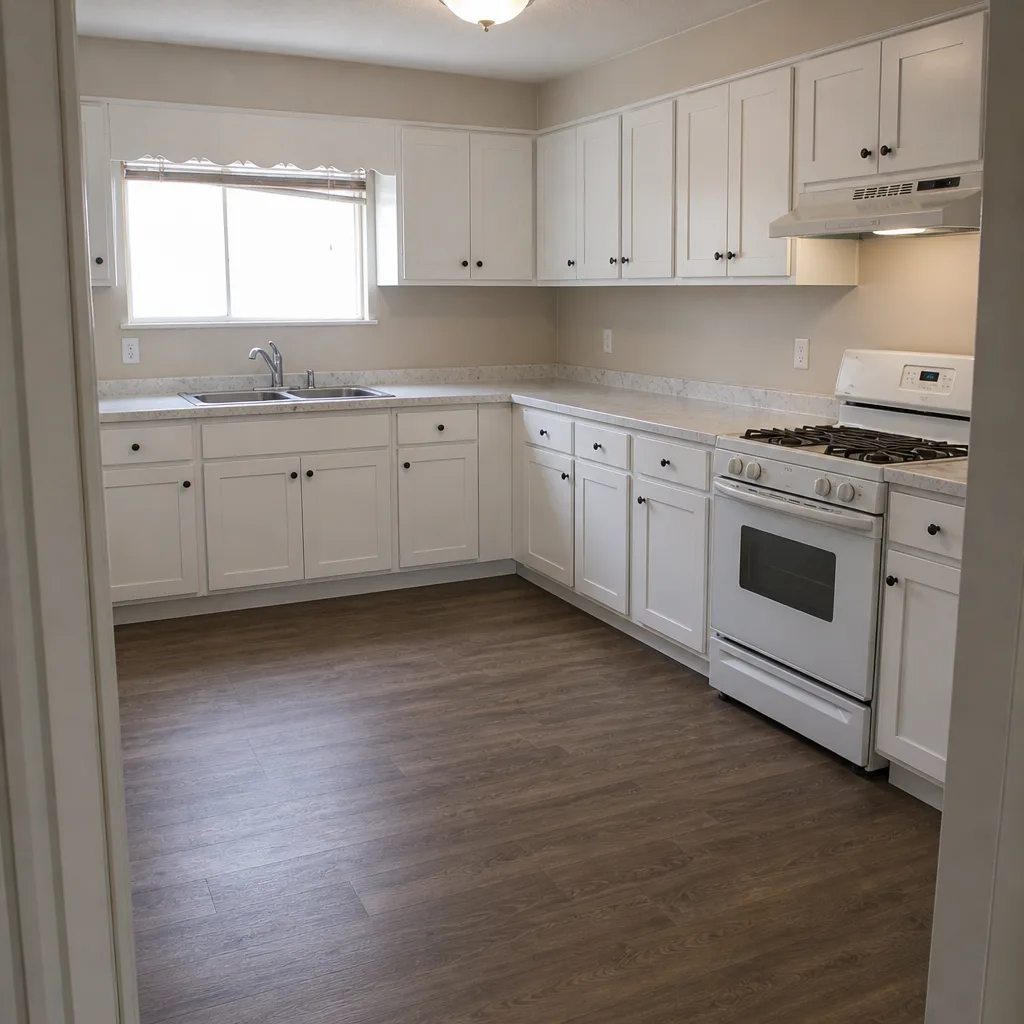 After
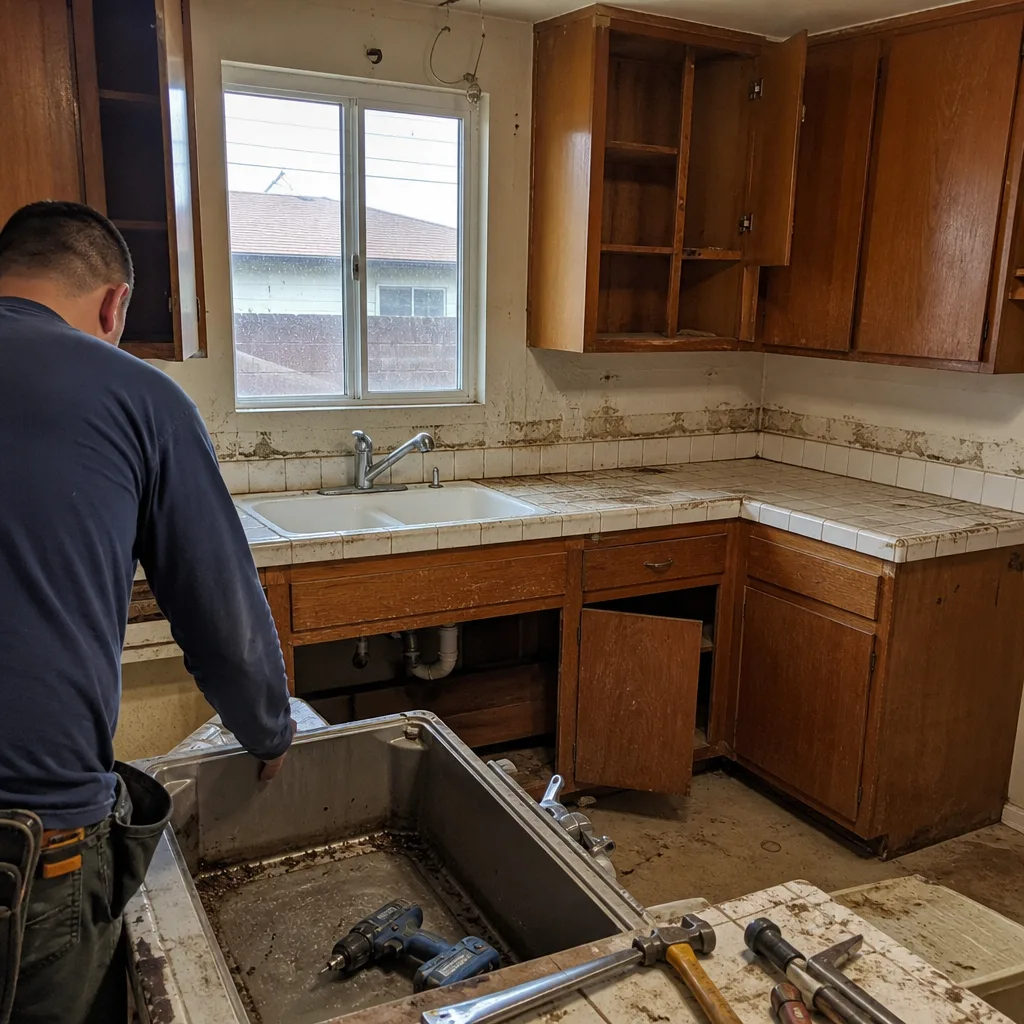 Before
 After
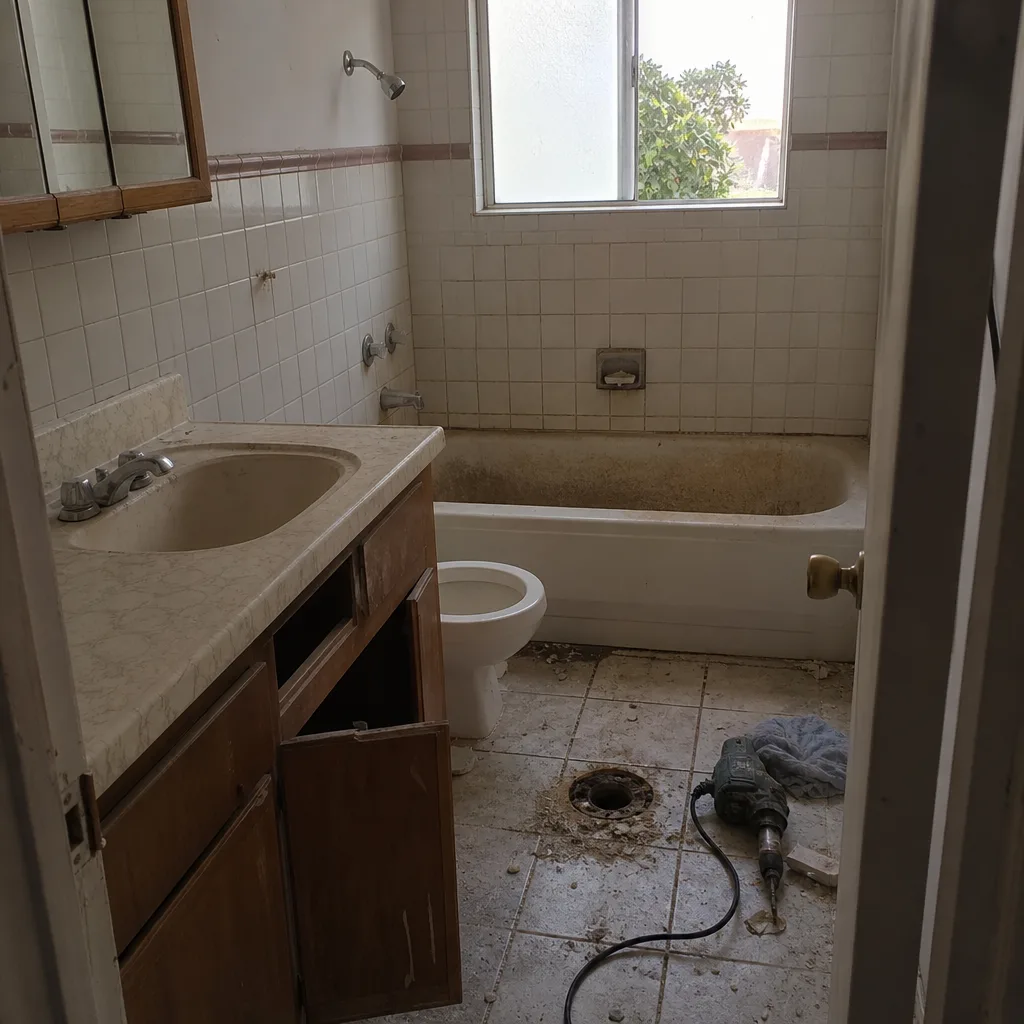 Before
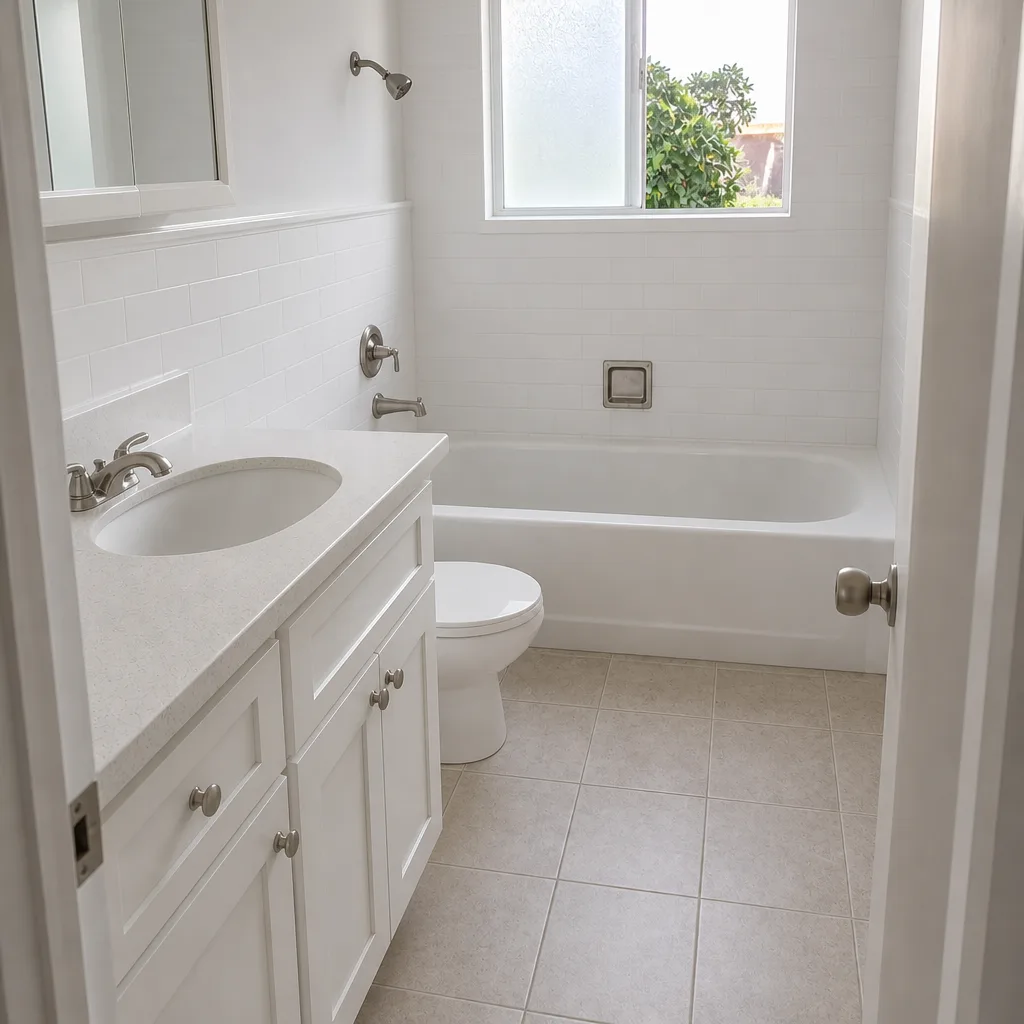 After
When to Call a Professional
Call a licensed contractor immediately when a retaining wall is visibly leaning, bulging, or shedding soil; when a foundation crack is widening over days or running in a stair-step pattern; when a ceiling is sagging from trapped water; or when water is actively entering a home through a window, door, or foundation and you can’t stop it from the surface. Call your insurer first for the claim, then get a professional assessment for anything structural. Cosmetic issues can wait; structure can’t. Groundwork Construction Co. of Inglewood offers free estimates in Inglewood – call (833) 842-7204. Calls are answered by a live person 24/7, so you’re not leaving a voicemail at 2 a.m. and hoping someone calls back Monday.
Frequently Asked Questions

A construction emergency is any condition that threatens structural safety or will worsen rapidly without intervention – active retaining wall movement, a widening foundation crack, a roof failure, or storm water entering the structure. If it involves structure or active water intrusion, it’s an emergency. If it’s cosmetic and stable, it can wait for a scheduled repair.
Call your insurance company first to open the claim and get a claim number, then call a licensed contractor for a structural assessment. The exception is genuine danger – gas smell, sparking, or a wall that could fall on someone – in which case you call 911 and get everyone out first. Documenting before cleanup protects the claim either way.
No. Shoring a moving retaining wall is not a homeowner task. A wall under active soil pressure can fail suddenly when you disturb the load, and people have been seriously hurt propping walls by hand. Safe homeowner measures are limited to redirecting surface water with sandbags and tarps and keeping people and vehicles clear. Call a professional for anything structural.
Emergency stabilization costs vary widely with the type and scale of the failure, so we won’t quote a number without seeing the site. What we can tell you is that the cost of stopping a problem early is a fraction of a full structural rebuild – and a free written estimate is the fastest way to get a real number. Call (833) 842-7204 to schedule a free estimate.
It depends on the cause. Damage classified as sudden and accidental is often covered; long-term deterioration, poor maintenance, and gradual earth movement are typically excluded. That’s why documenting the sudden nature of the event – with dated photos, measurements, and a contractor’s written assessment – matters so much. Ask your insurer directly how they’re classifying the damage.
Verify the license against the state board, require a written scope and price before work begins, ask whether permits will be pulled, ask for recent local references, and insist on a written workmanship warranty. Be wary of anyone demanding a large cash deposit up front or pushing a full rebuild before a proper assessment. A legitimate contractor will separate emergency measures from the permanent repair and put it all in writing.
The Bottom Line
Construction emergencies in Inglewood follow predictable patterns – saturated clay soils, aging drainage, and older foundations meeting winter storms – which means preparation pays off. Know the five common emergencies, follow the response order (secure people, stop the water, document everything, call your insurer, then a contractor), keep homeowner action limited to surface water and belongings, and vet your contractor before you need one. The homeowner who’s thought it through makes a measured call on a small repair; the one who panics spends the next month managing a full rebuild. Preparedness is the cheapest repair you’ll ever make.
When the moment comes, you want a contractor who answers, shows up, and puts the plan in writing. Groundwork Construction Co. of Inglewood offers free estimates, upfront pricing with no surprises, and a 730-Day Done Right Promise – if it’s not done right, we make it right. Call (833) 842-7204 for your free estimate. A live person answers 24/7.
Written by the team at Groundwork Construction Co. of Inglewood.