Free written scope consultation - allowances, timeline, and change-order rules on paper before a single trade is scheduled
Styles & brands we work with
- Kitchen remodeling
- Bathroom remodeling
- Home additions & ADU
- Roofing
- Windows & doors
- Driveway & pavers
- Fence
See the difference
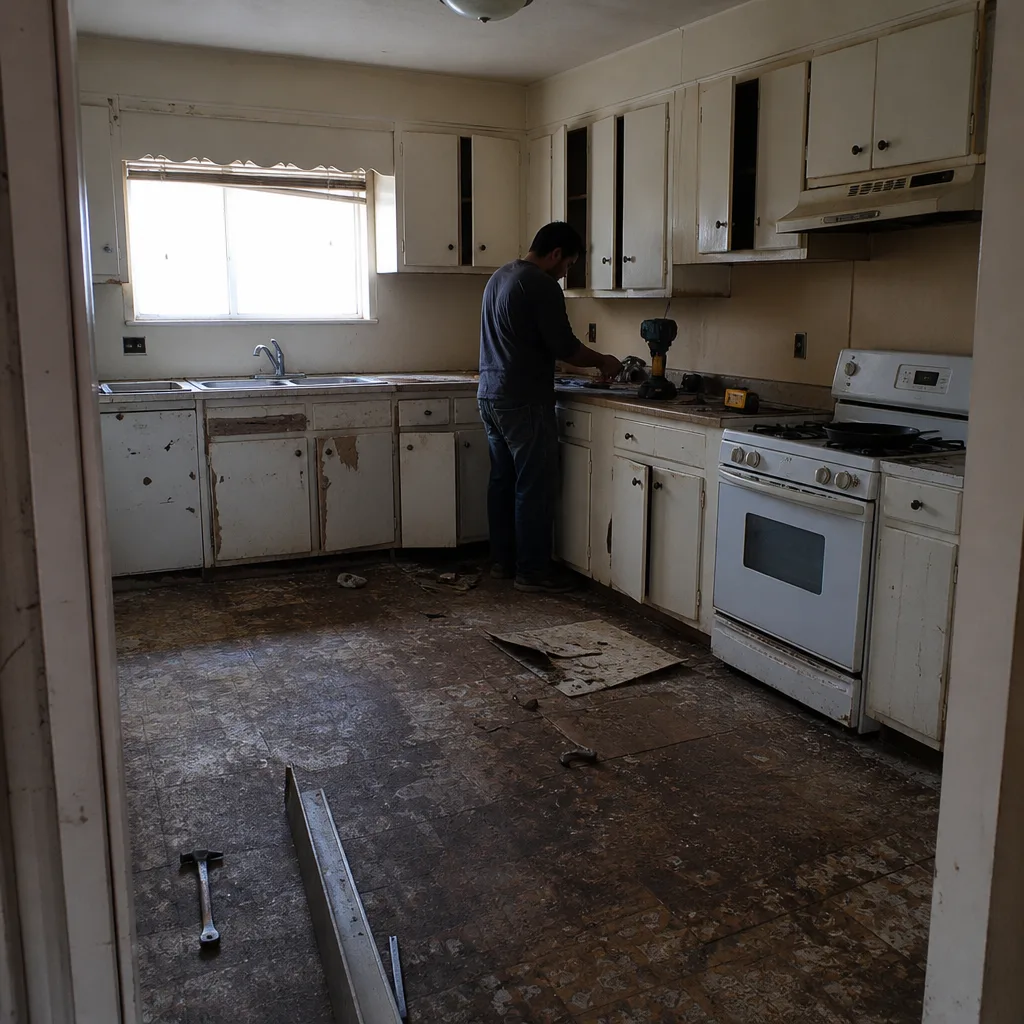 Before
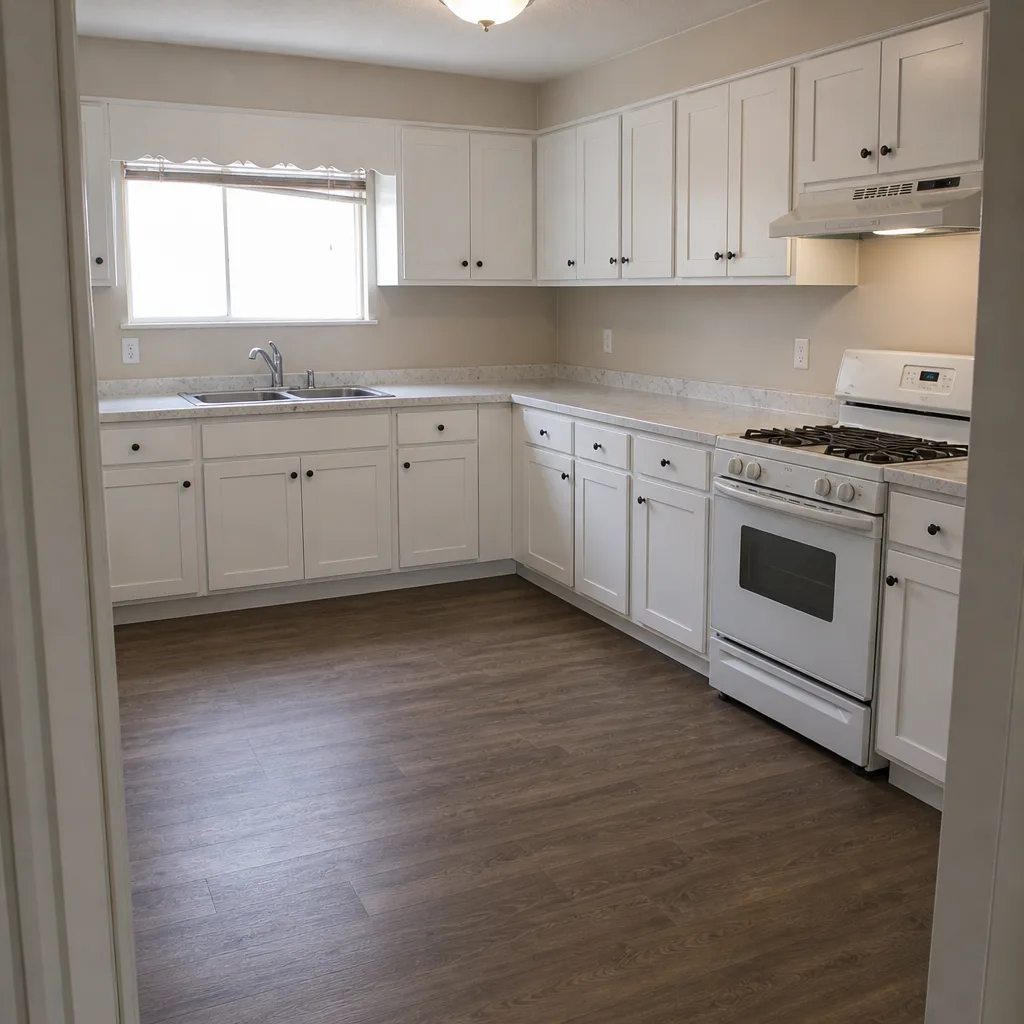 After
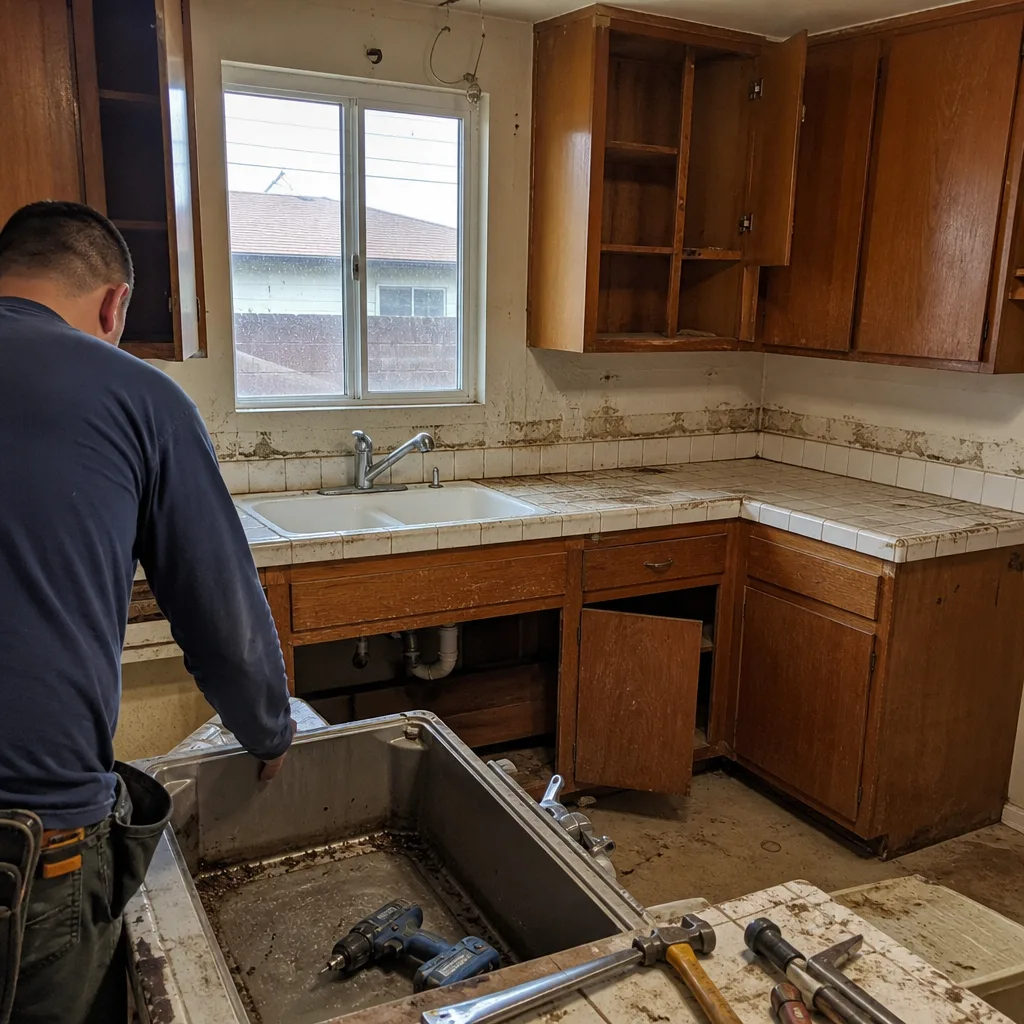 Before
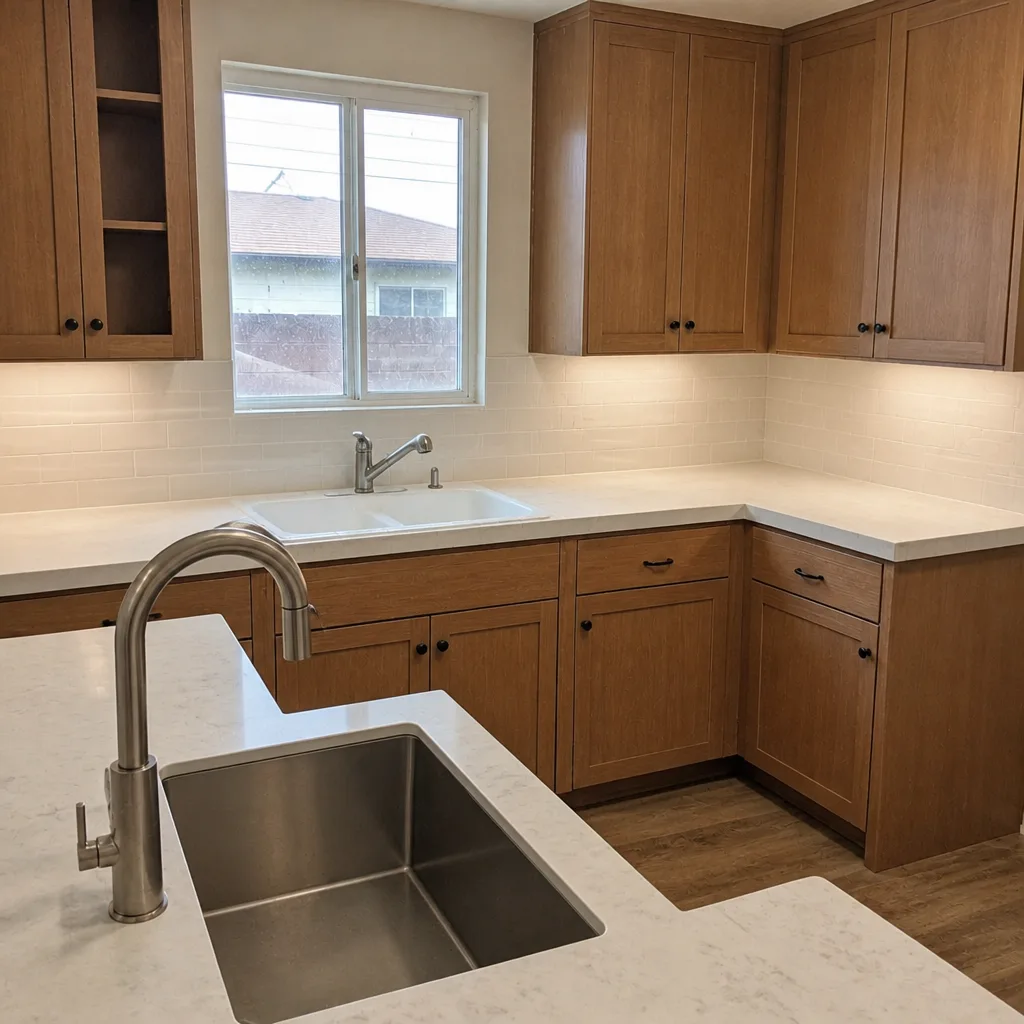 After
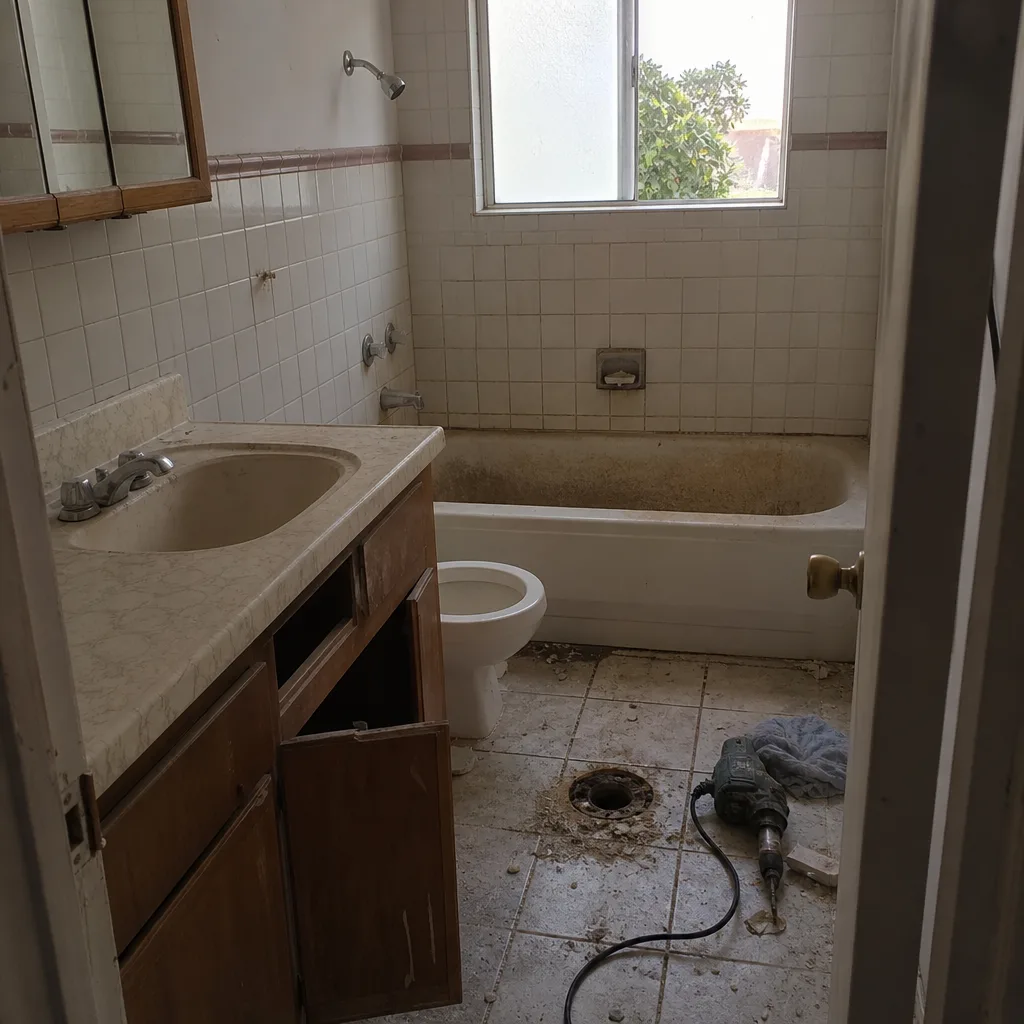 Before
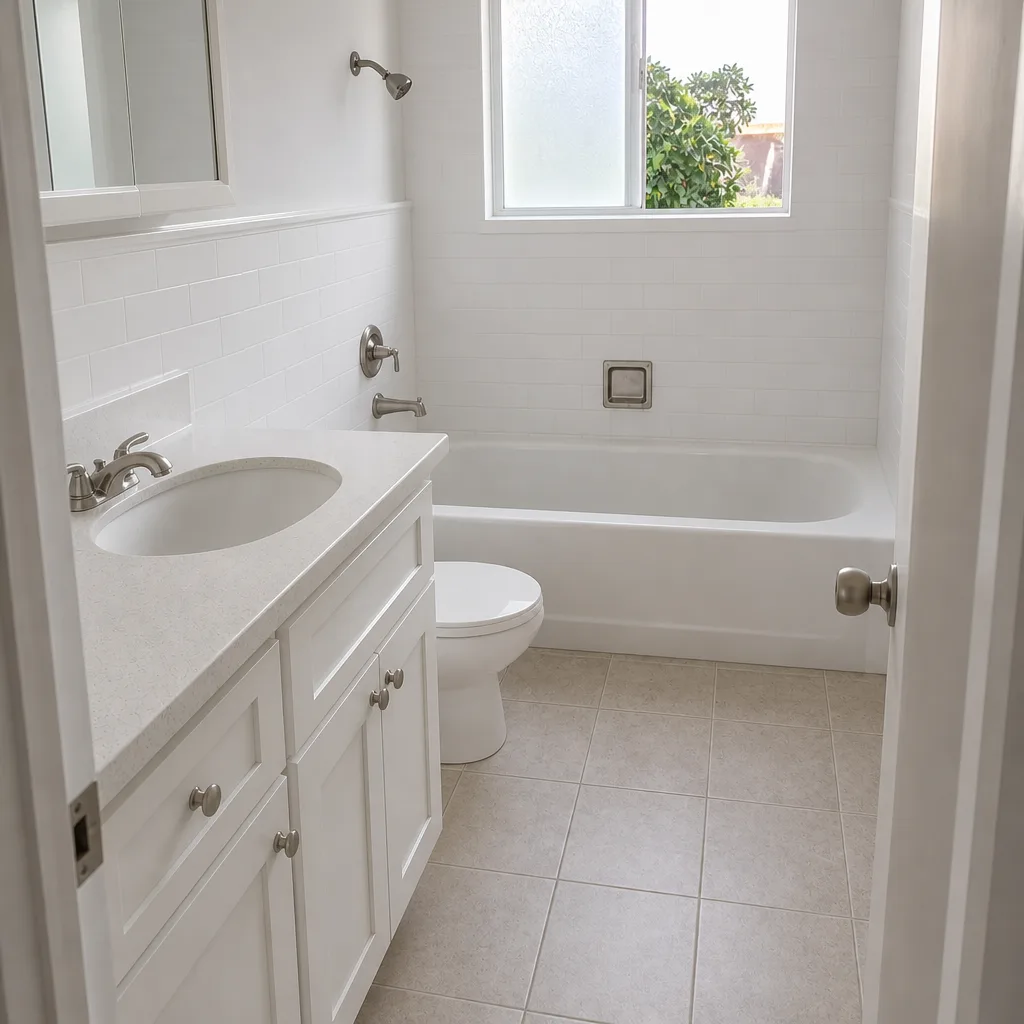 After
Acrylic vs. Tile Shower in Inglewood, CA: Which One Actually Holds Up Here?
Choose tile unless it’s a secondary bathroom on a tight budget and you’re willing to replace what’s behind the wall first. In Inglewood’s coastal air, a properly waterproofed tile shower outlasts an acrylic surround over a 10-plus-year horizon, mostly because the marine layer is unkind to panel seams and trim hardware. If you’re weighing the two before a bathroom tear-out, call (833) 842-7204 and we’ll walk your actual shower through the decision in about fifteen minutes. Free estimate, no pressure.
Key takeaways:
- Acrylic is the low-maintenance pick in most of the country. Near LAX, the marine layer changes that math.
- Salt-laden onshore air oxidizes acrylic trim hardware and degrades caulk seams faster than it would inland.
- Tile wins long-term when it’s installed correctly – and “correctly” is doing all the work in that sentence.
- Either way, what’s behind the wall (drywall vs. cement board) decides whether the job lasts.
Why Does Inglewood’s Marine Layer Change the Acrylic Math?
Acrylic surrounds are marketed as the low-maintenance option, and in most of the country that’s roughly true. In Inglewood’s marine air – the onshore flow that sits over the flats west of Prairie Avenue and settles near LAX – the caulk seams on a panel system start showing salt-corrosion staining and trim oxidation around year three. That’s not a sales pitch. It’s what we see when homeowners call us to fix a shower that’s already started to look tired.
Here’s the mechanism, because it matters more than the marketing. Acrylic panels themselves are chemically stable. The hardware around them is not. Chrome-plated trim, screws, and the thin metal brackets that hold a door frame to a panel all sit in a salt-heavy, moisture-cycling environment. Inglewood rarely freezes at night, so you don’t get freeze-thaw damage the way an inland contractor would see it. What you get instead is constant low-grade moisture cycling: morning fog, afternoon dry-out, repeat. Caulk formulated for an interior shower will start to chalk and pull away from a panel edge in a few years under that cycle, and once the caulk fails, water finds the seam.
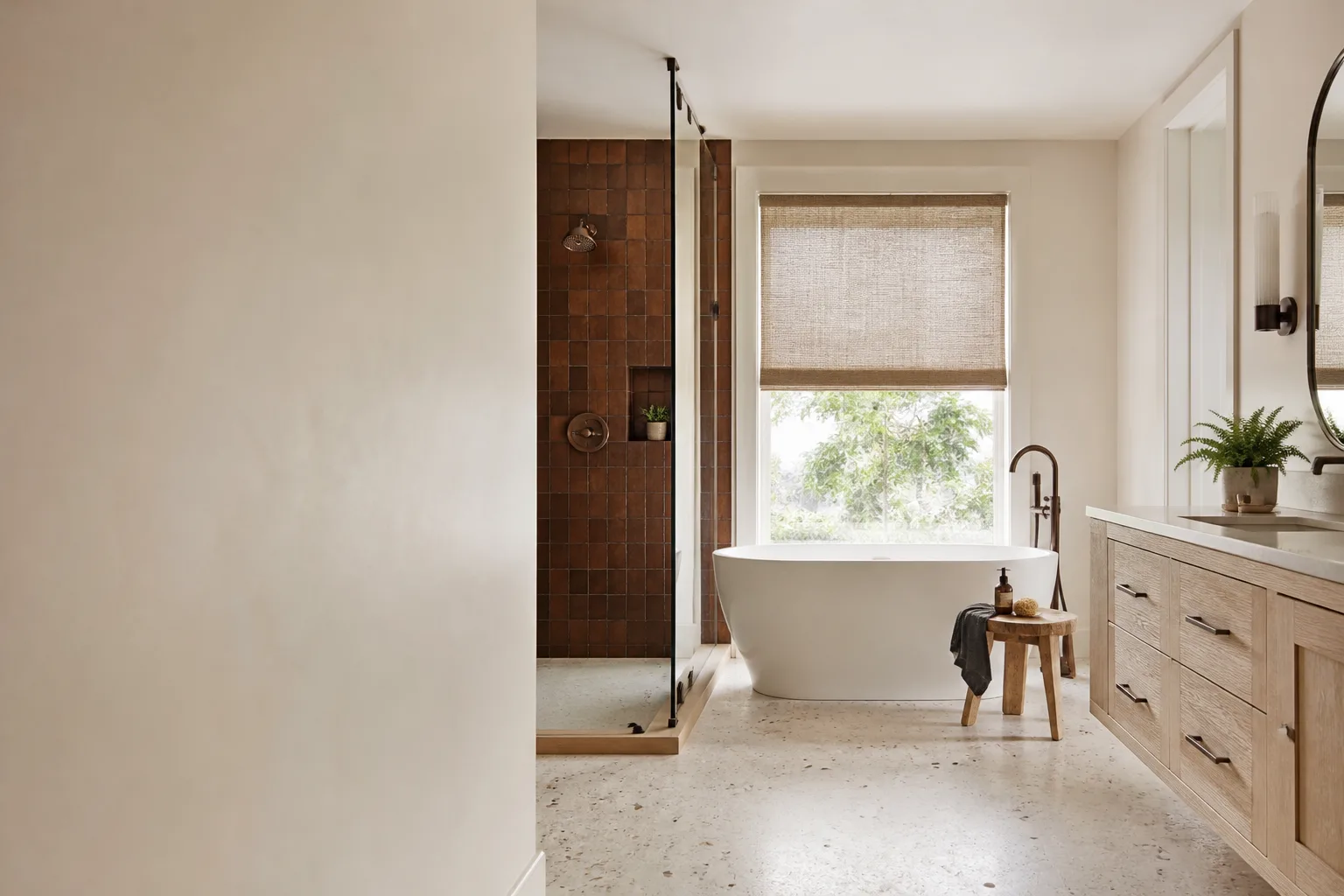
Tile doesn’t escape the climate – nothing does in Inglewood – but the failure mode is different. Grout joints can be sealed and resealed. A waterproofing membrane behind the tile is a continuous sheet, not a series of caulked seams. That’s the fundamental design difference, and it’s why we recommend tile for primary bathrooms in this specific microclimate almost every time.
What Does “Correctly Installed” Actually Mean for Tile in Inglewood?
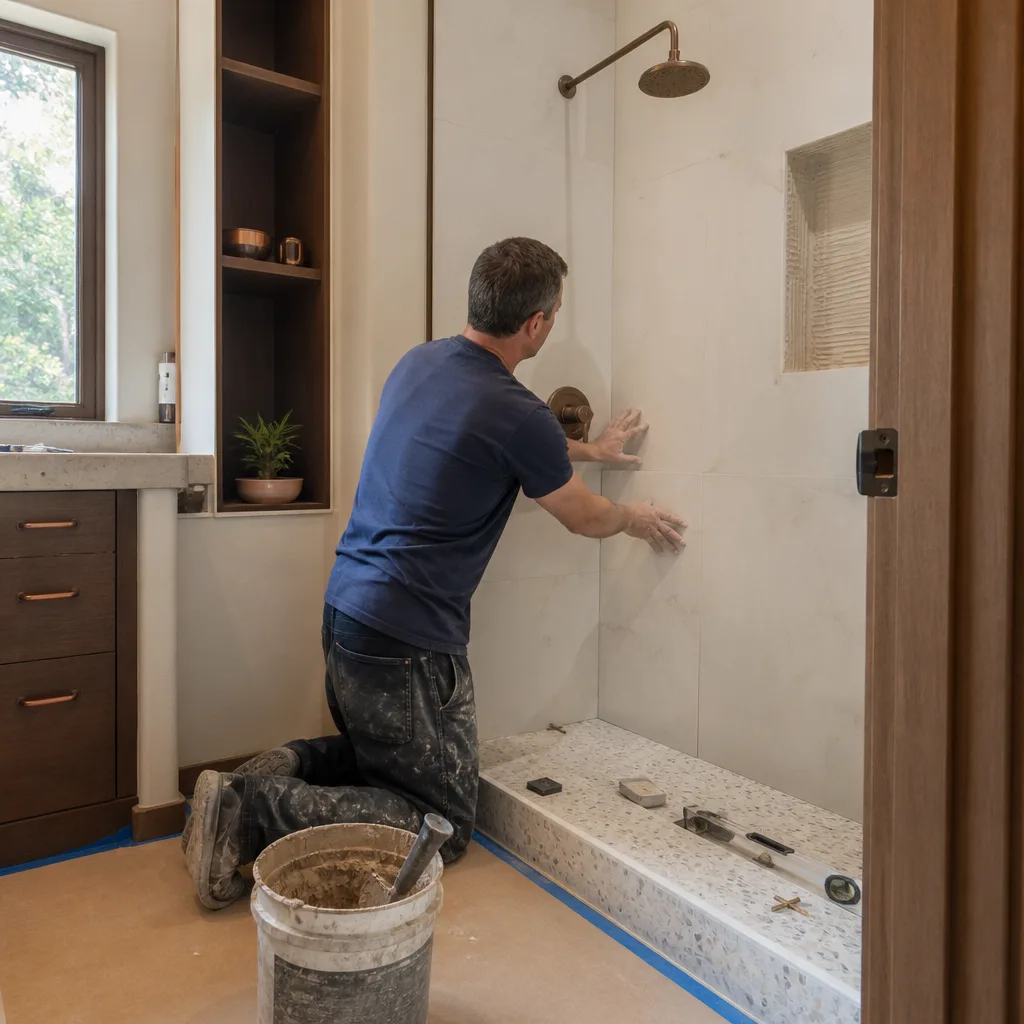
A correctly installed large-format tile shower will hold up for 15-plus years in Inglewood with simple maintenance: a full waterproofing membrane over cement board (not drywall), minimal grout joints, and grout sealed at installation. The word “correctly” is carrying the entire argument, though. Tiled showers fail in Inglewood for three predictable reasons, and none of them are the tile:
- No membrane. Thinset over drywall is not waterproofing. It’s a delay.
- Original 1940s drywall left in place. Many Inglewood bungalows on the flats still have the original gypsum board behind the shower wall. It has to come out.
- Grout joints too wide. Small mosaics look great on paper and give moisture 40 linear feet of grout to attack. Large-format on the walls cuts that in half.
When we tear into a shower in Inglewood, we plan for the wall behind it to be wrong. It’s not pessimism – it’s the pattern in this housing stock. Replacing the substrate adds to the budget, but it’s the single line item that decides whether the shower survives a decade in this climate.
When Does Acrylic Actually Make Sense Here?
For a secondary bathroom on a tight budget, a quality acrylic surround with proper substrate prep is a legitimate choice. Guests use it twice a month, the door stays shut, and the marine layer’s fingerprints on it stay minimal. We install them. We just install them correctly, which means the same substrate rule applies: if there’s old drywall or a failed mud bed behind the wall, it comes out and gets replaced with the appropriate backer before any panel goes on. Skip that step and the panel will fail regardless of how good the acrylic is.
What we don’t recommend is commodity acrylic from a big-box aisle used as the “cheap” option for a primary shower. The panel might be fine. The hardware, the trim kit, the door frame screws – those are where the salt air finds its opening. The tile systems and installation products we work with come with verified VOC and moisture ratings that commodity panels simply don’t publish. If a brand won’t tell you what its panel is rated for in a coastal-humidity environment, that’s the answer.
Side-by-Side: Acrylic vs. Tile Shower in Inglewood
| Factor | Acrylic surround | Tile shower |
|---|---|---|
| Upfront cost | Lower – $3,000-$8,500 typical shower replacement | Higher – $4,500-$12,000 walk-in install |
| Expected life near LAX | ~8-12 years before trim/seam work; caulk touch-ups from year 3 | 15-plus years with sealed grout and membrane |
| Marine layer effect | Salt corrosion on trim hardware; caulk cycling | Grout joint maintenance; membrane handles the moisture |
| Behind-the-wall work | Required if original drywall present | Required; cement board and membrane standard |
| Repair path | Replace the whole panel if it fails | Spot-repair a tile or regrout |
| Best fit | Secondary bath, tight timeline, guest use | Primary bath, long-horizon ownership |
For Inglewood bathroom remodels overall, plan on $9,000-$28,000. A walk-in tile shower runs $4,500-$12,000. A shower replacement – often the acrylic path – runs $3,000-$8,500. A tub-to-shower conversion, which is where a lot of Inglewood bungalows end up because the original tub is 60 years old, runs $3,500-$10,000. These are honest numbers, not teasers; the upfront pricing you get in writing from us is what you pay, and the choice between acrylic and tile isn’t a gamble either way thanks to our 730-Day Done Right Promise covering both material and workmanship.
What Should Inglewood Homeowners Actually Pick?
For a primary bathroom in an Inglewood bungalow you plan to own another decade, tile. For a secondary bath in a rental or in-law unit where the budget is the whole conversation, a properly prepped acrylic surround is fine and we’ll install it without the upcharge routine. The house decides more than the marketing does. If your shower sits on original drywall from the 1940s (common on the flats), that substrate work is happening regardless.
If you’re bundling this with a broader project, our home page covers how full-scope work runs from foundation to finish line under one contractor, and our dedicated page on Bathroom Remodeling in Inglewood goes deeper on tile selection, permits, and how the City of Inglewood’s permit office handles legacy additions in this post-SoFi enforcement climate. The same bathroom work is also documented on our Bathroom Remodeling page, which is where most homeowners start when they’re still building a scope. Calls are answered by a live person 24 hours a day – no voicemail – and our technicians have up to 12 years of experience.
FAQs
Tile is better for primary bathrooms in Inglewood because the coastal marine layer attacks acrylic trim hardware and caulk seams faster than inland climates do, while a properly waterproofed tile shower holds up 15-plus years. Acrylic is a reasonable pick for a secondary bath on a tight budget – call (833) 842-7204 if you want us to walk your specific bathroom through it.
An acrylic shower replacement in Inglewood typically runs $3,000-$8,500, while a full tile walk-in runs $4,500-$12,000. If you’re tearing out a tub, a tub-to-shower conversion runs $3,500-$10,000. Call (833) 842-7204 for an exact quote – estimates are free.
Acrylic panels themselves usually don’t fail – the trim hardware and caulk seams around them do, because salt-laden onshore air oxidizes the metal brackets and pushes the caulk through constant moisture cycling. That process shows up around year three in Inglewood homes near the airport. Call (833) 842-7204 if you’re seeing it now.
Yes, if there’s original drywall or a failed mud bed behind it – both are common in 1920s-1950s Inglewood bungalows. Putting a new panel over old substrate is a warranty invitation to fail. Call (833) 842-7204 and we’ll tell you what’s likely behind your wall before we demo anything.
If you’d rather have it looked at, Groundwork Construction Co. of Inglewood offers a no-pressure assessment in Inglewood – call (833) 842-7204. Free estimates, 0% financing for 18 months, and $1,000 off projects over $10,000. Background-checked, uniformed technicians on every job.
Written by the team at Groundwork Construction Co. of Inglewood, serving Inglewood, CA.