Last updated November 18, 2026

Free written scope consultation - allowances, timeline, and change-order rules on paper before a single trade is scheduled
DIY vs Professional Bathroom Remodeling: What’s Safe to Do Yourself
A homeowner who tiles their own backsplash saves $400. A homeowner who re-routes their own drain and gets it wrong spends $6,000 on subfloor replacement. That’s the real divide in DIY vs professional bathroom remodeling – not whether you’re handy, but whether the task you’re taking on has consequences that outlast your weekend. Some bathroom work is genuinely friendly to a careful DIYer. A lot of it hides behind walls and fails six months later, and by then you’ve already paid for the tile. This guide breaks the bathroom down task by task, tells you what California law requires, and shows you how Inglewood homeowners can split a project smartly so you keep the savings without inheriting the risk.
Quick Answer
Painting, hardware swaps, mirror and vanity installation, and light demo are safe to do yourself. Anything that touches plumbing, electrical, waterproofing, or structural framing in a wet area should go to a licensed professional – in California, most of it legally must. The smartest approach for most Inglewood homeowners is to handle prep and finish work while handing the technical scope off to a licensed contractor who pulls the permits and guarantees the work.
Styles & brands we work with
- Kitchen remodeling
- Bathroom remodeling
- Home additions & ADU
- Roofing
- Windows & doors
- Driveway & pavers
- Fence
Table of Contents
- The Real Divide: Skill vs. Consequence
- Low-Risk DIY: What You Can Genuinely Handle
- What Legally Requires a Licensed Contractor in California
- Why Unpermitted Inglewood Work Can Block Your Home Sale
- The Hidden Cost of “Almost Right”
- Your Own Skill Assessment Before You Demo
- How to Split a Project Smartly
- Common Mistakes to Avoid
The Real Divide: Skill vs. Consequence
Most DIY advice focuses on whether you have the skill. That’s the wrong question. The right one is how bad the failure would be and how long before you’d notice it.
A light fixture you wire wrong trips a breaker the moment you flip the switch – obvious, immediate, fixable. A shower drain you plumb with the wrong slope fails slowly, silently, under the subfloor. You find out a year later when the tile is loose and there’s a soft spot you can press your thumb into. The skill level required for both is roughly comparable. The consequence is not.
We think about bathroom work in four tiers:
- Cosmetic, immediate feedback. Painting, caulking, swapping hardware. If you get it wrong, you see it, and you redo it. Consequence is low.
- Surface, hidden fasteners. Hanging a mirror or floating vanity, replacing a faucet. Moderate consequence; failure is annoying but contained.
- Waterproofing and wet-area assembly. Shower pans, tile backer boards, flooring membranes. High consequence; failure only shows up months or years later.
- Behind the wall. Plumbing, electrical, structural framing, permits. Highest consequence, and legally regulated in California.
You’ll notice the tiers track the physical depth of the work. The deeper it goes, the more a mistake compounds. That’s the honest version of DIY vs professional bathroom remodeling – it’s not about your confidence, it’s about how far into the wall the work reaches.
Low-Risk DIY: What You Can Genuinely Handle
There’s a solid list of bathroom tasks that save real money and don’t threaten your home or your insurance. These are the ones we tell Inglewood homeowners to take on with confidence if they have the patience for detail work:
- Painting. A bathroom repaint – primer plus two coats of a mildew-resistant finish – runs a few hundred dollars in materials. Warm, dry Inglewood interiors cure predictably, and this is the single best DIY return in the room.
- Hardware and fixture swaps. Towel bars, cabinet pulls, a new shower head (not the valve behind the wall), a standard vanity light that mounts to an existing box. Straightforward with the power off.
- Hanging a mirror or floating shelves. Take the time to find studs, use the right anchors for the wall material, and it’s a safe weekend project.
- Caulking and re-grouting. Freshening up silicone at the tub edge and re-grouting tile joints is tedious but low-risk if you remove the old material properly.
- Setting a freestanding vanity. If the plumbing is already in place and you’re swapping a vanity in the same footprint, connecting supply lines is within reach for a careful DIYer.
- Demo. Tearing out old tile, an old vanity, or a worn tub surround is genuinely satisfying and genuinely fine to do yourself (with a few safety notes below).
The through-line is that these tasks fail visibly. A poorly prepped paint job shows brush marks. A crooked mirror looks crooked. A bad caulk line peels. When the feedback loop is short, the risk of a weekend project is mostly a threat to your pride.
What Legally Requires a Licensed Contractor in California
California is specific about what must be done by a licensed contractor, and the rules aren’t trivia – they’re what stands between you and a failed inspection or an uninsurable claim. Under the Contractors State License Board, and the broader licensing framework in the Business and Professions Code, any construction work over $500 in combined labor and materials – for a single project, whether or not the permit is required – must be performed by a licensed contractor when you hire someone. That’s the hiring rule.
The permit rule is separate. Work that requires a building permit in most California jurisdictions, including Inglewood, includes:
- Plumbing relocation or new rough-in – moving a drain, relocating a fixture, re-piping supply lines.
- Electrical alterations – new circuits, relocated outlets in the wet zone, exhaust fan wiring.
- Structural changes – removing or altering a wall (even some “non-load-bearing” walls carry MEP inside them), framing new openings.
- Any change to the waterproofing envelope in a shower or wet area that involves new assembly.
Here’s the part DIY videos skip: in California, a homeowner can pull their own permits for work on their own primary residence in many cases – but that comes with real strings. You become the responsible party for code compliance, you generally must do the work yourself (with limited exceptions), and any resale requires disclosure. In practice, most Inglewood bathroom projects that touch plumbing, electrical, or structural framing need a licensed contractor who pulls the permit, passes inspection, and stands behind the work.
The safety rule is just as concrete. Bathroom electrical lives inches from water, and a shower valve or drain re-route done wrong causes damage that isn’t limited to your bank account – a shower pan that leaks under a slab can compromise structural framing over time. If you smell gas, or a wire is hot, or you don’t fully understand the assembly, that’s the moment to call. Our team connects you with local licensed professionals, and that local pro is licensed and insured as California requires.
Why Unpermitted Inglewood Work Can Block Your Home Sale
Here’s where local rules bite harder than people expect. Inglewood is a city that has been changing fast – the 2028 arrival pace around SoFi Stadium and the broader market have made homes across Morningside Park, Centinela, and North Inglewood more scrutinized than ever by buyers and appraisers. A bathroom that was remodeled without permits doesn’t just sit quietly. It surfaces in disclosures.
When you sell, you must disclose known unpermitted work. Buyers’ agents run permit histories. Appraisers compare against permitted square footage and fixture counts. A remodeled bathroom line item that reads “unpermitted” on a sale contract is a negotiating lever for the buyer – and sometimes a lender requirement that the work be inspected or brought to code before a loan will close. Finish work that looks great can turn into a five-figure holdback at the table.
Homeowner’s insurance tells a similar story. Most policies exclude damage caused by faulty workmanship, and many will deny a water-damage or mold claim that traces back to unpermitted, non-code work. A slow drain leak in an unpermitted shower can become an insurance claim that goes wrong twice: once when the water comes, and again when the adjuster finds the cause was work you did without a permit.
If you want to keep DIY savings without inheriting that risk, the smart split is to keep your hands on finish work and let a licensed contractor handle the scope that carries permits. If you’re already planning exterior work alongside a bathroom project, that same “who pulls the permit” logic applies to a fence installation in Inglewood and to a Driveway & Pavers in Inglewood project, both of which need the right professional on county and city requirements.
The Hidden Cost of “Almost Right”
Amateur waterproofing is the single most expensive mistake we see in Inglewood bathrooms, and it’s almost invisible on install day. A shower pan has to slope to the drain at a specific pitch, with a pre-slope under the pan liner, and the liner has to bond to the drain flange and turn up the walls far enough to matter. Skip a step and the shower looks perfect when it’s done.
Six months later it doesn’t. Water finds the gap and migrates laterally under the tile, into the subfloor, and sometimes into the wall cavity. The classic signature is a soft, dark spot at the base of the shower on the adjoining wall, or a musty smell in the closet behind it. By the time you smell it, mold has had a head start in a warm, humid Inglewood pocket – and mold remediation plus subfloor replacement can run well past the cost of having done the shower right the first time.
Drain work has the same delayed failure shape. A shower drain plumbed with the wrong slope, or a trap set shallow enough to siphon, does its damage invisibly. The costs typically appear in tiers:
- $300 – $1,200 for a re-do of the shower floor tile assembly if caught early.
- $1,500 – $4,000 for subfloor replacement plus new waterproofing once moisture has reached the framing.
- $3,000 – $8,000+ for mold remediation, structural repair, and a fully rebuilt shower once the failure has spread.
Those aren’t scare numbers. In our experience, “almost right” is more expensive than either doing the work fully yourself with the right materials or hiring the trade. The half-measure splits the cost and keeps the risk.
Your Own Skill Assessment Before You Demo
Swinging a hammer is not the hard part of demo. Knowing what’s behind the tile is. Before you take a pry bar to your Inglewood bathroom, work through this honest checklist:
- Do you know where the shutoffs are, and are they actually working? If your main or fixture shutoffs are seized or dripping, fix them before demo or you’ll be doing demo in a puddle.
- Do you know what’s behind the wall you’re about to open? A stud finder is not enough. If you don’t know whether a wall is load-bearing or has a vent stack running through it, don’t open it.
- Have you located the water heater, breaker panel, and any gas line? Turn off power at the panel, not just at the switch.
- Can you handle the debris? A gutted bathroom produces hundreds of pounds of tile, backer board, and old fixtures. Inglewood homes are largely single-family, so plan a debris strategy before you start.
- Do you have a second bathroom? A full gut takes weeks. If this is your only bathroom, your schedule needs to account for that.
- Are you weighing the savings against your own time, at an honest hourly rate? A weekend of demo you’re comfortable with is fine. A weekend of plumbing you’re guessing at is not a savings.
If you can’t confidently answer the first four, the safe answer is to bring in a professional for the whole scope. That’s not failure. That’s knowing your ceiling and respecting it.
How to Split a Project Smartly
The best bathroom projects for the budget-conscious Inglewood homeowner aren’t all-DIY or all-contractor. They’re a clean split, with each party doing what they’re actually good at.
Here’s the split that works most often. You take on:
- Demo if you’ve done the skill assessment and you know what’s behind the tile.
- Painting and finish after the walls are closed up and inspected.
- Hardware, mirror, and trim installation on your own schedule.
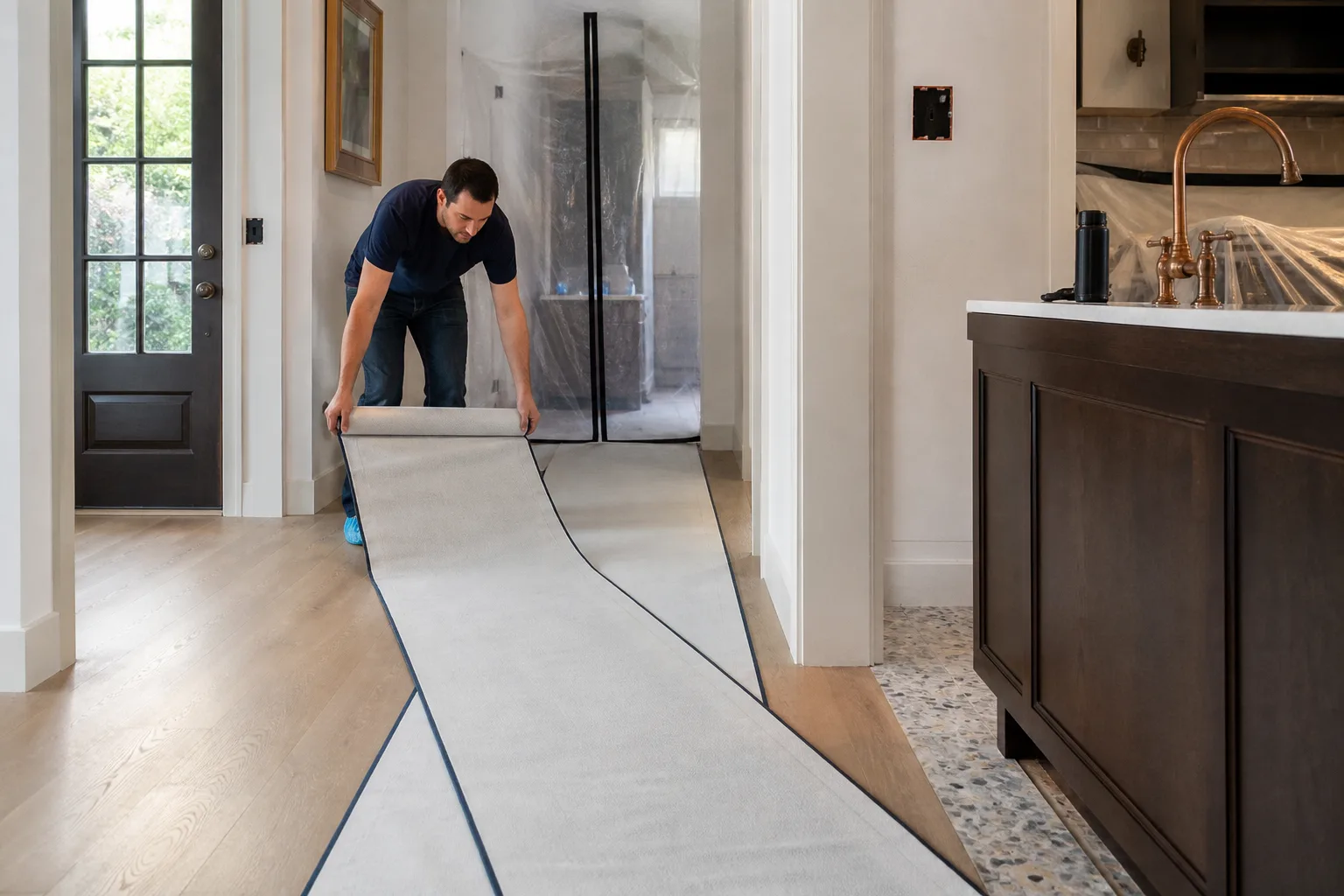
- Pre-project prep – clearing the space, protecting flooring, coordinating the debris haul-off.
The licensed professional takes on:
- Plumbing rough-in and fixture set – valve, drain, supply lines, permit.
- Electrical – fan, wet-zone outlets, new circuits.
- Waterproofing and tile assembly, where the failure mode is hidden and long-delayed.
- Any framing or structural work and the permit that goes with it.
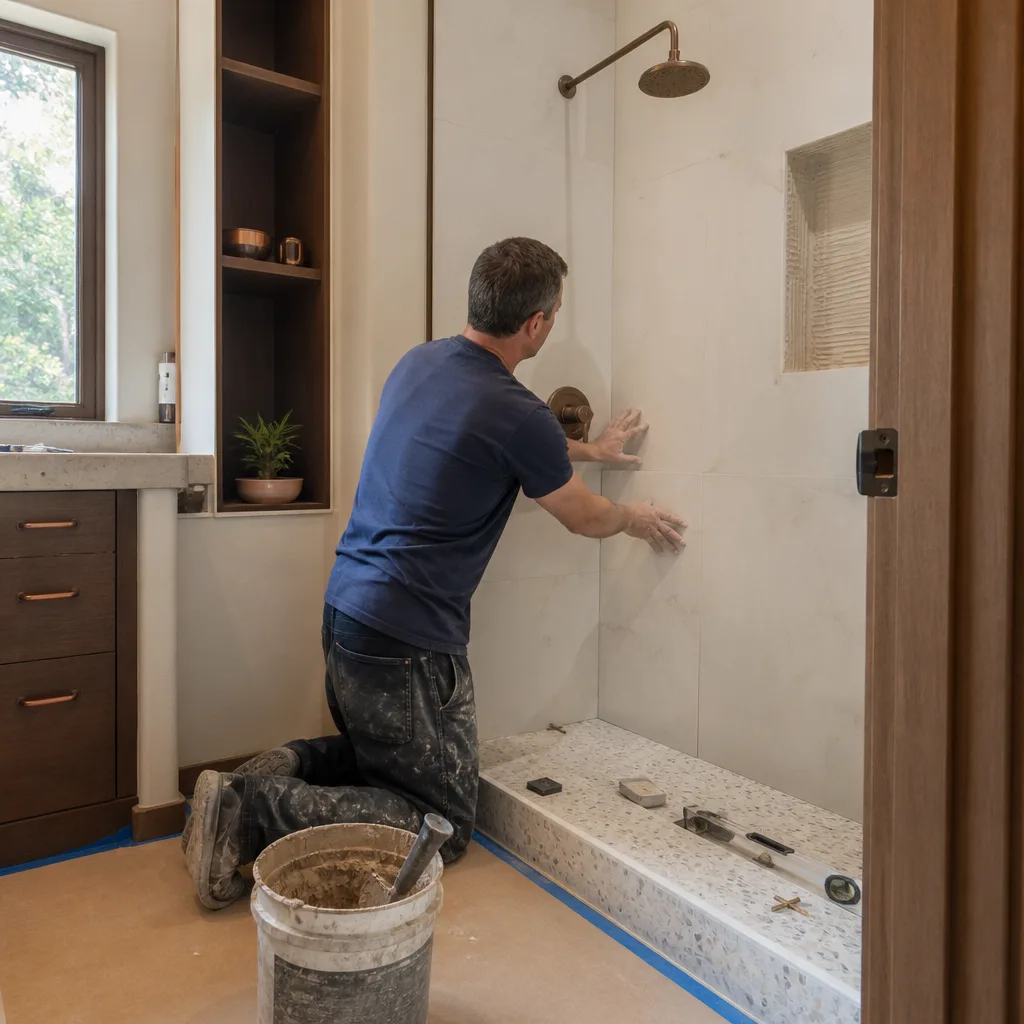
This split saves the money that matters (finish work is expensive per hour even when it’s simple) while leaving the high-consequence scope with the trade that carries the license and stands behind the assembly. It also means the inspection is on someone else’s shoulders – a big relief if you plan to sell. If a bathroom project is part of a bigger plan, that same split logic applies to a Home Additions & ADU in Inglewood build, where doing the planning and finish work yourself while the pro handles structure and permits is genuinely sensible.
The professional side of that split is where Groundwork Construction Co. of Inglewood comes in. We coordinate with vetted local trades who work under a background-checked, uniformed crew standard, and the whole project is covered by our 730-Day Done Right Promise – if it isn’t done right, we make it right. That’s one of the longest workmanship guarantees in the residential construction space, and it’s in writing.
Common Mistakes to Avoid
- Skipping the pre-slope under the shower pan liner. The shower looks fine on install day and leaks a year later. Re-doing a shower floor is far more expensive than building it right the first time.
- Using the wrong subfloor or backer board in a wet area. Standard drywall and green board both fail under sustained moisture. If you don’t know the difference between cement backer board and a waterproof membrane, let a pro choose the assembly.
- Re-tiling over old material without inspecting what’s underneath. Covering a soft spot or existing mold traps the problem and accelerates it. Inglewood’s warm, humid pockets make this a mold reset clock, not a cosmetic issue.
- Doing plumbing or electrical without a permit and assuming nobody will check. Inspection records persist and sale disclosures force the issue. The hidden savings are usually paid back at the closing table.
- Moving a wall without confirming it’s non-load-bearing. “It looks like it’s just drywall” is not a structural assessment. This is the single biggest mistake that turns a weekend project into a structural repair.
- Buying fixtures before confirming plumbing compatibility. A gorgeous freestanding tub that won’t fit your existing rough-in wastes money and time. Measure the drain center, valve spread, and floor structure first.
- Assuming your homeowner’s policy covers your own DIY mistakes. Most policies exclude faulty workmanship, and many exclude mold tracing back to it. Verify coverage before you start, not after a leak.
See the difference
 Before
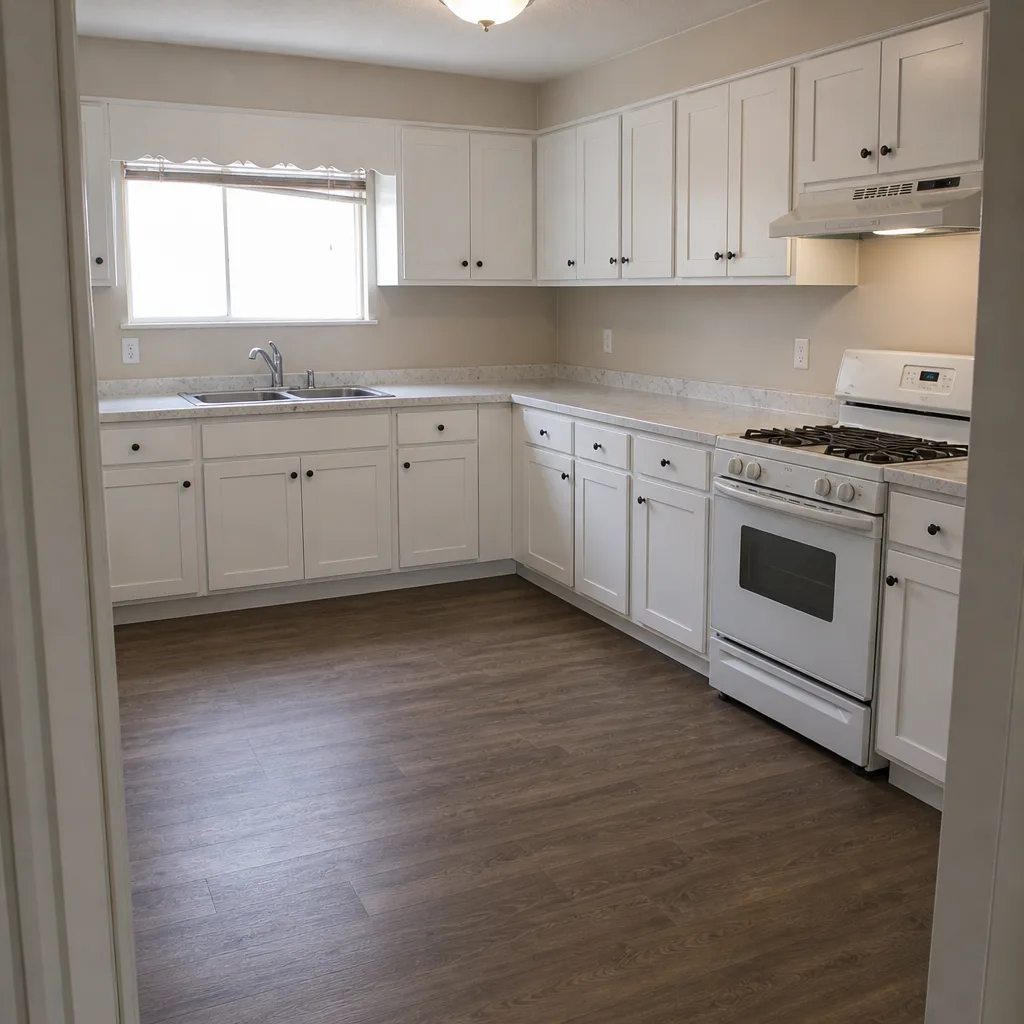 After
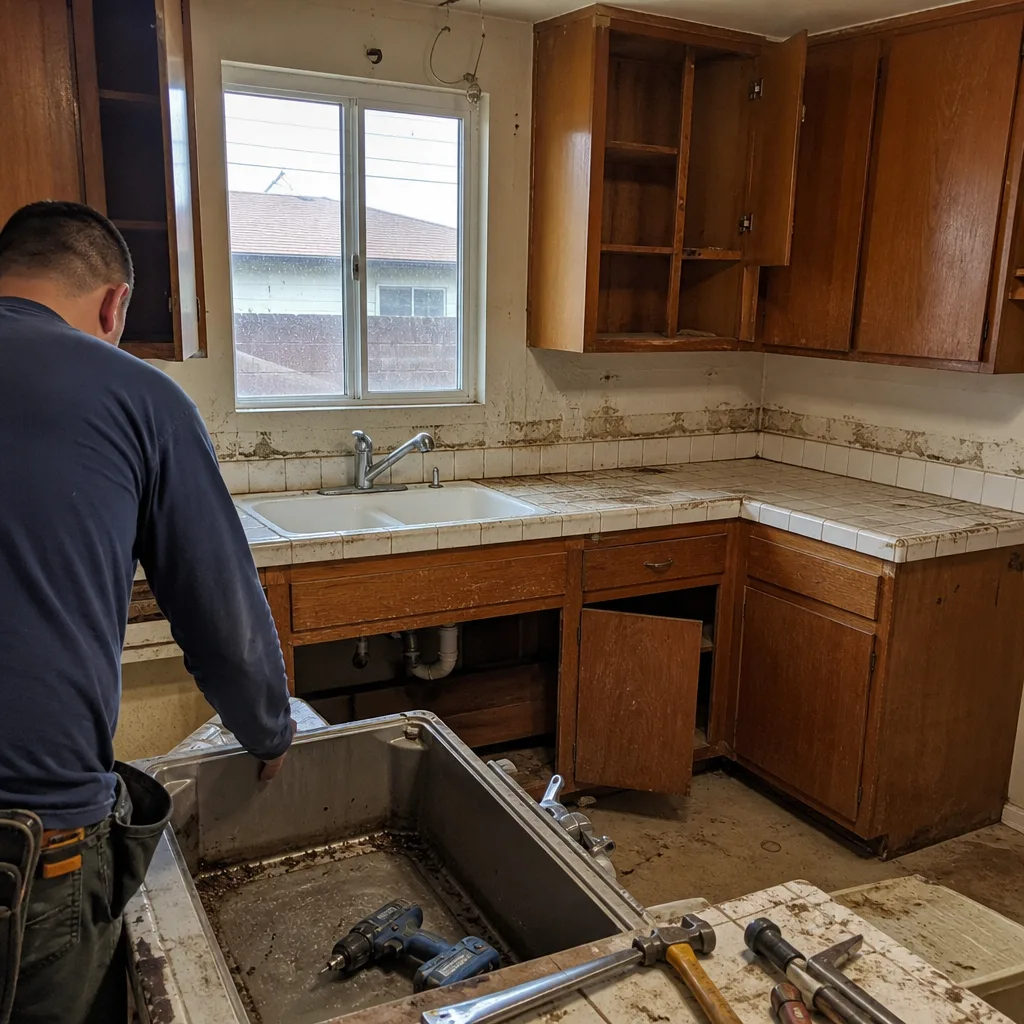 Before
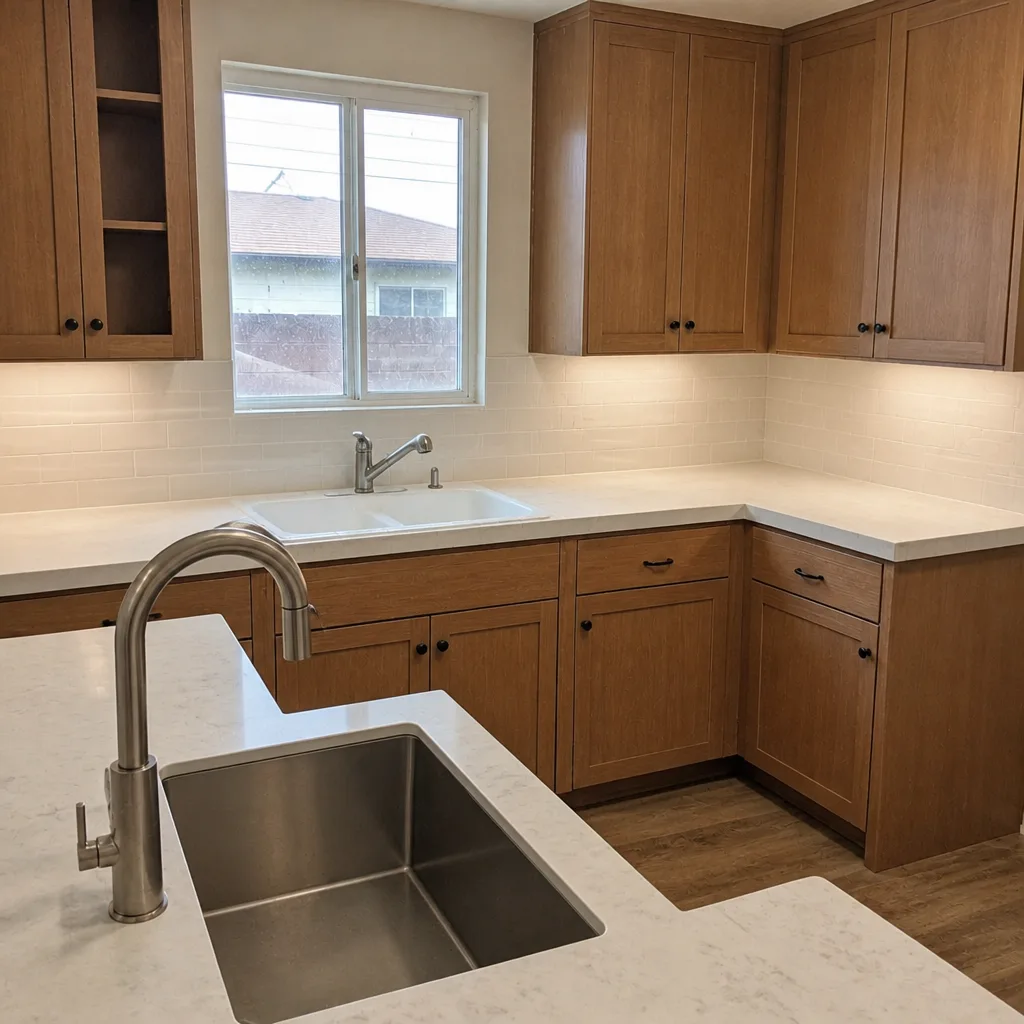 After
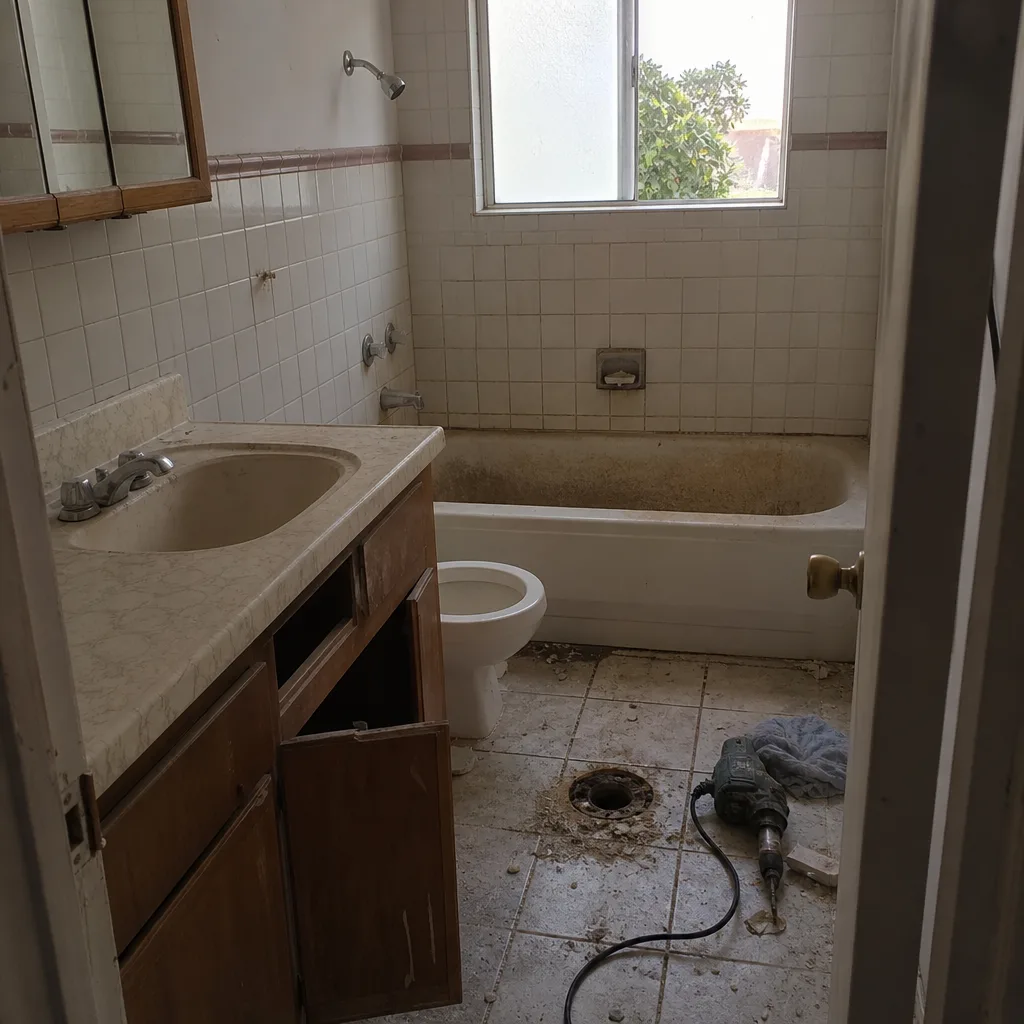 Before
 After
When to Call a Professional
Call a professional when the work touches plumbing, electrical, structural framing, or waterproofing, or when you’re not sure whether it does. Also call when you’re selling in the next few years – unpermitted work in Inglewood can hold up closings and appraisals. If your project is a whole-bathroom gut, a shower rebuild, or a layout change, the licensed path is faster and safer than a learn-on-the-job approach. If you’re already planning to update the rest of the home, the same logic applies to your Groundwork Construction Co. of Inglewood home projects beyond the bathroom – full scope, one contractor, everything covered by the same written promise. Call (833) 842-7204 for a free estimate.
Frequently Asked Questions
Yes, for limited scope, and in many cases you can pull your own permits if you own and occupy the home – but the permitted work generally must be done by you, not a hired hand, and you remain responsible for code compliance and disclosure at resale. The moment plumbing, electrical, or structural work is involved, the safest and most common path is a licensed contractor who pulls the permit and stands behind the inspection. Call (833) 842-7204 for a free estimate and a clear breakdown of what parts of your Inglewood project need a license.
Waterproofing the shower floor without the correct slope and liner assembly. It looks perfect for months and then the soft spots appear – and repairing it costs far more than the original build. If you’re considering a shower rebuild, have a licensed trade take that scope. Call (833) 842-7204 for a free estimate.
It can – buyers and lenders run permit histories, and known unpermitted work must be disclosed. In a hot Inglewood market, that disclosure becomes negotiating leverage and sometimes a lender condition. Getting the work permitted on the front end is cheaper than resolving it during escrow. Call (833) 842-7204 to talk through the permitting path before you start.
Yes, and it’s usually the smartest split. Demo is a real cost saver and generally safe to self-perform if you know what’s behind the tile and the plumbing is isolated. Just confirm the waste hauling and scheduling before you start swinging. Call (833) 842-7204 for a free estimate on just the technical scope.
The 730-Day Done Right Promise is our workmanship guarantee – if the work isn’t done right, we make it right, for two years. It covers the work our licensed trades perform, not owner-performed DIY. The point of the split is to let you keep the finish savings while the technical scope carries real backing. Call (833) 842-7204 for the details on your project.
A license, insurance, a permit pulled in their name, a written scope with upfront pricing, and a workmanship guarantee longer than a season. Our technicians are background-checked and arrive in uniform, and the local pro we connect you with is licensed and insured as California requires. Call (833) 842-7204 to schedule your free estimate and design consult.
The Bottom Line
The honest answer to DIY vs professional bathroom remodeling is that it isn’t one decision – it’s a dozen small decisions, and the right answer changes as the work goes deeper into the wall. Painting, hardware, mirrors, and light demo are yours to keep. Plumbing, electrical, structural framing, waterproofing, and anything that needs a permit belong with a licensed contractor in California. The hidden cost of “almost right” is what to avoid: slow failures in waterproofing and drains that surface a year later and cost several times what doing it properly would have. Inglewood homes deserve that care. If a project is one you’re ready to price, call Groundwork Construction Co. of Inglewood at (833) 842-7204 for a free estimate.
Written by the team at Groundwork Construction Co. of Inglewood.