Last updated November 18, 2026

Free written scope consultation - allowances, timeline, and change-order rules on paper before a single trade is scheduled
Driveway & Pavers Maintenance Checklist for Inglewood Homeowners
The number one reason Inglewood driveways fail before the ten-year mark isn’t bad installation. It’s sand joint washout from rain events homeowners never see coming, because they’ve been told it barely rains here. That’s half true. Inglewood gets an average of about 14 inches of rain a year, and most of it lands in a handful of intense storms between November and March. When those storms hit a paver driveway with degraded joints, water gets under the surface and the base starts to move. This guide covers what actually fails in Inglewood, the seasonal inspection calendar that matches our real weather, and the specific warning signs that separate a weekend fix from a call to a professional.
Quick Answer
In Inglewood, driveway pavers need joint sand topped up once a year before the rainy season, a full inspection each October and again in April, and resealing every three to five years with a breathable, UV-stable sealer. The biggest local threat isn’t heat or traffic, it’s the marine layer humidity cycle combined with intense late-summer sun, which breaks down polymeric sand faster than in drier inland cities.
Styles & brands we work with
- Kitchen remodeling
- Bathroom remodeling
- Home additions & ADU
- Roofing
- Windows & doors
- Driveway & pavers
- Fence
Table of Contents
- Why Inglewood’s Marine Layer Wears Out Your Pavers
- The Inglewood Seasonal Inspection Calendar
- Joint Sand: The Maintenance Task That Prevents Everything Else
- Reading Crack Patterns: Surface Wear vs. Base Failure
- Which Sealers Survive Southern California UV Without Trapping Moisture
- What to Do After an Atmospheric River Storm
- Drainage, Weeds, and the Edges Nobody Checks
- What Paver Maintenance Costs in Inglewood
Why Inglewood’s Marine Layer Wears Out Your Pavers
The marine layer rolls in off the Santa Monica Bay most summer mornings and burns off by mid-afternoon. That cycle leaves a film of moisture sitting on your pavers overnight, then hits the surface with direct sun and surface temperatures that can climb past 130°F on dark pavers in July. This wet-dry, cool-hot swing is the actual engine of paver deterioration in Inglewood, and it works on the joints and the base more than it works on the stone itself.
What happens underneath is the part most maintenance guides skip. The humidity keeps the sub-base slightly damp through the summer months. Polymeric sand, which is designed to harden and lock pavers together, degrades when it’s exposed to repeated moisture cycles and then UV. The polymer binder breaks down, the sand turns gritty and loose, and joints open up. Once the joints open, water gets in faster on the next rain event. In Inglewood, we’ve seen polymeric sand start to fail in three to four years in shaded driveways on the west side of a property, while the same sand on a sunny south-facing driveway holds closer to six.
This is different from what happens in Palm Springs, where the problem is pure heat and zero moisture, or Seattle, where the issue is constant rain with little drying. Inglewood gets both halves of the cycle in the same 24-hour period during summer. That combination is why local maintenance needs to be scheduled around the marine layer, not a generic four-season template copied from a national site.
Neighborhood-specific notes
- Morningside Park and North Inglewood: older driveways with clay-heavy sub-bases hold water longer after rain, so joint sand degrades faster here.
- Lennox and the neighborhoods near LAX: heavier airplane-adjacent dust settles in joints, then turns to a fine paste when the marine layer moves in. It looks harmless until the sand can’t drain.
- Inglewood Park and the downtown blocks: street trees drop sap and leaf litter that traps moisture against the surface. Driveways under a ficus or jacaranda can develop dark organic staining within a season.
The Inglewood Seasonal Inspection Calendar
Generic maintenance advice tells you to inspect in spring and fall. That’s roughly right for Inglewood, but the reason matters, and the specific timing matters more. Our rainy season runs November through March. The UV peak runs June through September. The two-week windows before and after each of those seasons are when you want eyes on the driveway.
Here’s the calendar we’d give a homeowner in Inglewood if they asked what to actually do and when:
- Early October (before the first rain): Refill joint sand across the whole surface. Check the edges for any pavers that have shifted or loosened. Clear debris from drains, channels, and any low spots. This is the single most important inspection of the year.
- Late November (after the first big storm): Walk the driveway looking for new depressions, popped pavers, or sand piles at the bottom of a slope. Sand washing out at the low end is the earliest sign of joint failure.
- January through March (during storm season): After any storm that drops more than an inch, do a quick visual pass. Look for standing water that hasn’t drained within a few hours, and for grit or sand at the base of the driveway near the street.
- April (after the last rain): Rinse off the winter’s accumulation, check for weed growth in joints, and look closely at any joint that’s wider than a quarter inch. That’s the time to refill sand again if needed.
- June (before UV peak): This is resealing season in Inglewood. If your pavers are due for a sealer (every three to five years), apply it before the summer sun bakes the surface, not after.
- July through September: Watch for color fading on the sunny side of the house and for any hairline surface cracks that open up in the heat. Neither is urgent on its own, but both are worth noting for a fall repair list.
That’s six check-ins a year if you count the quick post-storm visual passes, which anyone can do in five minutes. The full inspections are October and April. If you only do two things, do those.
Joint Sand: The Maintenance Task That Prevents Everything Else
Joint sand is the layer between pavers that holds everything together. It acts as a flexible connector, keeps pavers from shifting against each other, and stops water from getting into the base. When the sand is intact, water sheds off the surface and into the drainage. When it’s gone, water goes straight into the joints, and the base starts to fail.
Most homeowners in Inglewood don’t notice sand loss until a joint is visibly empty, which means the failure is already a season or two old. The fix in the early stage is cheap and simple. The fix in the late stage is a partial re-installation, which costs ten to twenty times as much.
How to tell if your joints need sand
- The joint is less than 1/8 inch deep when you press a screwdriver tip into it.
- Sand runs off the surface onto the curb when you spray the pavers with a hose.
- You can see small gaps at the surface between pavers that were flush last year.
- Weeds are growing from joints. Weeds only get a foothold where there’s space and moisture.
Refilling joint sand is a homeowner-friendly task on a sound driveway. Sweep dry polymeric sand across the surface, work it into the joints with a broom or a hand tamper, blow off the excess, and mist lightly to activate it. The trick in Inglewood is timing the misting right, because the marine layer means your pavers are already slightly damp by early morning, and the sand won’t activate properly. Late afternoon on a dry day is the best window. If your joints are missing more than about half their depth, or if pavers have shifted, that’s a different job and a trained installer should look at it.
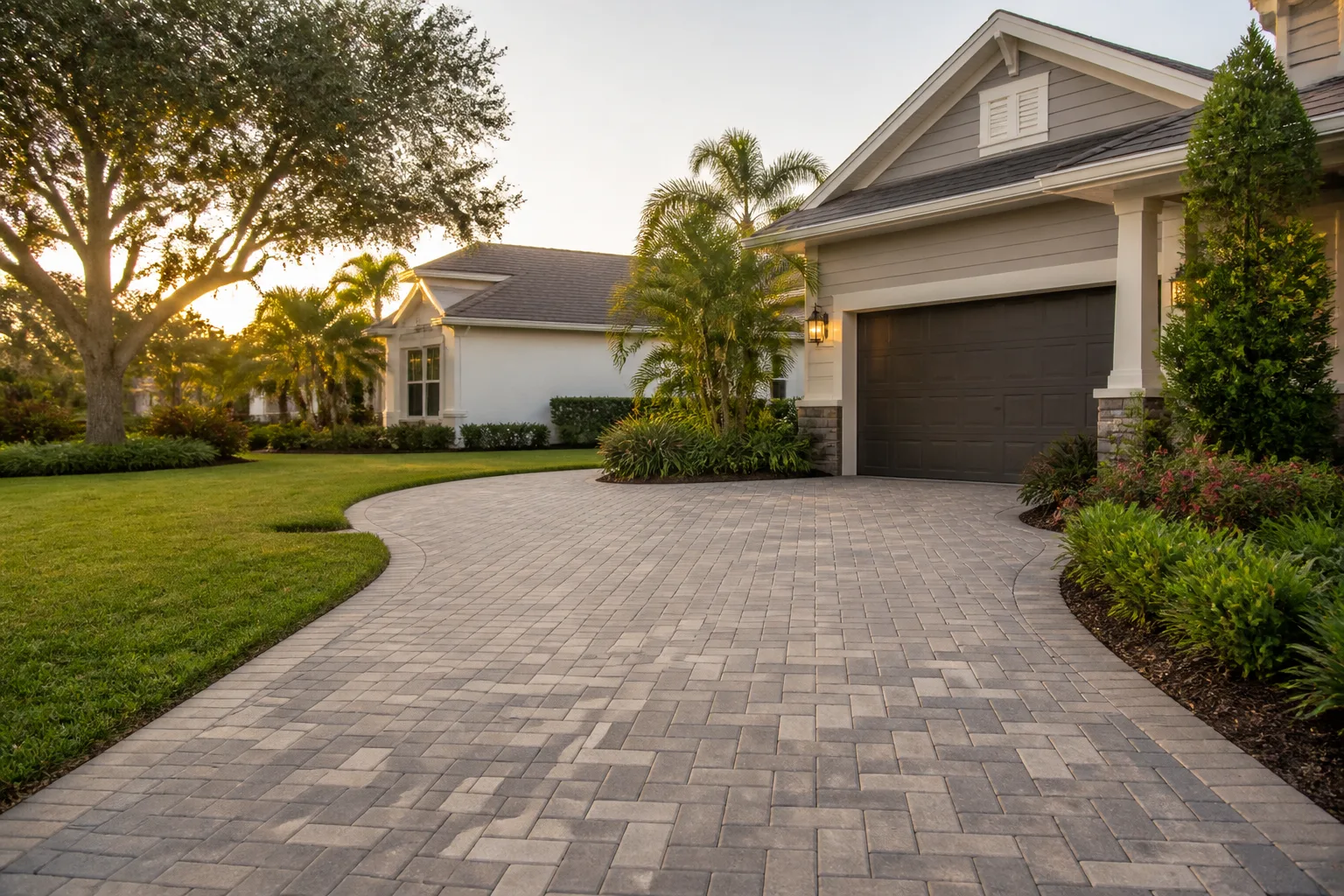
This is also where a full-scope contractor helps. If the driveway is due for replacement or a serious repair rather than just maintenance, choosing the right base preparation and locking the joints properly the first time is what makes the sand last. Our team works with Belgard pavers and the site prep that goes under them, and the Driveway & Pavers in Inglewood page covers what that installation work involves.
Reading Crack Patterns: Surface Wear vs. Base Failure
Not all cracks mean the same thing. Some are cosmetic and some are the first sign that the base is moving. Knowing which is which saves Inglewood homeowners from either panicking over nothing or ignoring a $2,000 problem until it turns into a $20,000 one.
Surface cracks: annoying, not urgent
- Hairline cracks that follow the surface texture of a paver or run along the edge of a single stone.
- Cracks that appear in an aggregate concrete surface where the top layer has dried out.
- Fading, chalky patches on pavers that get the most western sun exposure.
These are cosmetic wear. They’re normal after five to ten years, and they can often be addressed with a pigmented sealer or by replacing individual stones. Surface cracks don’t threaten the structural integrity of the driveway.
Base failure: call a professional
- A crack that runs in a continuous line across multiple pavers, especially in a straight line or a wide sweep.
- Pavers that are visibly sinking or rocking when you walk on them.
- A dip or depression that appears in the middle or at the edge of a driveway, even if the surface looks fine.
- Gaps at the edge restraint, where pavers are pulling away from the border or the garage apron.
- Any joint that’s wider than 1/4 inch and looks like it’s opening up over months rather than closing back.
These signal that the base has settled or shifted, or that water has been getting under the pavers and lifting the sub-base. In Inglewood, this most often happens where a driveway meets a garage slab or a street apron, because those transition points take the most water and the most seasonal movement. It also happens over old tree roots in the older neighborhoods, where the sub-base was likely compacted decades ago and has been slowly moving since.
Base failure doesn’t fix itself. It stops getting worse when the cause is addressed, which usually means pulling up the affected section, re-compacting the base, and re-setting the pavers. If you’re seeing the signs above, that’s the point where you stop refilling sand and start getting an estimate.
Which Sealers Survive Southern California UV Without Trapping Moisture
Sealer is where a lot of Inglewood driveways get ruined by well-meaning homeowners. The wrong sealer traps moisture under the surface. With the marine layer pushing humidity into the pavers overnight and the sun heating them the next day, trapped moisture has nowhere to go. It sits under the film, erodes the binder, and eventually lifts the sealer in sheets or turns the surface cloudy.
The right sealer breathes, resists UV, and stays stable through a wet-dry daily cycle. Here’s how the options break down for our climate:
- Penetrating siloxane or silane sealers: These soak into the paver and leave the surface breathable. They won’t give you a glossy look but they hold up well against Inglewood’s UV and don’t trap moisture. Best choice for a homeowner who wants low maintenance.
- Water-based acrylic sealers: Breathable enough for Southern California when applied thin, and available in matte and low-sheen finishes. They hold color well but need a fresh coat every two to three years under direct UV.
- Solvent-based film-forming sealers: These create the glossy “wet look” some homeowners want. They’re also the highest risk in Inglewood because they trap moisture. If you use them, apply in early fall on a dry, moderate-temperature week, not in the spring when the marine layer is thickest.
- Any sealer labeled for cold climates or wet climates: Skip it. Those products are formulated for different moisture cycles and often go cloudy in our UV.
Timing and process for resealing in Inglewood
- Wash the surface thoroughly and let it dry for 48 hours in dry weather, ideally in early to mid-October.
- Check the weather forecast. You want two to three days of dry, moderate weather, no marine layer drizzle in the overnight window.
- Refill joint sand before sealing, not after. Sealer locks the sand in place.
- Apply two thin coats rather than one thick coat. Thin coats breathe better.
- Stay off the surface for 24 hours minimum, longer if the sealer manufacturer specifies.
If you’ve had a bad sealer experience and your surface has gone cloudy or is peeling, the fix is usually chemical stripping and re-sealing, which is not a homeowner job. That’s the point to talk to a contractor who does this work in Inglewood regularly and knows which products hold up under our UV.
What to Do After an Atmospheric River Storm
An atmospheric river is the weather term for those long, intense rain events that drop a big chunk of our annual rainfall in a day or two. In Inglewood, they happen once or twice most winters. The damage they do to a paver driveway depends almost entirely on how the driveway was prepared before the storm and how quickly you act afterward.
The first 24 hours after a storm
- Check for standing water. Water that sits for more than a few hours after the rain stops means a drainage problem. It has probably been getting worse for a while. Note where it pooled.
- Look for sand at the low end. If you see sand or grit piled up at the bottom of the driveway or at the street apron, joints have been washing out. That’s not a cosmetic issue; it’s the first stage of base loss.
- Walk the surface slowly. Listen for hollow or rocking pavers. A paver that rocks after a storm has lost its bedding sand underneath.
- Check the edges. Every storm pushes water against the edge restraint. If pavers near the border have shifted or the border itself has moved, address it before the next storm.
- Clear any debris from drains and channels. Leaves and silt from the storm block the drainage that carries water away from the driveway.
The following week
Once the surface is dry, refill any joints that washed out. Don’t wait until the next storm. The joint sand you refill now protects the base through the rest of the season. If you see a depression in the driveway surface that wasn’t there before the storm, that’s a base loss signal, and it’s worth having a professional look at it. In our experience, the driveways that turn into full reinstallation jobs are the ones where the joint sand wasn’t refilled in October and the first big storm of the season took out the base.
If your driveway is at the point where maintenance isn’t enough and the paver surface needs replacement, our team installs new systems with proper base preparation for Inglewood soil and drainage. You can learn more about how we approach that work on our Groundwork Construction Co. of Inglewood home page, or talk with us directly about a free estimate.
Drainage, Weeds, and the Edges Nobody Checks
Most of the driveway gets attention. The edges, transitions, and drainage points get ignored until they fail. In Inglewood, that’s where problems start.
The edge restraint is the border that keeps pavers from spreading outward under traffic and water pressure. Over time, the spikes that hold the restraint in place can work loose, especially in older installs. When the edge gives, the whole paver field starts to loosen from the outside in. Walking the perimeter of your driveway twice a year and checking for gaps or movement is a five-minute task that prevents thousands in repair cost.
Drainage is the other one. Any paver driveway should drain away from the house, not toward it. If you’re seeing water pooling against the garage door, at a low spot in the middle, or right where the driveway meets the sidewalk, that’s a drainage issue that needs to be corrected before the next rainy season. Channel drains and trench drains are the standard fix in Inglewood, and they’re a job for a contractor, not a DIY pour.
Weeds in joints are more than a nuisance. Their roots widen the joint, hold moisture, and break down the sand faster. Pull them by hand when you can, or use a targeted pre-emergent designed for pavers. Don’t blast them with a pressure washer at high PSI, because that strips the joint sand and takes you back to square one. A 1,500 – 2,000 PSI washer with a wide fan tip is the ceiling for paver maintenance, and only after joint sand has fully cured.
If your property line includes a fenced perimeter or a privacy fence alongside the driveway, check the posts and the base of the fence at the same time you inspect the pavers. Water that fails to drain at the driveway edge often pools at the fence line next, and falling fence posts are a common companion problem in Inglewood. Our team handles Fence Installation in Inglewood alongside driveway work, and inspecting both together saves a second visit.
What Paver Maintenance Costs in Inglewood
Maintenance costs in Inglewood track closely with LA County averages, with a slight premium for jobs near the coast where moisture-related repair is more common. Here’s the range we see:
| Service | Typical Cost (Inglewood) | Frequency |
|---|---|---|
| Joint sand refill (800 – 1,200 sq ft) | $200 – $450 | Once a year |
| Full surface cleaning and joint refill | $350 – $700 | Every 1 – 2 years |
| Penetrating sealer application | $500 – $1,100 | Every 3 – 5 years |
| Film-forming acrylic sealer application | $700 – $1,400 | Every 2 – 3 years |
| Bad sealer stripping and re-sealing | $900 – $1,800 | As needed |
| Individual paver replacement (labor + material) | $25 – $60 per paver | As needed |
| Section repair (base recompaction, re-set) | $1,200 – $3,500 | Once every 10+ years typical |
| Full driveway re-installation | $10,000 – $25,000+ | Once per paver life cycle |
Those are ranges, not quotes. The actual number on a specific driveway depends on square footage, paver type, drainage setup, and how far the failure has gone. In Inglewood, we typically see a joint sand refill cost a fraction of what a base repair does, which is why the annual task matters so much. Skip the annual maintenance and you compress ten years of paver life into five.
When you do need repair work, an upfront written quote with fixed pricing is the standard we hold ourselves to. If the scope of work changes mid-project for any reason, that’s discussed and approved before a change order is issued. Our estimates for paver work in Inglewood are free, and they come with a walkthrough of what’s actually failing, not just a number on a page.
Common Mistakes to Avoid
- Pressure washing at high PSI. Blasting a paver driveway at 3,500 PSI strips the joint sand and opens the surface. In Inglewood, that starts the degradation cycle back at year one and takes a weekend of work to undo.
- Applying sealer in spring. The marine layer is thickest in April and May, and the surface stays damp too long. Sealer applied in that window can go cloudy or fail to cure. Wait for early fall.
- Refilling joint sand only where it looks empty. Low spots wash out first, but the whole surface loses sand in the cycle. Refill across the entire driveway, not just the visible gaps.
- Ignoring sand at the bottom of the driveway after a storm. Sand at the low end is the single cheapest warning sign to spot and the first indicator of base loss. Homeowners who clean it up and never refill pay for it at the next storm.
- Sealing over a wet surface or before joint sand has cured. Sealer traps moisture, especially under the marine layer. The surface has to be truly dry before you apply it.
- Assuming “it barely rains here” means you don’t need to prep for storms. Inglewood gets the same annual rainfall in fewer days than most cities. That intensity is exactly what causes washout.
- Skipping the edge and transition checks. The base failures we see most often start at the garage apron or the street-side drain, where water does the most work. Five minutes twice a year catches them early.
See the difference
 Before
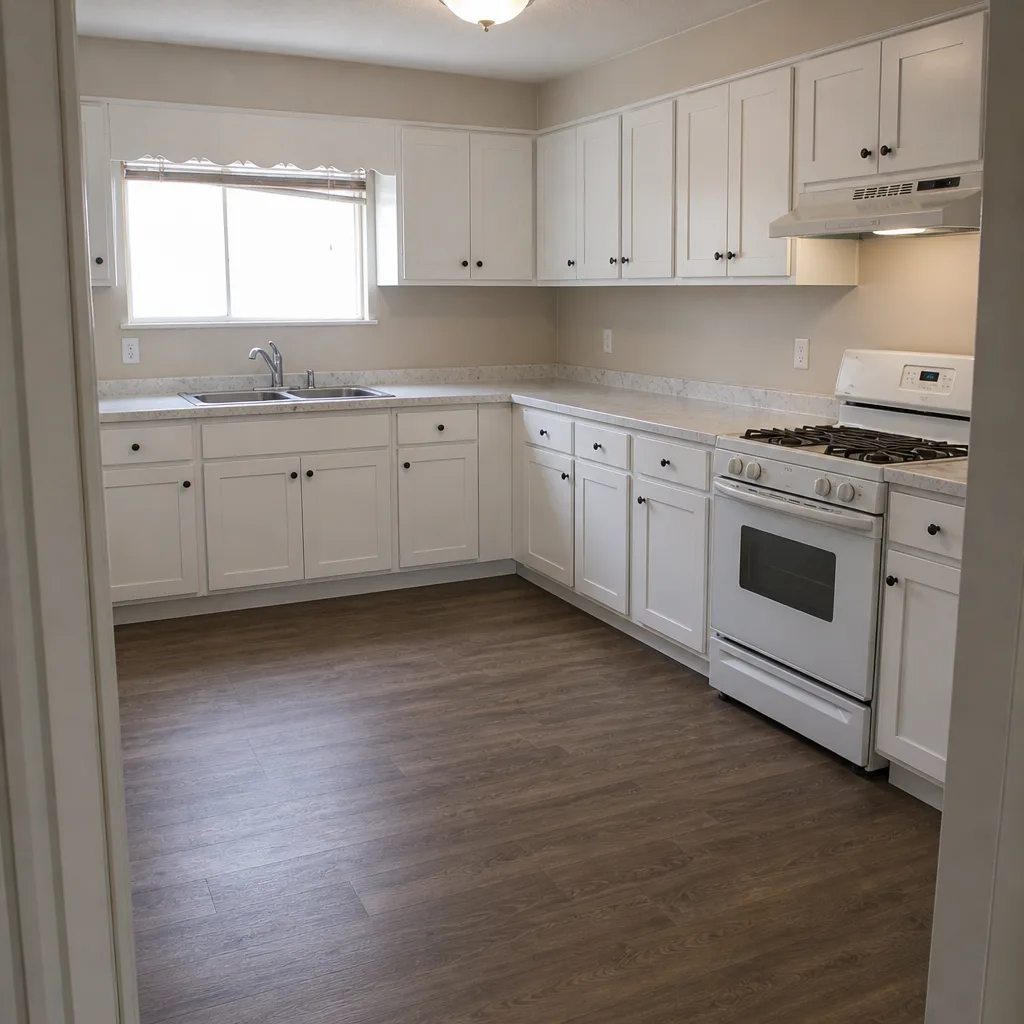 After
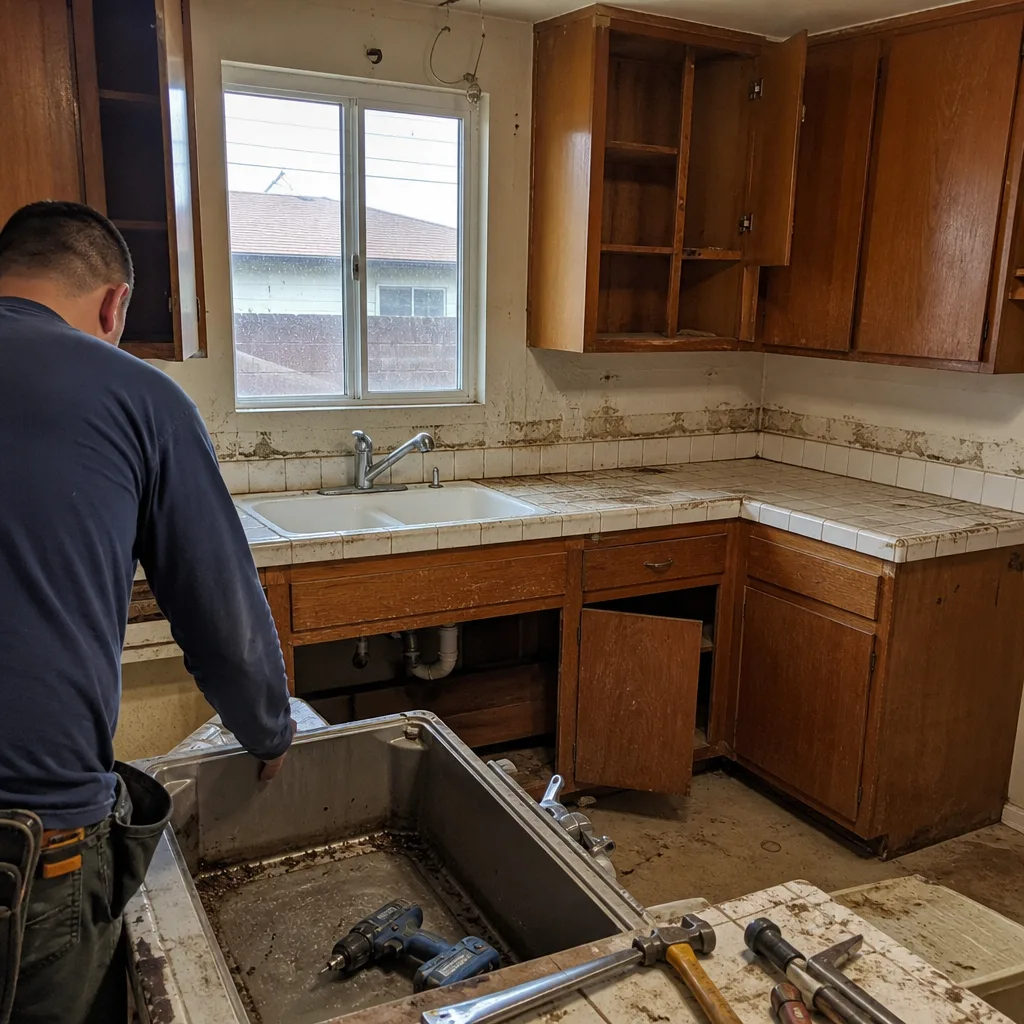 Before
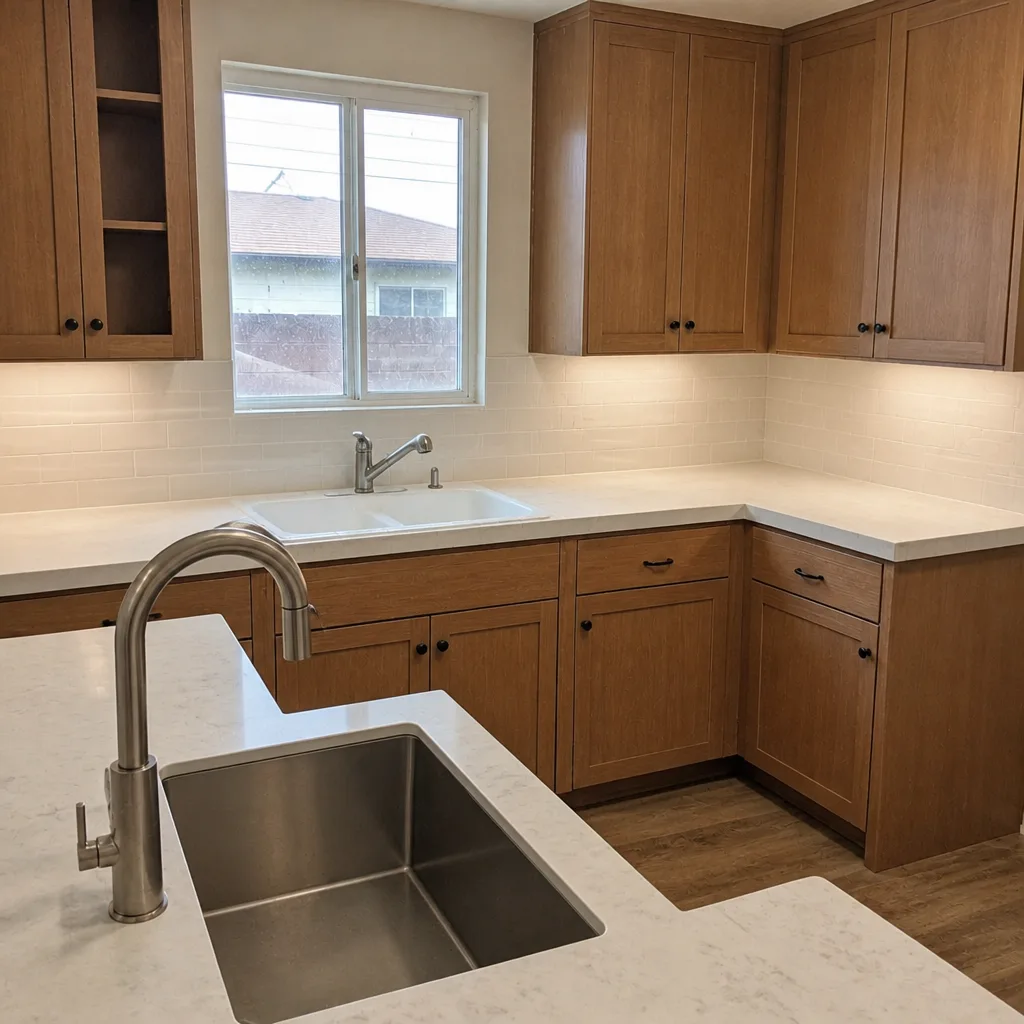 After
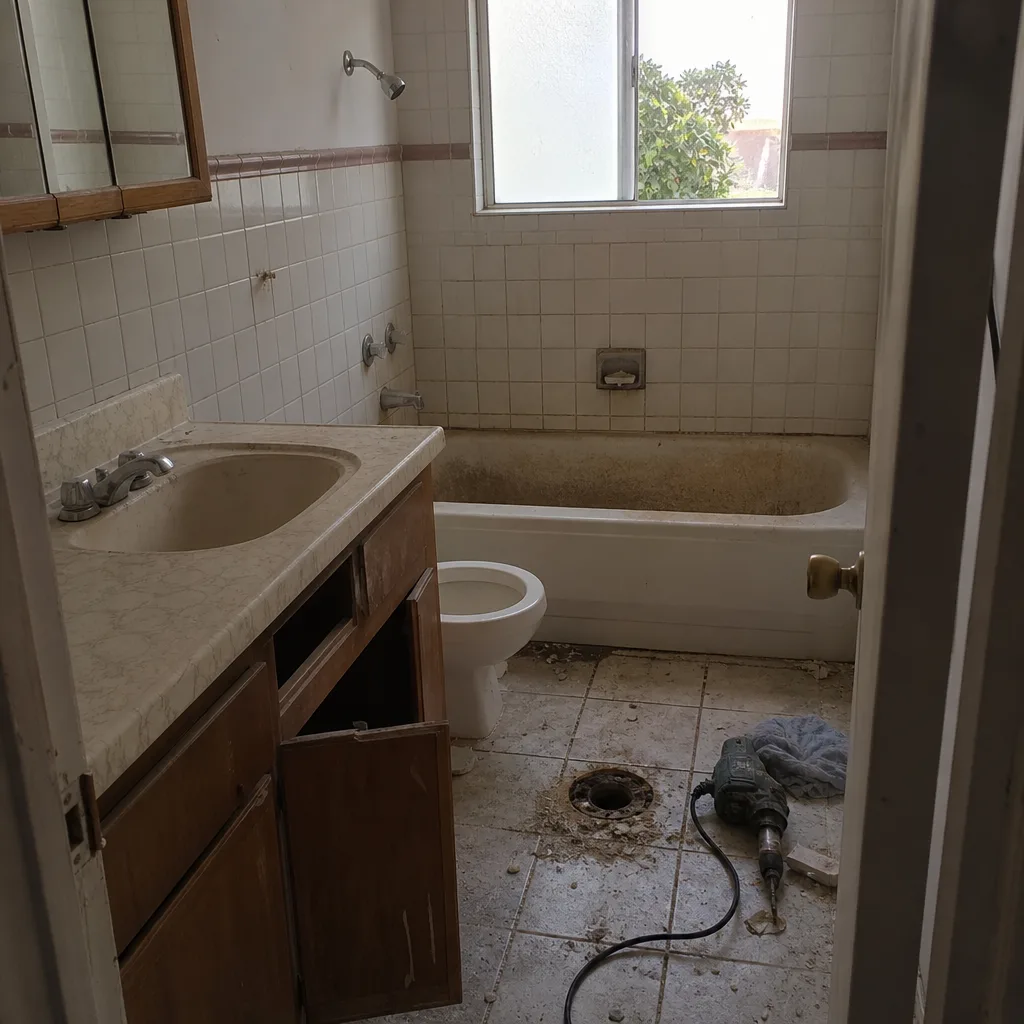 Before
 After
When to Call a Professional
Most paver maintenance is reasonable homeowner work. Refilling joint sand, cleaning the surface, pulling weeds, and walking the perimeter each fall are all tasks a homeowner can handle. But some situations need a trained eye and the right tools, and trying to DIY them can turn a manageable repair into a full replacement.
Call a professional if you’re seeing any of these: a depression or dip that wasn’t there last year, pavers that rock or sound hollow when you walk on them, a crack running in a continuous line across multiple pavers, water pooling against the garage or in the middle of the driveway after rain, sand washing out repeatedly at the bottom of the driveway after every storm, or cloudy, peeling sealer that needs chemical stripping. If the paver surface itself is past its useful life and it’s time for replacement, that’s a bigger job and a contractor should walk it with you.
Groundwork Construction Co. of Inglewood offers free estimates in Inglewood, and our technicians have up to 12 years of experience with paver repair, replacement, and drainage work. Call (833) 842-7204 to schedule a walkthrough. Calls are answered by a live person, 24/7, so you’re never leaving a message in a void.
Frequently Asked Questions
Once a year, ideally in early October before the rainy season. Inglewood’s marine layer and UV cycle degrade polymeric sand faster than in drier inland cities, so annual refills prevent the joint washout that leads to base failure. Call (833) 842-7204 if you’d rather have it done right than guess.
Because those storms are intense. Inglewood gets around 14 inches of rain in concentrated bursts between November and March, and if the joints are already degraded from the summer UV cycle, the first big storm pushes water through them and washes out sand. Refilling joints in October is the single best way to prevent it.
Annual joint sand refill typically runs $200 to $450 for a standard driveway, and a full sealer application every three to five years runs $500 to $1,100 for a penetrating sealer. Repairs are much more expensive, which is why maintenance is worth doing. Call (833) 842-7204 for an exact quote – estimates are free.
Only if you use the wrong sealer. Breathable penetrating sealers and thin-applied water-based acrylics don’t trap moisture. Solvent-based film-forming sealers can, especially in Inglewood’s daily wet-dry humidity cycle, which is why we usually recommend breathable options for our climate.
Yes, but only at low pressure – 1,500 to 2,000 PSI with a wide fan tip, and only after the joint sand has fully cured. Higher pressure strips the sand and opens the joints, which starts the failure cycle over. If you’re not sure, a surface cleaning from a contractor is safer.
With annual maintenance, a paver driveway in Inglewood should last 20 to 30 years. Without it, we’ve seen 10 to 12 years before base failure forces a full reinstallation. The difference comes down almost entirely to joint sand and drainage over the life of the surface.
If you’re planning a full replacement or want to look at drainage improvements alongside the driveway, our Home Additions & ADU in Inglewood team can handle the full-scope work, and we coordinate paver and drainage installs as part of larger property projects. Groundwork Construction Co. also backs paver work with the 730-Day Done Right Promise, so if it’s not done right, we make it right. If you’re weighing a bigger project, our team covers everything from foundation to finish line, and you can read more on our Groundwork Construction Co. of Inglewood home page.
The Bottom Line
Inglewood driveways don’t fail from neglect in the way most national guides describe. They fail from a specific combination of marine layer humidity, intense UV, and concentrated winter rain, and the failure almost always starts in the joints, not the stone. Refill joint sand in October. Check the surface after every storm. Seal with a breathable sealer in early fall every three to five years. Inspect the edges and transitions twice a year. Read the crack patterns honestly: surface cracks are cosmetic, base failure needs a contractor. Do those things and your pavers will hold up through the next decade of Inglewood weather without a reinstall.
Ready for a professional walkthrough? Groundwork Construction Co. of Inglewood offers free estimates on paver maintenance, repair, and replacement, with upfront pricing and no surprises. Call (833) 842-7204 to schedule yours, or reach out anytime – a live person answers, 24/7.
Written by the team at Groundwork Construction Co. of Inglewood.