Free written scope consultation - allowances, timeline, and change-order rules on paper before a single trade is scheduled
Styles & brands we work with
- Kitchen remodeling
- Bathroom remodeling
- Home additions & ADU
- Roofing
- Windows & doors
- Driveway & pavers
- Fence
See the difference
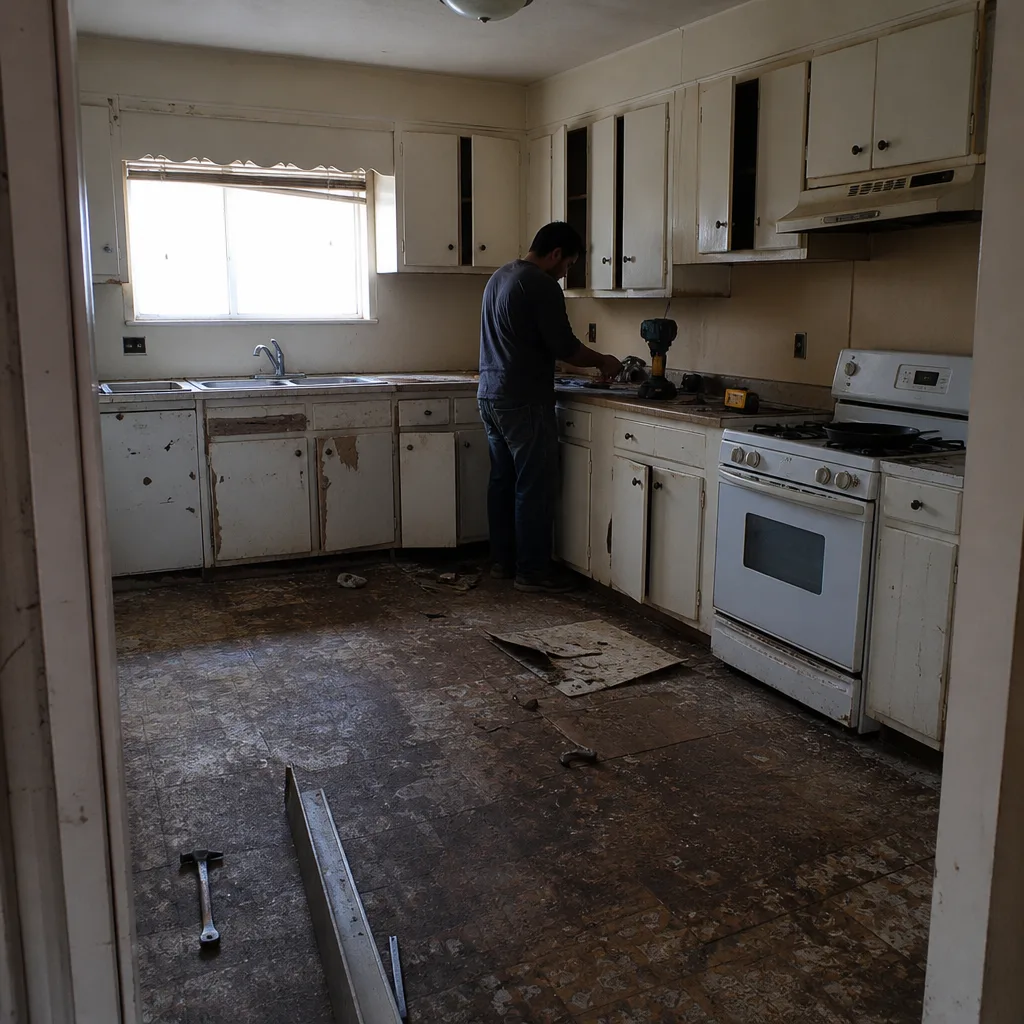 Before
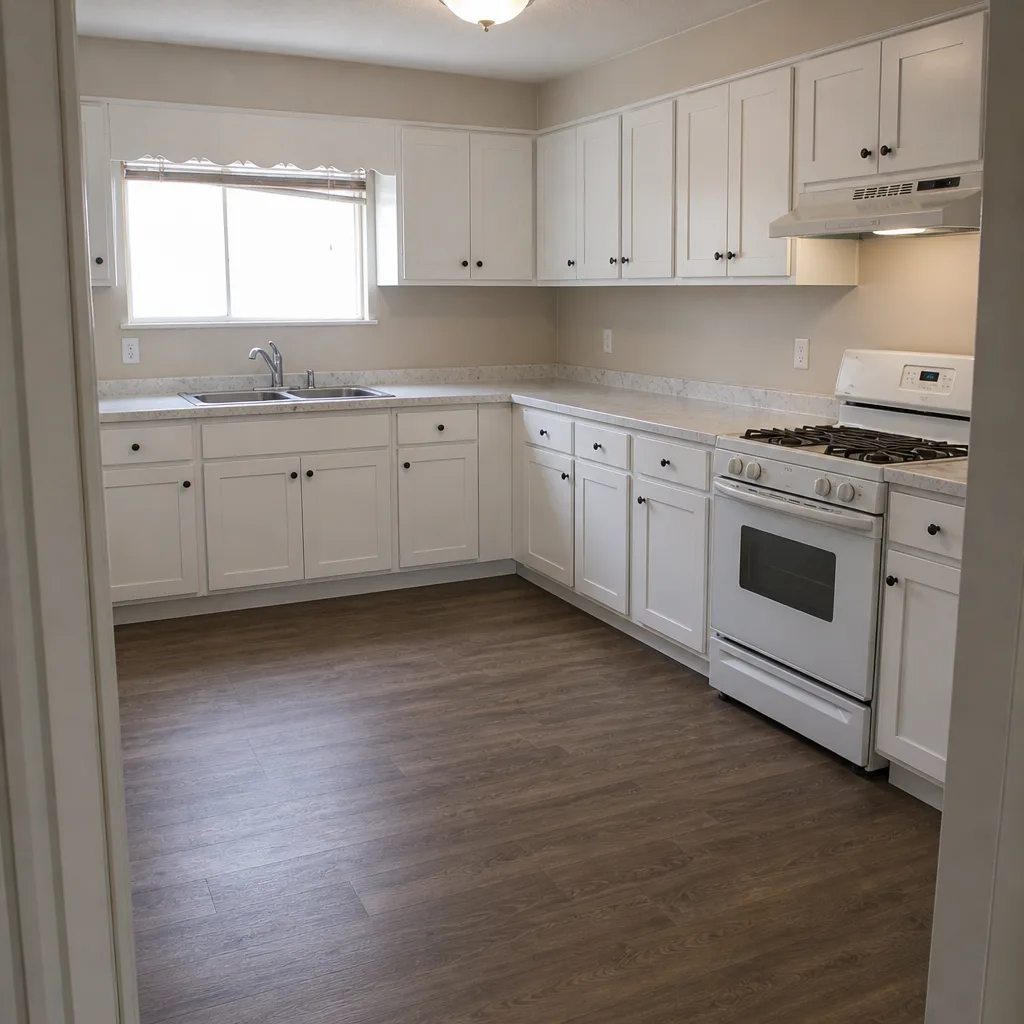 After
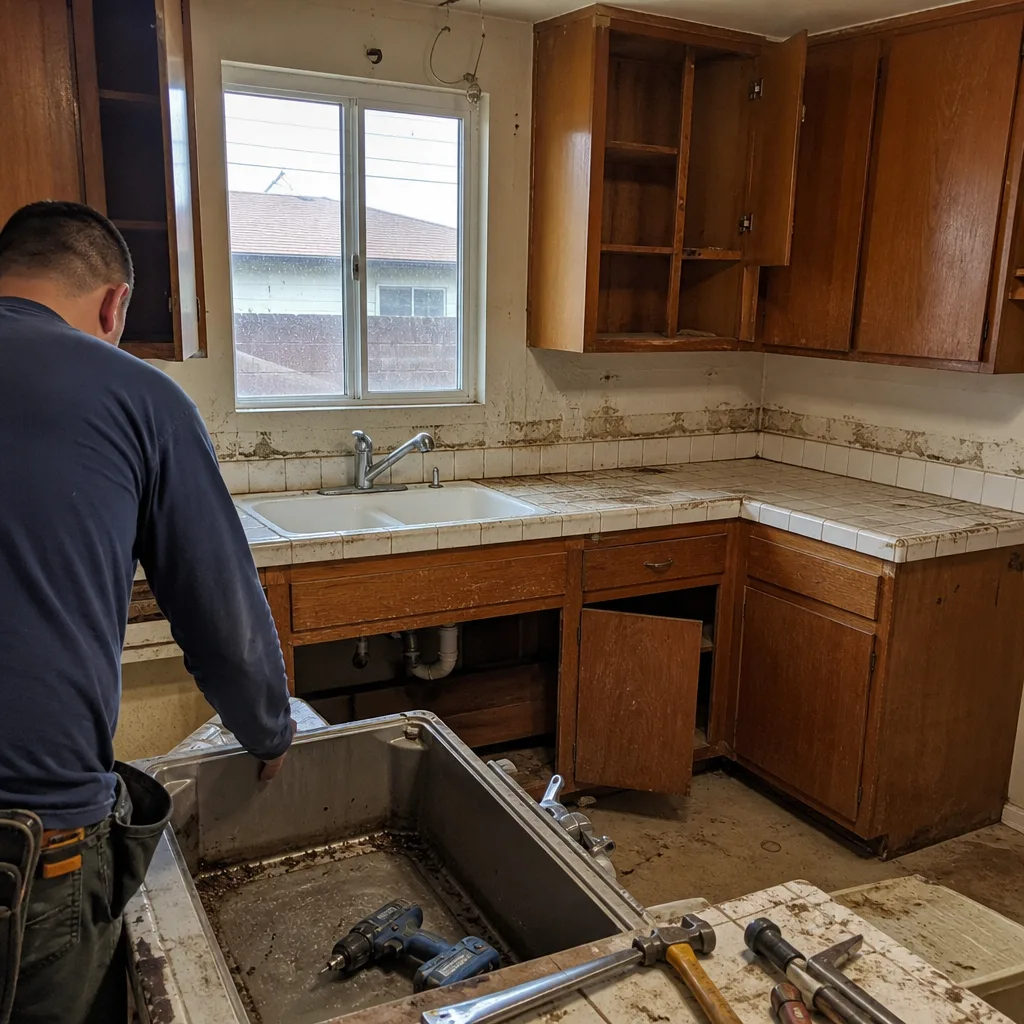 Before
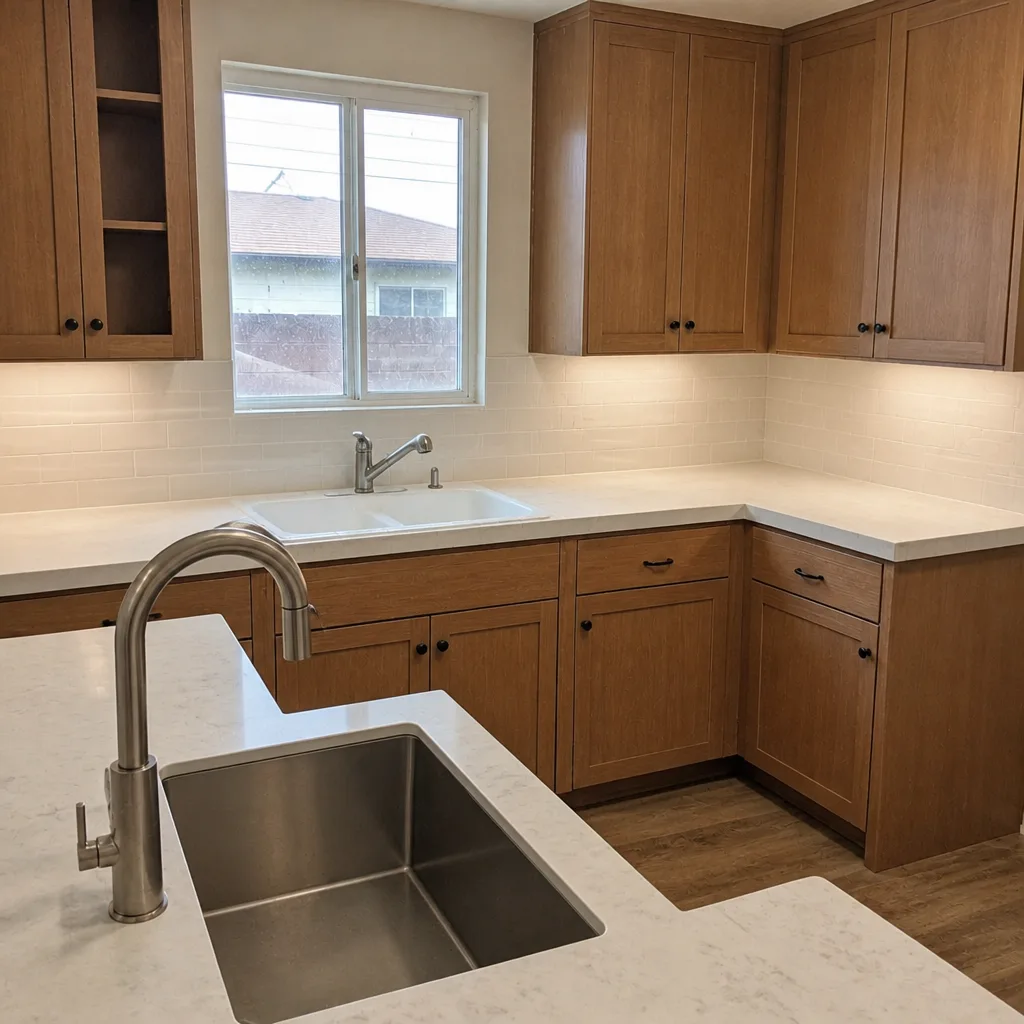 After
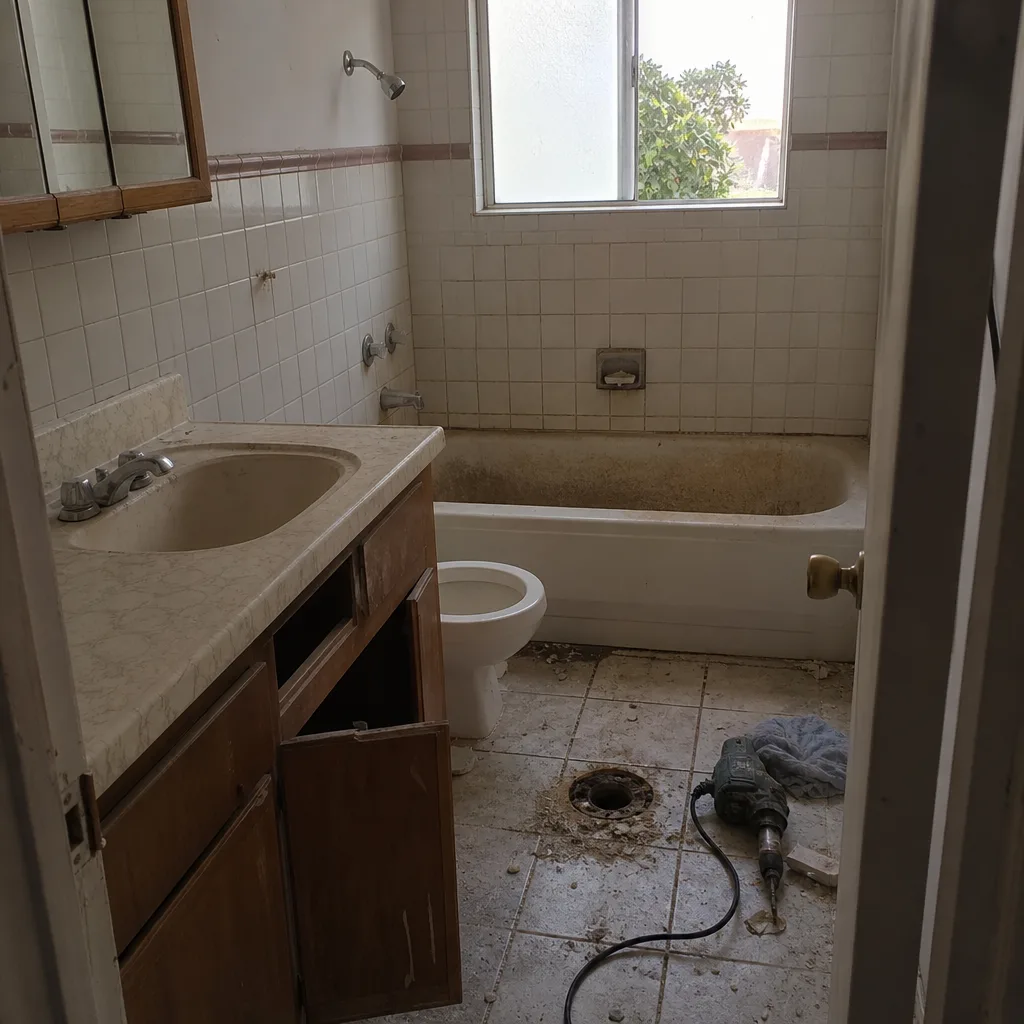 Before
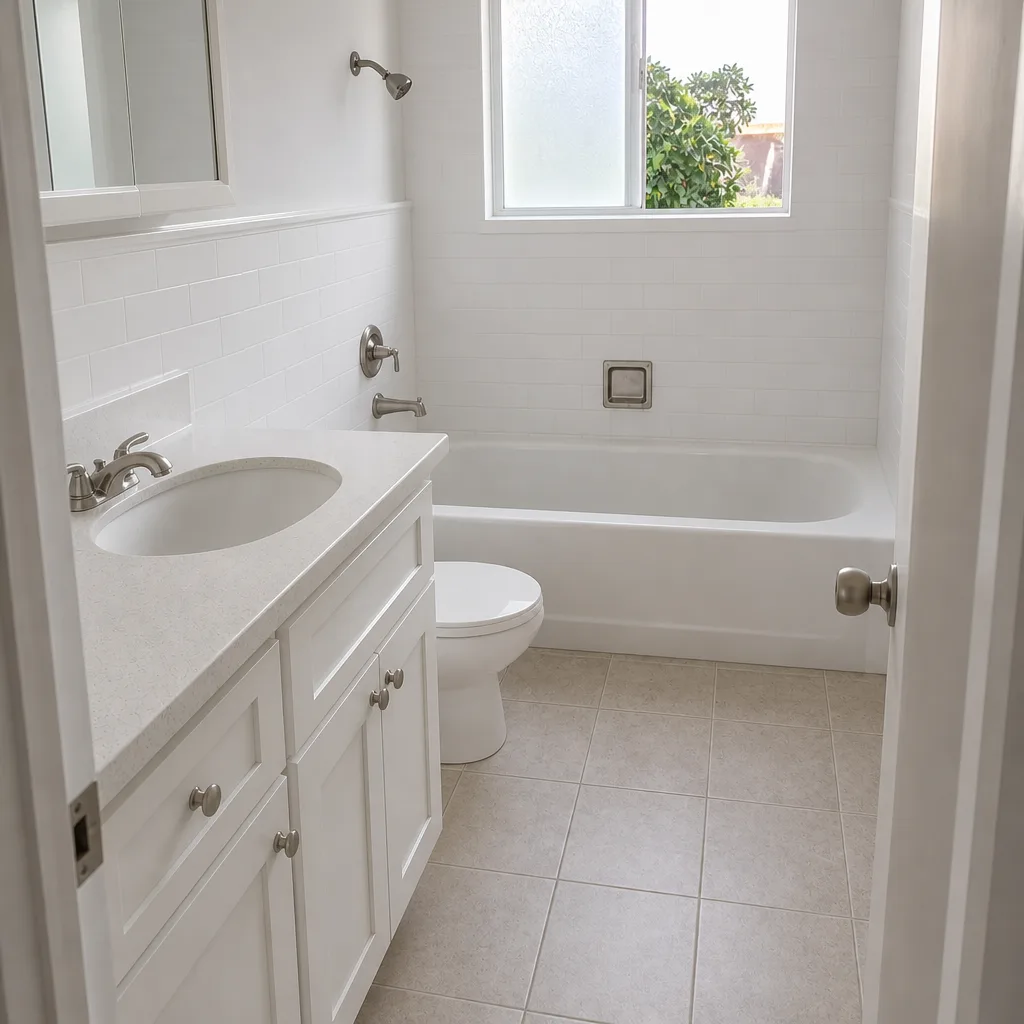 After
Tile vs Vinyl Plank Kitchen Flooring in Inglewood, CA: Which One Holds Up?
Choose luxury vinyl plank unless you’re ready to pay for the subfloor work that makes tile survive in an Inglewood bungalow. Tile is the more durable surface on paper, but most pre-1960 houses on the flats west of Prairie Avenue sit on original fir subfloors with enough flex and seasonal movement to crack grout within 18 months. Vinyl plank tolerates that movement. Tile doesn’t. The real question isn’t tile or vinyl – it’s whether your floor is stiff enough to hold tile without cracking, and what fixing that stiffness costs. Call (833) 842-7204 and we’ll walk you through it before you commit to either one.
Why does the subfloor decide this, not the material?
Tile depends on a stiff floor. The industry standard is L/360 deflection – meaning the floor can sag no more than 1/360th of its span under normal load. Luxury vinyl plank is also rated at L/360, but it tolerates flex that would crack a rigid tile-and-grout surface because it moves with the floor instead of fighting it.
Inglewood’s housing stock makes that difference matter. The 1920s-1950s bungalows and small stucco duplexes that dominate the flats were framed with fir joists that have spent decades drying and moving. Some were never built to modern standards, and a fair number carry unpermitted additions that the City of Inglewood’s permit office now scrutinizes hard in the post-SoFi enforcement climate. When we open a kitchen floor, we find the truth fast.
How to test your own subfloor for bounce before you get a quote
You can check deflection yourself in about ten minutes. Here’s the test we suggest to every Inglewood homeowner weighing this decision:
- Fill a clear glass with water and set it on the kitchen floor.
- Stand about two feet away and bounce your weight on the balls of your feet – a firm, steady rhythm, not a jump.
- Watch the waterline. Ripples that spread past the rim mean the floor is moving more than tile will tolerate.
- Repeat near the middle of the room and next to exterior doors, where joists often run out.
- Also check for slight dips with a four-foot level laid across the floor in three directions.
If the water jumps or the level rocks, tile means adding a cement board underlayment and, in many cases, sistering or blocking joists first. Vinyl plank usually goes right over a leveled surface. That single test tells you which path you’re on.
What does each material actually cost in Inglewood, with subfloor prep included?
Per-square-foot price cards hide the subfloor line, and that line is exactly where tile gets expensive. Here’s what we see in Inglewood kitchens when prep is honest and included:
| Cost line | Ceramic/Porcelain Tile | Luxury Vinyl Plank |
|---|---|---|
| Material | Lower per sq ft | Slightly higher per sq ft |
| Subfloor prep | Cement board underlayment + possible joist work | Self-leveling compound only if needed |
| Grout & sealer | Required | None |
| Typical installed kitchen | Higher all-in once prep is counted | Lower all-in for most bungalows |
| Moisture behavior | Grout joints absorb humidity | Waterproof core resists it |
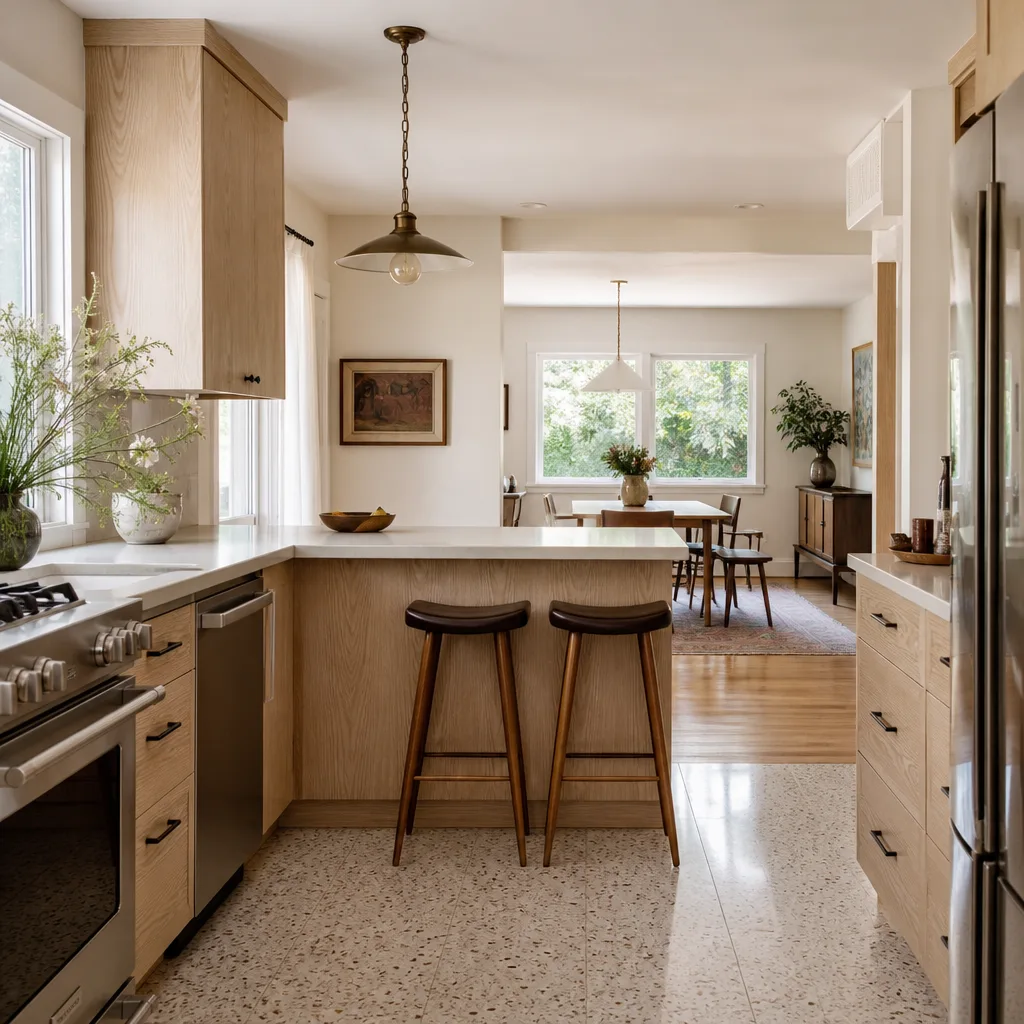
A full kitchen remodel in Inglewood runs $14,000-$45,000, and flooring is one piece of that budget. If you’re reworking the whole space, our Kitchen Remodeling team plans the floor and the subfloor together so the number you see is the number you pay. For a broader look at how flooring fits into a full renovation, see Kitchen Remodeling in Inglewood.
Does Inglewood’s coastal moisture favor one material?
It favors vinyl plank near the wet zones. Inglewood sits close to LAX under a persistent marine layer, and kitchen floors near exterior doors and under sink cabinets see more humidity cycling than an inland home. Grout is porous; in a poorly ventilated kitchen it takes on moisture, stains, and eventually mildew in the joints. A waterproof-core LVP plank handles that cycling without a sealer schedule.
That isn’t only about comfort. Salt-laden onshore air and moisture cycling are the same forces that age stucco and corrode fasteners across Inglewood, just at a smaller scale inside the kitchen. We see it in the finishes that fail first. If you’re weighing a full kitchen overhaul, the home page lays out how we think about whole-house durability in this climate.
The radiant heat question older Inglewood homes keep raising
Electric radiant heat is increasingly popular as a gas-free upgrade in California, and both materials can sit over it – but the install protocols differ. Tile needs a specific mortar and membrane rated for in-floor heat so the assembly expands together, and the heating element must be fully embedded. LVP needs a mat rated for floating or glue-down over heat, with temperature limits the manufacturer sets. Get the protocol wrong on either and you void the warranty. This is the piece most comparison articles skip.
Which one is cheaper over ten years?
Vinyl plank wins on total cost of ownership. Tile grout needs resealing every 2-3 years and re-grouting at 7-10 years; LVP needs essentially no maintenance beyond sweeping and damp mopping. Add up a decade of sealer, regrout labor, and the occasional cracked tile and the two materials land far closer than their sticker prices suggest – or LVP pulls ahead outright. The decision becomes financial, not just aesthetic.
So how do we decide with you?
We test the floor, price the prep honestly, and recommend based on what the subfloor will actually do – not on which product sells. Whether it’s an original bungalow or a modernized one, we bring background-checked, uniformed technicians, upfront pricing, and the 730-Day Done Right Promise behind every install. Our technicians have up to 12 years of experience with both materials. Flooring that holds is built from the joists up.
FAQs
Vinyl plank is the better fit for most Inglewood kitchens because it tolerates the flex in older fir subfloors and resists marine-layer humidity that grout absorbs. Tile is the better choice only when the subfloor can be brought to L/360 stiffness and you want the durability of a hard surface. Call (833) 842-7204 for a free estimate and we’ll test your floor first.
Installed kitchen flooring is part of a kitchen remodel that runs $14,000-$45,000 in Inglewood, with the subfloor prep as the variable that swings the tile price highest. A smaller kitchen refresh lands in the $9,000-$20,000 range. Call (833) 842-7204 for an exact quote – estimates are free and there are no surprises.
Often yes, but it depends on the test. Vinyl plank can usually go over a leveled fir subfloor; tile typically needs cement board and sometimes joist work. We check deflection before quoting either. Call (833) 842-7204 and we’ll assess your floor in person.
Repair only makes sense when the subfloor is sound and the damage is localized – a few cracked tiles, a small soft spot. If grout is cracking across the room within 18 months, replacement with LVP is usually the smarter spend. Call (833) 842-7204 and we’ll give you the honest call.
If you’d rather have it looked at, Groundwork Construction Co. of Inglewood offers a no-pressure assessment in Inglewood – we’ll test the subfloor and tell you straight whether tile is viable. Call (833) 842-7204 to book your free estimate.
Written by the team at Groundwork Construction Co. of Inglewood, serving Inglewood, CA.