Last updated November 18, 2026
Free written scope consultation - allowances, timeline, and change-order rules on paper before a single trade is scheduled
DIY vs Professional Home Additions & ADU: What’s Safe to Do Yourself
Here’s the part almost nobody tells homeowners: in California, you can legally pull your own permits and act as your own general contractor to build an ADU. That’s a real right under state law, and it surprises people who assume a licensed GC is mandatory. But legal and practical are two very different things, and the gap between them is where budgets go to die. In Inglewood, where lots are tight and half the housing stock predates 1960, that gap tends to be wider than most people expect. This guide breaks down exactly which phases you can safely own yourself, which phases will cost you more if you DIY them, and how to run an honest audit of your own skills before you sign anything.
Quick Answer
You can legally act as your own general contractor for an ADU in California, but four phases are almost never worth DIYing: foundation, framing to code, rough-in inspections, and weatherproofing. Demolition, painting, and landscaping are the three phases where a capable homeowner genuinely saves money without added risk. Licensed trades (electrical, plumbing, HVAC) still require a licensed professional even under the owner-builder exemption.
Styles & brands we work with
- Kitchen remodeling
- Bathroom remodeling
- Home additions & ADU
- Roofing
- Windows & doors
- Driveway & pavers
- Fence
Table of Contents
- What California’s Owner-Builder Permit Law Actually Allows
- The Three Phases Where DIY Genuinely Saves Money
- The Four Phases Where DIY Creates Compounding Risk
- The Insurance Gap Most Homeowners Never Hear About
- A Realistic Skill-and-Time Audit Before You Decide
- Inglewood-Specific Considerations: Lots, Codes, and Climate
- What Professional ADU Work Actually Costs in Inglewood
- Common Mistakes to Avoid
What California’s Owner-Builder Permit Law Actually Allows
California’s owner-builder exemption lets a homeowner pull permits and manage construction on their own property without holding a contractor license. That covers a single-family home occupied by the owner, and it applies to ADUs. What it does not do is exempt you from building codes, from required inspections, or from the licensed-trade rules. If your ADU needs new electrical service, you can’t pull that permit and wire it yourself unless you personally hold a C-10 license. Same goes for plumbing and HVAC.
The week-to-week reality is that being your own GC means you become the general contractor in every legal and practical sense. You’re coordinating subs, tracking inspection schedules, managing the ordering of materials, and taking responsibility for every punch-list item. The permit is in your name. The liability is on your shoulders.
There’s also a future-sale consequence worth understanding now. When you sell the home, you’ll be required to disclose that you acted as an owner-builder, and you may be asked to provide documentation showing the work was permitted and inspected. Buyers and their agents in Inglewood ask pointed questions about ADU legality, because a non-conforming ADU is functionally worthless. An owner-built ADU that passes every inspection has the same market value as one built by a professional. An owner-built ADU that skips a step becomes a negotiation liability at sale time.
In our experience across Inglewood, ADU permits are more scrutinized today than they were even five years ago. The city’s planning department has gotten strict about parking, setbacks, and utility tie-ins. The owner-builder path is legal, but it’s not the path of least resistance.
The Three Phases Where DIY Genuinely Saves Money
There are real phases where capable homeowners save four figures by doing the work themselves. Focus your DIY energy here.
1. Demolition and Debris Removal
Clearing an old garage, removing a concrete pad, or gutting out a shed to make way for the footprint is genuinely something a homeowner can handle with a rented jackhammer, a dumpster, and a weekend. The work is physical but not technical. The risk of a serious error is low, and the savings are concrete: dumpster rental runs a few hundred dollars versus two to three thousand for a small crew over a couple of days. One caveat specific to Inglewood: check for lead paint on pre-1978 structures before you start swinging a sledgehammer. Knocking plaster off a wall that contains lead paint without containment measures creates a health hazard and, if discovered, an abatement bill that eats your savings twice over.
2. Finish Painting
Once the drywall is finished and inspected, priming and painting interior walls is a stress-free DIY. Labor costs for painting represent 60-70% of the total cost of a paint job, and a mid-size ADU (500-700 sq ft) typically runs $3,000-$5,000 painted professionally. Doing it yourself with quality paint (a $300-$500 material cost) is one of the best ROI-per-hour projects you can take on. Give yourself more time than you think. ADUs are small, so there’s lots of cutting in around windows and doors.
3. Landscaping and Post-Construction Cleanup
Reseeding the yard, planting low-water plants, laying sod, and cleaning up construction dust is safe for a homeowner to take on. Note that any concrete flatwork (patios, pathways, driveways) is a different story: unless you’re very confident pouring and finishing concrete, that’s a project where errors are visible and awkward to fix. If you’re considering flatwork, Driveway & Pavers in Inglewood covers what professional grading and installation look like in this market. If your ADU project also triggers re-fencing along the property line, that’s covered in Fence Installation in Inglewood.
The Four Phases Where DIY Creates Compounding Risk
These are the phases where a mistake on Monday becomes a $15,000 problem three years from now.
1. Foundation Work
Inglewood’s soil profile is a mix of sandy loams and pockets of expansive clay, and the transition zone along the hills west of La Brea is known for differential settlement. A foundation poured with the wrong soil preparation, the wrong mix, or the wrong reinforcement doesn’t fail immediately. It cracks over two to four years, and by the time you notice the door frames aren’t true or the floor is uneven, the fix means lifting the building. Remediation on a slab that fails varies wildly, but stabilization and cosmetic repair runs $15,000-$40,000 on the low end. A licensed concrete contractor handles this phase in three days. You can’t borrow against the savings if the foundation fails.
2. Framing to Code
Framing gets inspected before drywall goes up. It’s the inspection that reveals whether the studs are spaced correctly, whether the headers are sized for the spans, whether shear walls are nailed and strapped per the engineering. Small errors here are not just a matter of re-doing work; they’re a matter of tearing out finished assembly. In our experience, an inspection failure on framing means at minimum a week of corrections and re-inspection, and the remediation on a 500 sq ft structure runs $4,000-$8,000 in labor and materials.
3. Rough-In Inspections (Plumbing, Electrical, Gas)
Rough-in is the behind-the-wall work: pipes, wires, gas lines. It’s also where California law forces your hand, since electrical, plumbing, and HVAC require licensed trades. Even beyond the legal requirement, rough-in work is where you cannot see the failure. A pinhole in a soldered copper joint or a wire that’s been nicked during rough-in is invisible at inspection but weeps water or overheats a wall months later. Repairing an electrical fault after drywall is up and painted typically runs $1,200-$3,500 for the demolition, remediation, and re-finishing.
4. Weatherproofing
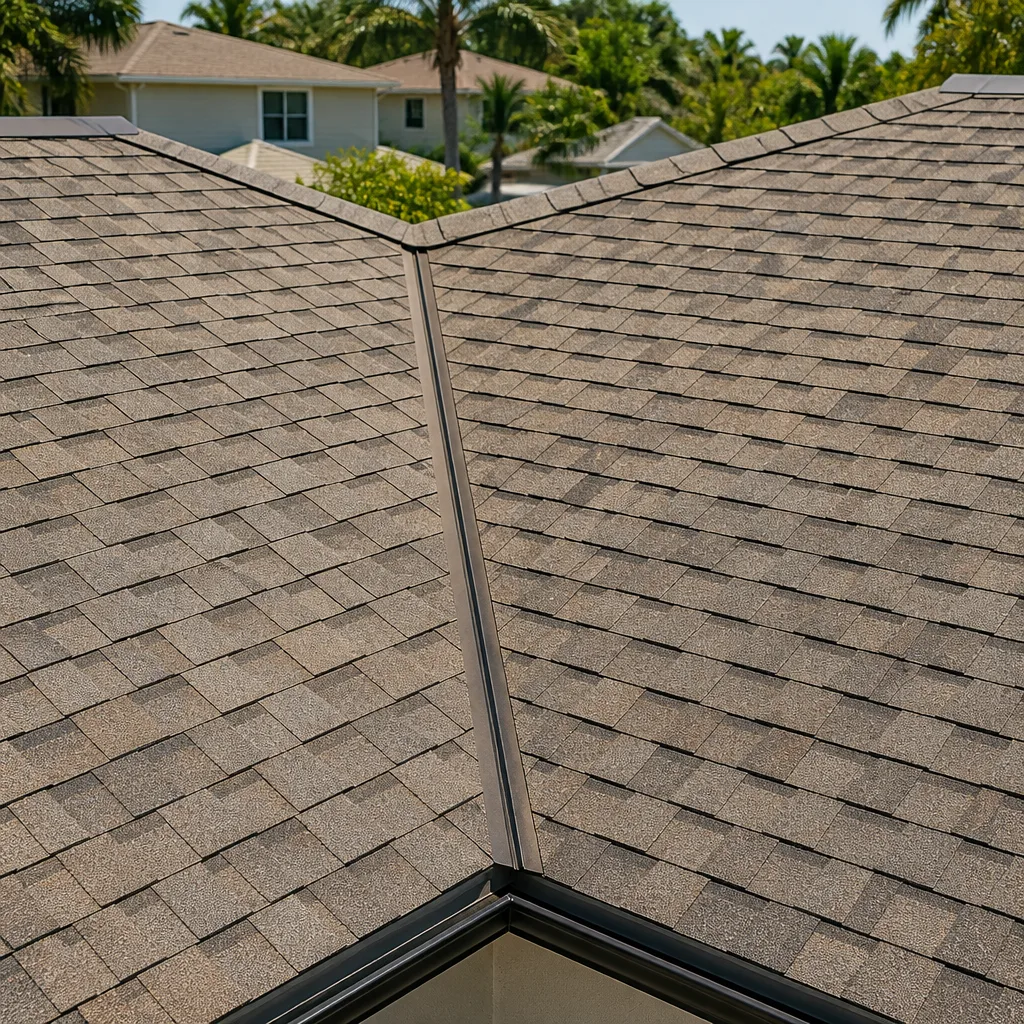
Roofing, flashing, window openings, and exterior sealing are the ADU’s front line against water. In Inglewood, we see a specific failure pattern where inexperienced installers don’t flash around chimney transitions or skylight curbs correctly. The damage doesn’t show up in the first rain. It shows up after the third winter, when the sheathing has soaked through and starts to rot. Remediation on a leaking roof valley often runs $2,500-$6,000 before interior damage.
The Insurance Gap Most Homeowners Never Hear About
Here’s the part most owner-builder guides leave out. Standard homeowner insurance policies contain clauses that can limit or exclude coverage for damage arising from work completed outside code or without permits. If your ADU was built by you as owner-builder and something fails three years later (a burst pipe behind the wall, a roof leak that rots the framing, an electrical fire in an under-inspected circuit), your insurer may investigate whether the work complied with the permit and inspection record. If the investigation reveals a skipped step or unpermitted change, the claim can be reduced or denied.
That conversation between you and your insurance adjuster is not the one you want to have on a rainy Tuesday in Inglewood. A licensed professional’s work comes with permits, inspection records, and a written workmanship guarantee, which materially changes the insurance conversation. You can build under the owner-builder exemption, but you’ll want to make sure every inspection passes on the first attempt and every piece of documentation is filed in a folder. The paper trail is your insurance policy.
A Realistic Skill-and-Time Audit Before You Decide
Before you commit to any scope, run yourself through this audit honestly. Be ruthless; the ADU isn’t the place for aspirational confidence.
- Have you personally managed a project over $50,000? If no, the learning curve is real and expensive. Most ADU projects in Inglewood run $120,000-$250,000 all-in.
- Can you read a set of construction drawings? Rough framing, dimensional tolerances, and MEP (mechanical, electrical, plumbing) layout. If not, hire a structural engineer to review and explain.
- Do you have 15-20 hours per week to dedicate to coordination for 4-8 months of the build? That’s not an exaggeration; it’s what being GC actually takes.
- Are you comfortable calling inspectors and re-scheduling after failures? Most owners underestimate the bureaucratic overhead. Inglewood’s planning and building departments run a 2-4 week queue on some inspections during peak season.
- Do you have a $20,000-$40,000 buffer over your estimated budget? The owner-builder path has no change-order protection; if something surprises you, you absorb it.
- Are you prepared to disclose the owner-builder role at future sale? Some sellers find buyers discount the property for fear of hidden defects. You’ll need the inspection records to counter that fear.
Score yourself on those six honestly. If you can say yes to five or six, owner-builder is worth the evaluation. If you can say yes to three or four, the smarter scope is to hire a professional GC and do the three safe DIY phases yourself. If you say yes to fewer than three, work with a GC.
For the broader context of what home additions look like in Inglewood today, the Home Additions & ADU in Inglewood page walks through the design and permitting phases. If you haven’t yet decided whether you’re building an ADU, a stick-built addition, or a prefab unit, that’s the question to nail down first.
Inglewood-Specific Considerations: Lots, Codes, and Climate
Inglewood is not a generic Southern California market, and the specifics matter for ADU planning.
Lot sizes and setbacks. Much of Inglewood’s housing stock sits on 5,000-6,000 sq ft lots, and the setback rules are strict. Detached ADUs work on the 6,000+ sq ft lots, but on the smaller lots you’re often looking at a garage conversion or an attached ADU, both of which have different structural and utility implications. The Morningside Park and North Inglewood neighborhoods have more room; the lots closer to downtown and along Manchester Boulevard are tighter.
Housing stock and permitting friction. A large share of Inglewood’s housing was built between 1920 and 1960. When you open a wall for a garage conversion, you may find knob-and-tube wiring, cast-iron plumbing, or non-permitted prior additions. Any of these can stall your permits and add scope. Budget for surprises.
Climate and construction timing. Inglewood’s coastal influence means foggy mornings and cooler temps even in summer, which affects paint curing and concrete pour timing. Rain is concentrated from November through March, so weatherproofing deadlines have real consequences if you’re not buttoned up before then. We’ve seen more ADU framing delays in Inglewood in November and December than any other time of year.
The prefab option. For homeowners considering a prefab ADU from a manufacturer like Cover, Dvele, or Mighty Buildings, the calculus changes. The panelized approach shifts the framing question to the manufacturer, but you still own the foundation, utility tie-ins, and site work, which are three of the four highest-risk phases. Cover and Dvele both work with local site contractors for that portion, which is where a professional GC genuinely earns their fee. Similar logic applies if you’re looking at a Boxabl or Mighty Buildings unit. If you’re setting up a prefab ADU as a rental, site preparation and utility work often account for 30-40% of the total project cost.
What Professional ADU Work Actually Costs in Inglewood
Here’s a realistic line-item breakdown for a 600 sq ft detached ADU in Inglewood. These are ranges we see on live projects; your numbers will vary based on site conditions and finish levels.
- Design and engineering: $6,000-$15,000, including structural engineering, Title 24, and permit drawings
- Permits and city fees: $4,000-$12,000 (Inglewood’s fee schedule and school district fees vary by square footage and project type)
- Site work and demolition: $8,000-$20,000 depending on what has to come out
- Foundation: $15,000-$30,000
- Framing and shell: $30,000-$55,000
- Roofing and weatherproofing: $8,000-$18,000
- Rough-in MEP (mechanical, electrical, plumbing): $18,000-$35,000
- Insulation, drywall, and finishes: $25,000-$45,000
- Final inspection, landscaping, and cleanup: $5,000-$12,000
Total for a 600 sq ft detached ADU typically runs $120,000-$240,000 all-in. A garage conversion often comes in 30-40% lower. The owner-builder path can save 15-25% of that total, but only if every inspection passes on the first try. Every failed inspection and every remediation eats into that margin fast.
Groundwork Construction Co. of Inglewood offers upfront pricing, no surprises, on every project, plus $1,000 off projects over $10,000 and 0% financing for 18 months. If you’re weighing the owner-builder path against a professional build, the free estimate makes that decision easier because you can see the actual number on paper. For a sense of how Groundwork’s broader practice works, the Groundwork Construction Co. of Inglewood home page is the right starting point.
Common Mistakes to Avoid
- Pulling the owner-builder permit without the structural drawings to back it up. Inglewood’s plan check is going to require a stamped set of engineering drawings for any foundation or shear wall work. Skipping the structural engineer to save $4,000 often costs $12,000 in delays and plan-check re-submittals.
- Assuming the owner-builder exemption covers licensed trades. It doesn’t. Electrical, plumbing, and HVAC permits require a licensed contractor. Hiring unlicensed trade help voids your inspections and, if there’s an insurance claim, voids that too.
- Ordering materials from the cheapest source without checking lead times. Windows alone can run 12-16 weeks right now. Ordering late means a framing crew standing around while your ADU sits open to the Inglewood fog.
- Skipping the fire-rated wall assemblies on garage conversions. Inglewood conversions have a specific requirement for separation between living space and any attached garage or common wall. Cutting that corner fails final inspection and, in the worst case, invalidates your fire coverage.
- Doing rough-in trades yourself without license or permit. Even if you’re mechanically skilled, the inspection won’t pass without a licensed signature. You pay for the work twice.
- Not filing every inspection report and permit in a single folder. At sale time, you’ll need this to prove the ADU is conforming. Without it, buyers discount the property or walk away.
- Underestimating the weatherproofing timeline. In Inglewood, if you’re still flashing the roof when November hits, you’re gambling on the rain window. The math on that gamble is $3,000-$8,000 of interior damage if it fails.
See the difference
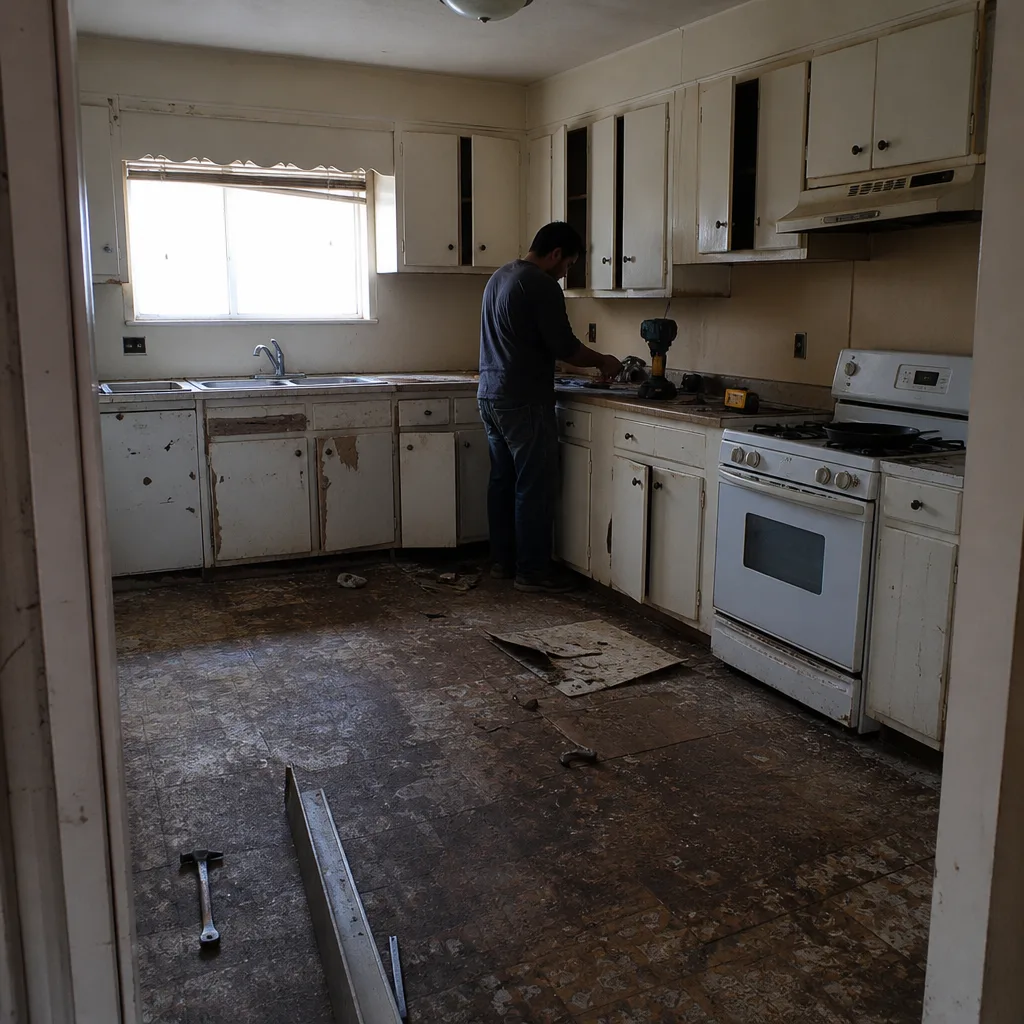 Before
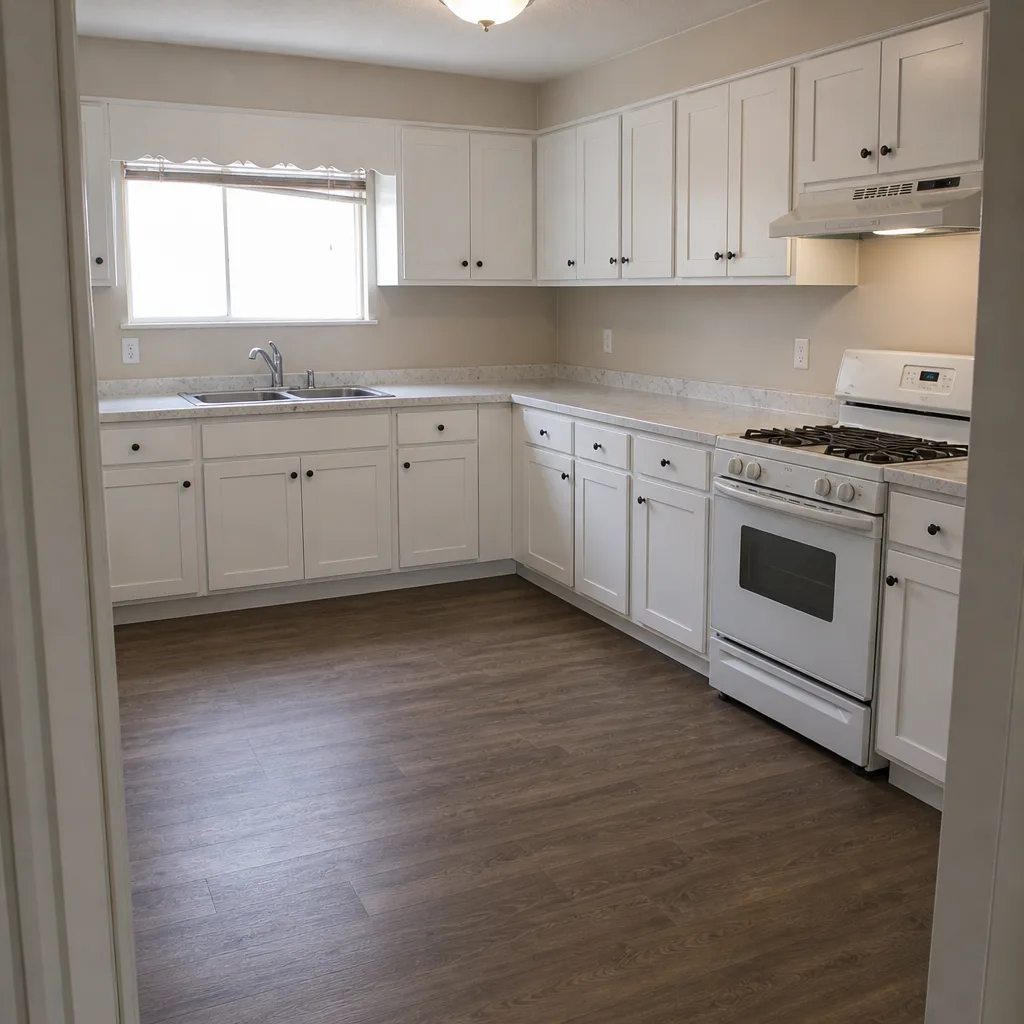 After
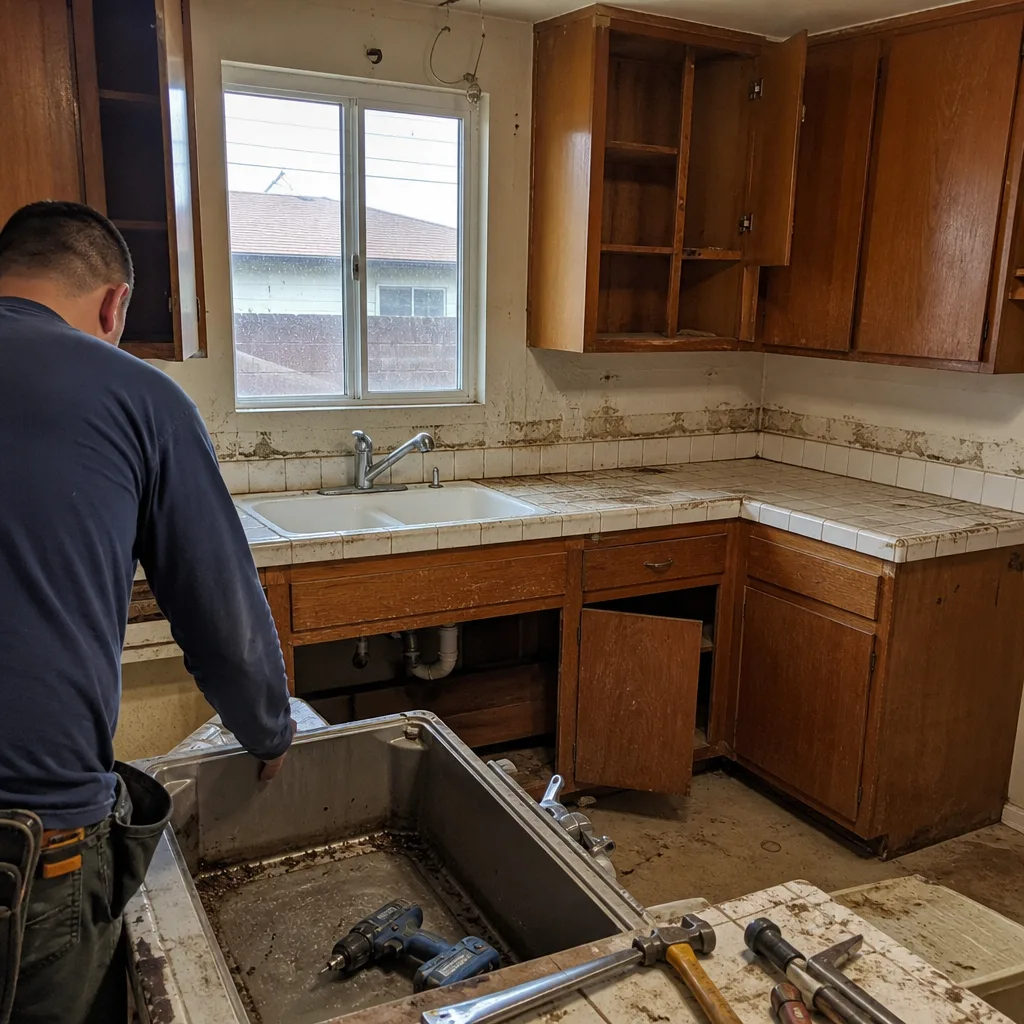 Before
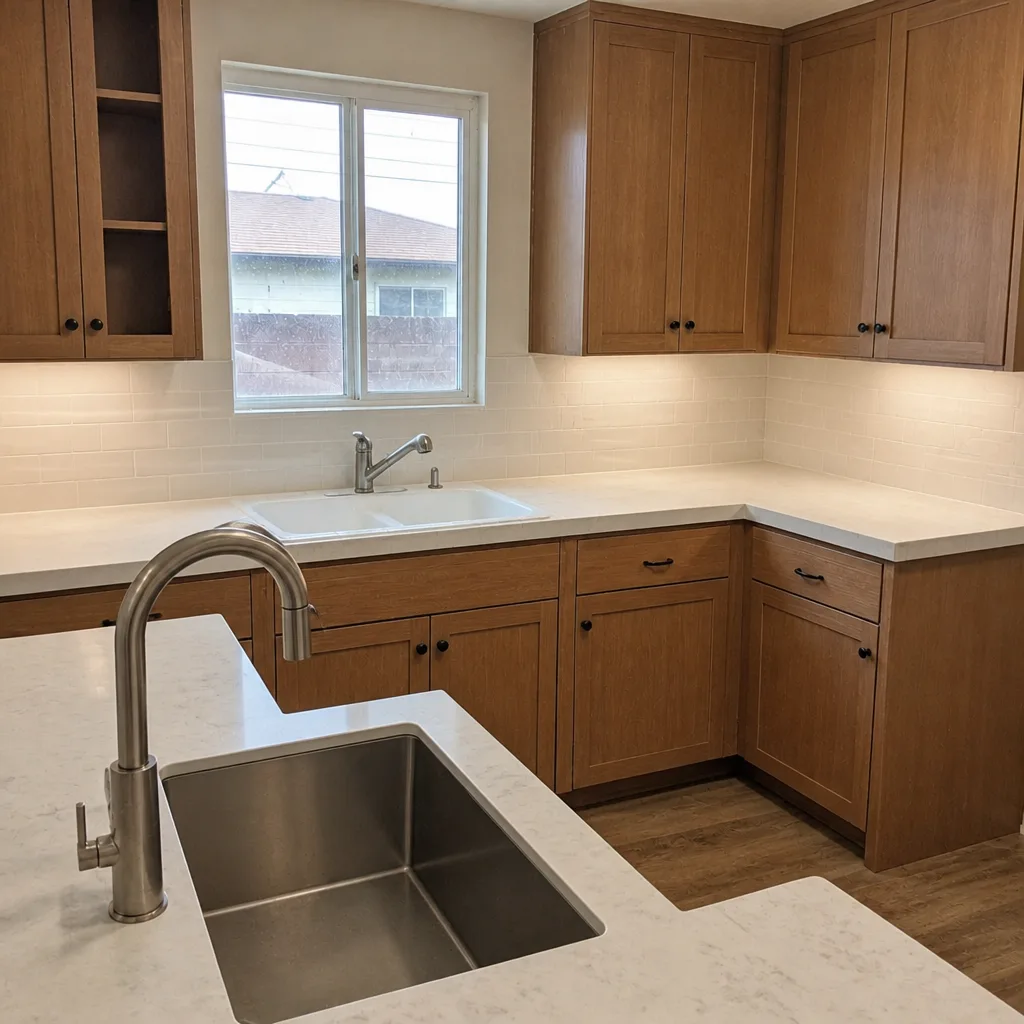 After
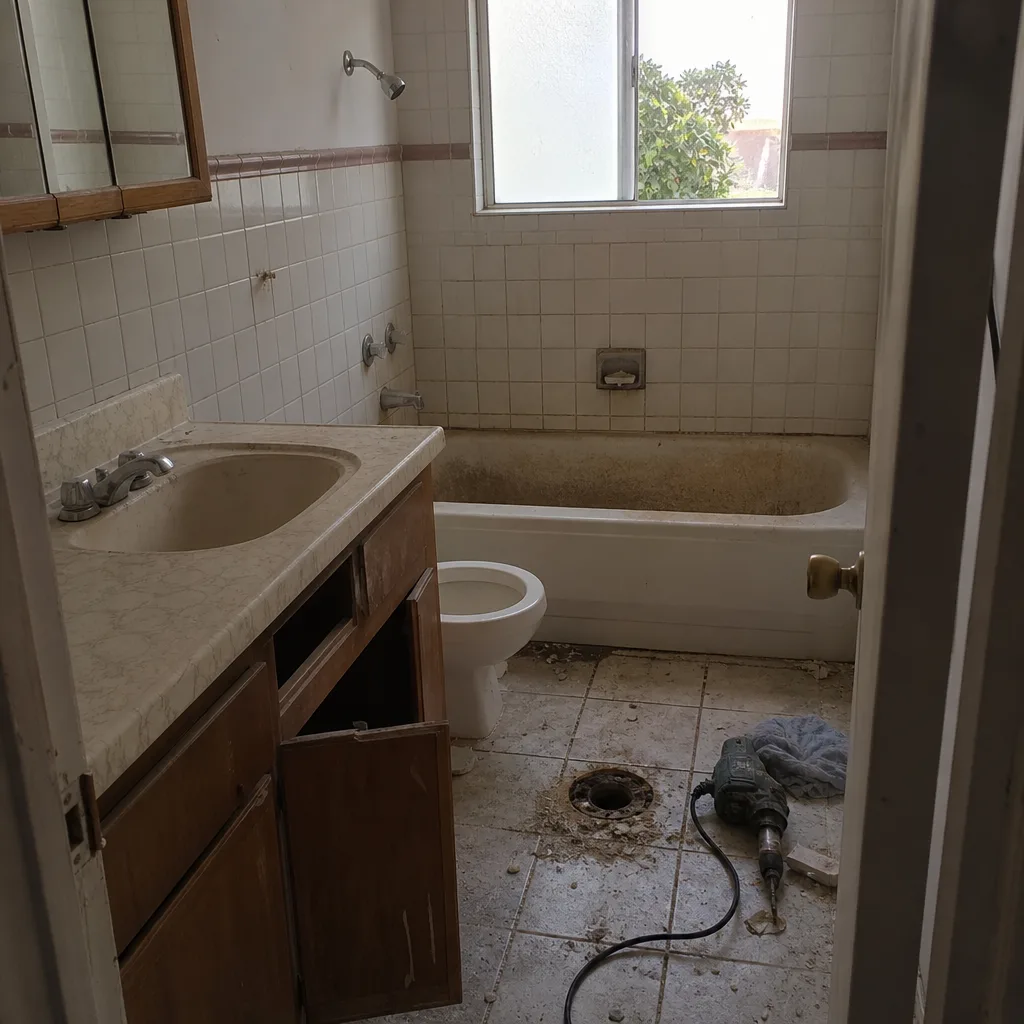 Before
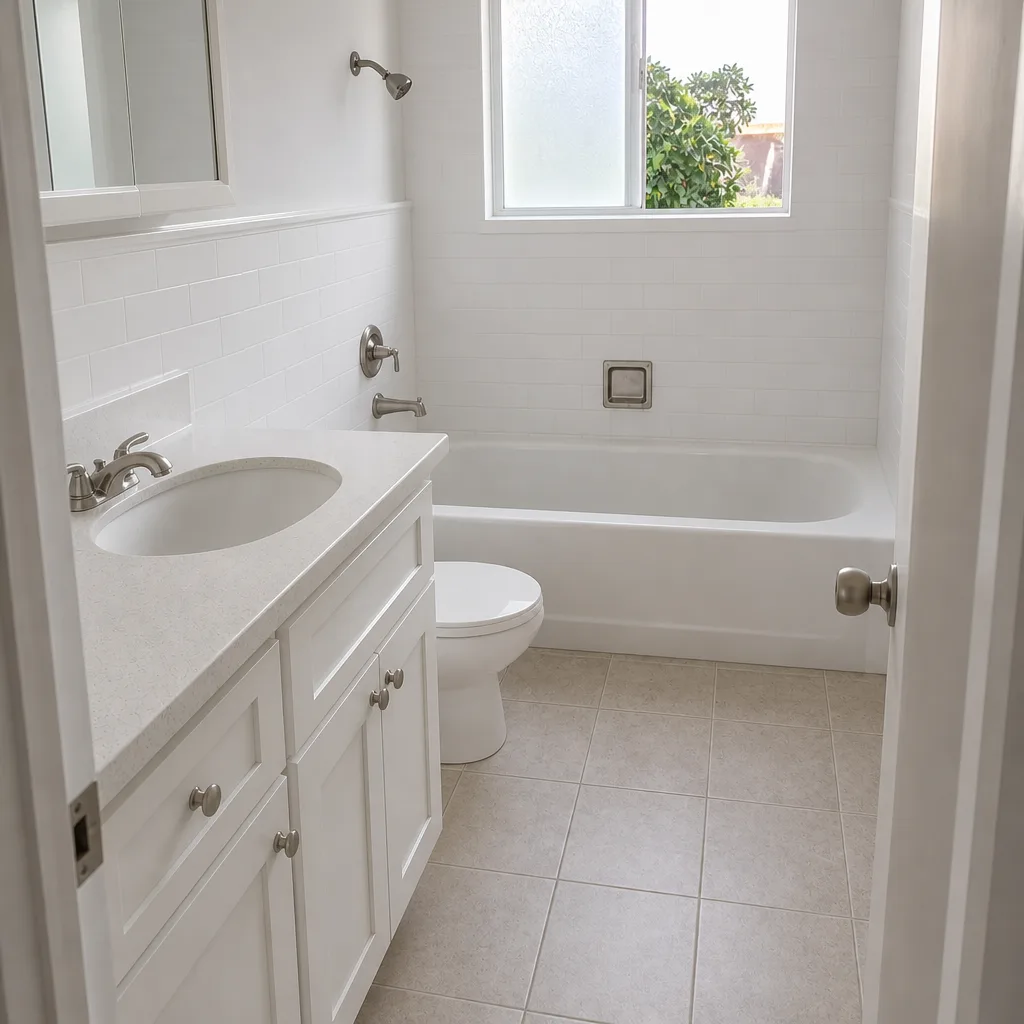 After
When to Call a Professional
Call a professional when any of these apply: you haven’t managed a large construction project before; your project involves moving or pouring a new foundation; your drawings haven’t been reviewed by a structural engineer; your build is hitting the fall-to-winter transition in Inglewood; you’re installing any new electrical service, plumbing, or HVAC; or your budget has less than a $15,000 buffer for surprises. In any of those cases, the owner-builder math doesn’t work because the risk of a compounding failure eats the savings.
If you’re planning a home addition or ADU in Inglewood and want a real number to compare against the DIY path, Groundwork Construction Co. of Inglewood offers free estimates in Inglewood. Call (833) 842-7204. Our technicians have up to 12 years of experience, all calls are answered by a live person 24/7, and every project is backed by our 730-Day Done Right Promise. If it’s not done right, we make it right.
Frequently Asked Questions
Yes. California’s owner-builder exemption allows a homeowner who occupies the property to pull permits and act as their own general contractor for an ADU, but it does not exempt them from building codes, required inspections, or the requirement to use licensed trades for electrical, plumbing, and HVAC work. The permit is in your name and so is the liability. Call (833) 842-7204 if you want a professional estimate to compare against the owner-builder path.
Often with limitations. Most homeowner policies can reduce or deny coverage if damage arises from work completed outside code or without a proper inspection record. That matters enormously at claim time – a burst pipe or a roof leak five years after completion can become a fight. Permitted, inspected work backed by a written workmanship guarantee protects the insurance conversation. Call (833) 842-7204 for a free estimate that includes warranty coverage.
Demolition, finish painting, and post-construction landscaping are the three phases where capable homeowners safely save real money without adding risk. Foundation work, framing to code, rough-in inspections, and weatherproofing are where DIY creates compounding risk. The savings on those four phases rarely survive a single failed inspection. Call (833) 842-7204 to discuss which phases make sense to keep in-house and which to hand off.
A 600 sq ft detached ADU in Inglewood typically runs $120,000-$240,000 all-in, depending on site conditions, foundation type, and finish level. A garage conversion often comes in 30-40% lower. Owner-builder savings are typically 15-25% of the total, but only if every inspection passes on the first try. Call (833) 842-7204 for an exact quote on your Inglewood property – estimates and design consults are free.
Yes. California requires disclosure of owner-builder status at sale, and buyers will likely ask for permit and inspection documentation. An ADU that passes every inspection has the same market value as a professionally built unit. One that skips a step becomes a disclosure problem and a negotiation liability. Call (833) 842-7204 if you want a build backed by a 730-Day Done Right Promise and a clean inspection record.
Underestimating the time and coordination required to run the project as GC. Most homeowners expect 5-10 hours a week of project management and actually need 15-20 for 4-8 months of active build. The second-biggest mistake is skipping the structural engineer on foundation and framing drawings. Call (833) 842-7204 to talk through what scope actually makes sense for your skill set and timeline.
The Bottom Line
The DIY-versus-professional question isn’t binary. California’s owner-builder law gives you the legal right to build your own ADU, but the smart money is on picking the specific phases where DIY saves real money without adding compounding risk. Demolition, painting, and landscaping: yes. Foundation, framing, rough-in, and weatherproofing: no. Run the skill-and-time audit honestly, keep every inspection record in a folder, and walk away from any phase where the savings don’t survive one failed inspection. In Inglewood, the difference between a well-executed ADU and a rework project usually comes down to one honest decision made early.
Groundwork Construction Co. of Inglewood works from foundation to finish line, uses brand partners like GAF, James Hardie, and Andersen, and backs every project with a 730-Day Done Right Promise. Call (833) 842-7204 for a free estimate.
Written by the team at Groundwork Construction Co. of Inglewood.