Free written scope consultation - allowances, timeline, and change-order rules on paper before a single trade is scheduled
Paver Driveways in Gardena, CA: What the Job Actually Involves
Paver driveways in Gardena typically run $7,000 – $18,000 and take four to six working days from demolition to final compaction, depending on square footage, base depth, and whether the old surface comes out cleanly. The work is a build-up, not a skin: excavate the old slab or asphalt, grade and compact a crushed aggregate base, set edge restraint, lay pavers on a screeded bedding course, cut the borders, then compact and sand the joints. On the small mid-century lots that dominate 90247 and 90249, tight clearance between the garage and the property line usually decides the layout before anything else. Call (833) 842-7204 for a free on-site estimate.
How a Paver Driveway Gets Built, Stage by Stage
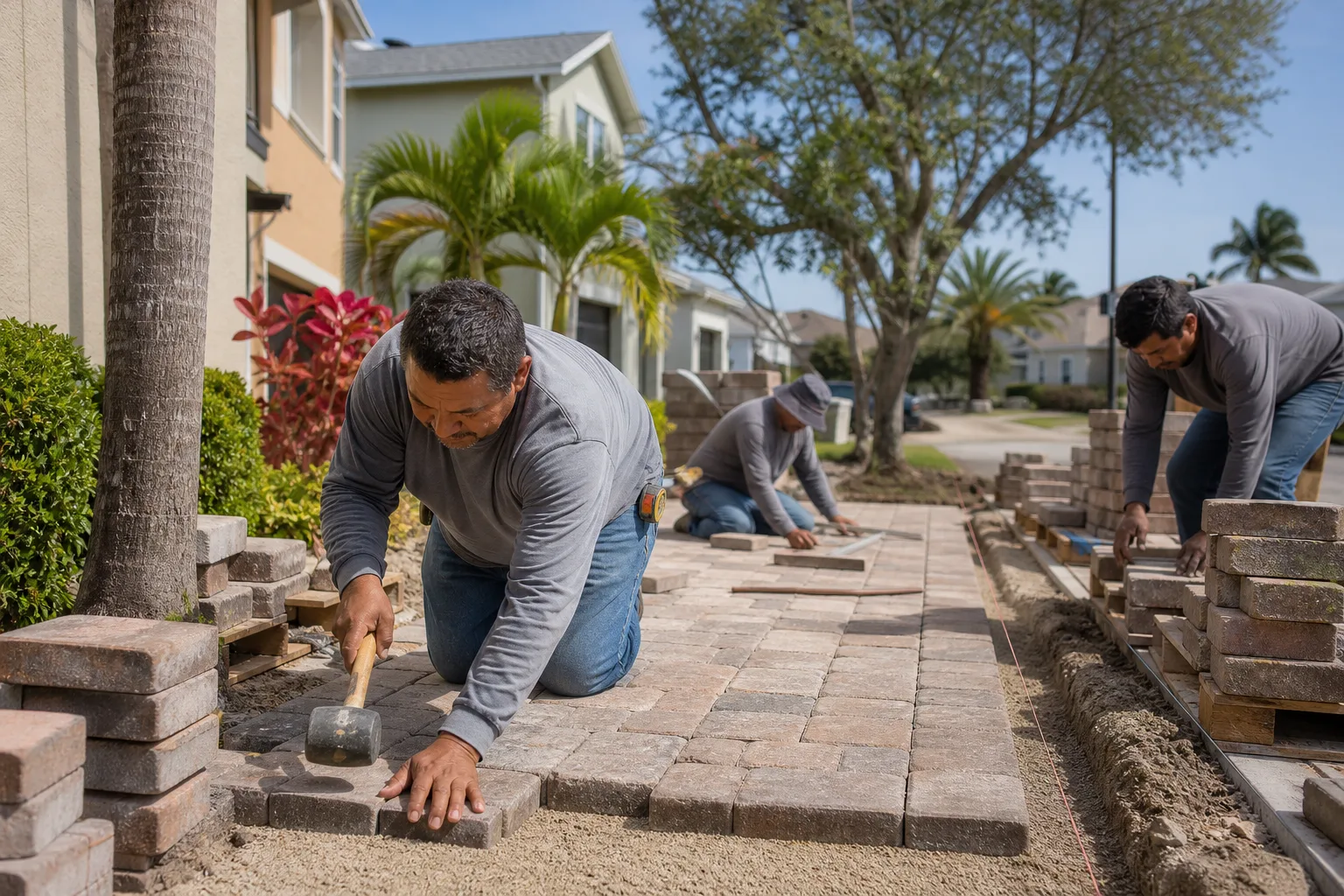
Most contractors describe this job as “prep and lay.” The prep is where the money and the schedule actually go, and it’s where a driveway either lasts thirty years or starts shifting in two. Here’s the real sequence we run.
Day 1: Demolition and haul-off
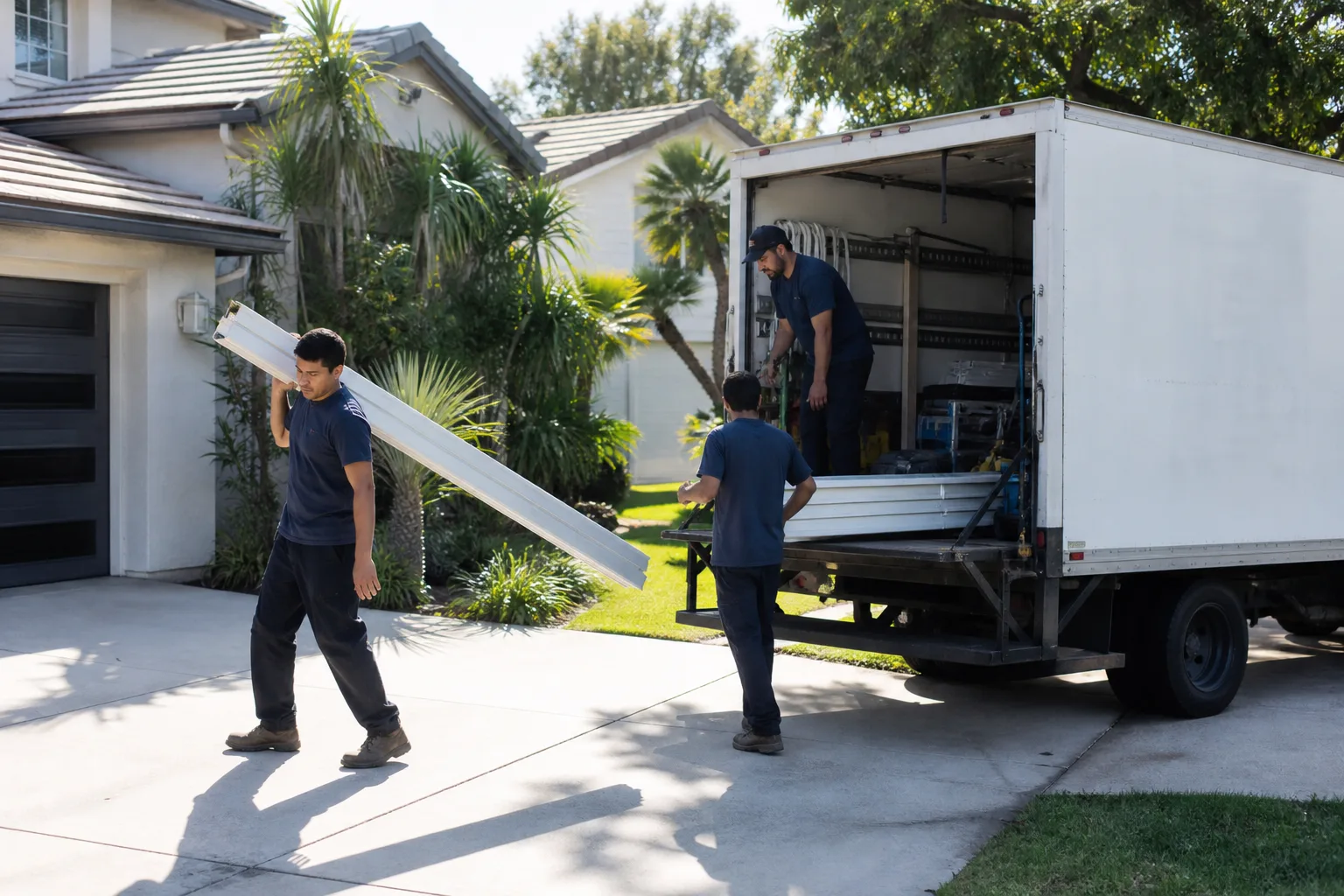
We break out the existing concrete or mill the old asphalt, then haul the debris. On a typical Gardena driveway of 400 – 600 square feet, demo runs most of a day, longer if there’s a post-tension slab or a hidden footing from an old block wall. You’ll decide at this stage whether the old apron at the sidewalk stays or comes out too. That call affects the price, so we price both before we start.
Day 2: Base and grading
This is the stage that determines whether your driveway drains toward the street or toward your garage. We excavate to depth, grade to a minimum slope away from the structure, and compact the crushed base in lifts. On the tight lots here, that means working within inches of a fence or a neighbor’s block wall, and sometimes by hand where a plate compactor won’t fit. We check slope with a laser before we ever open a pallet.
Day 3: Edge restraint and bedding course
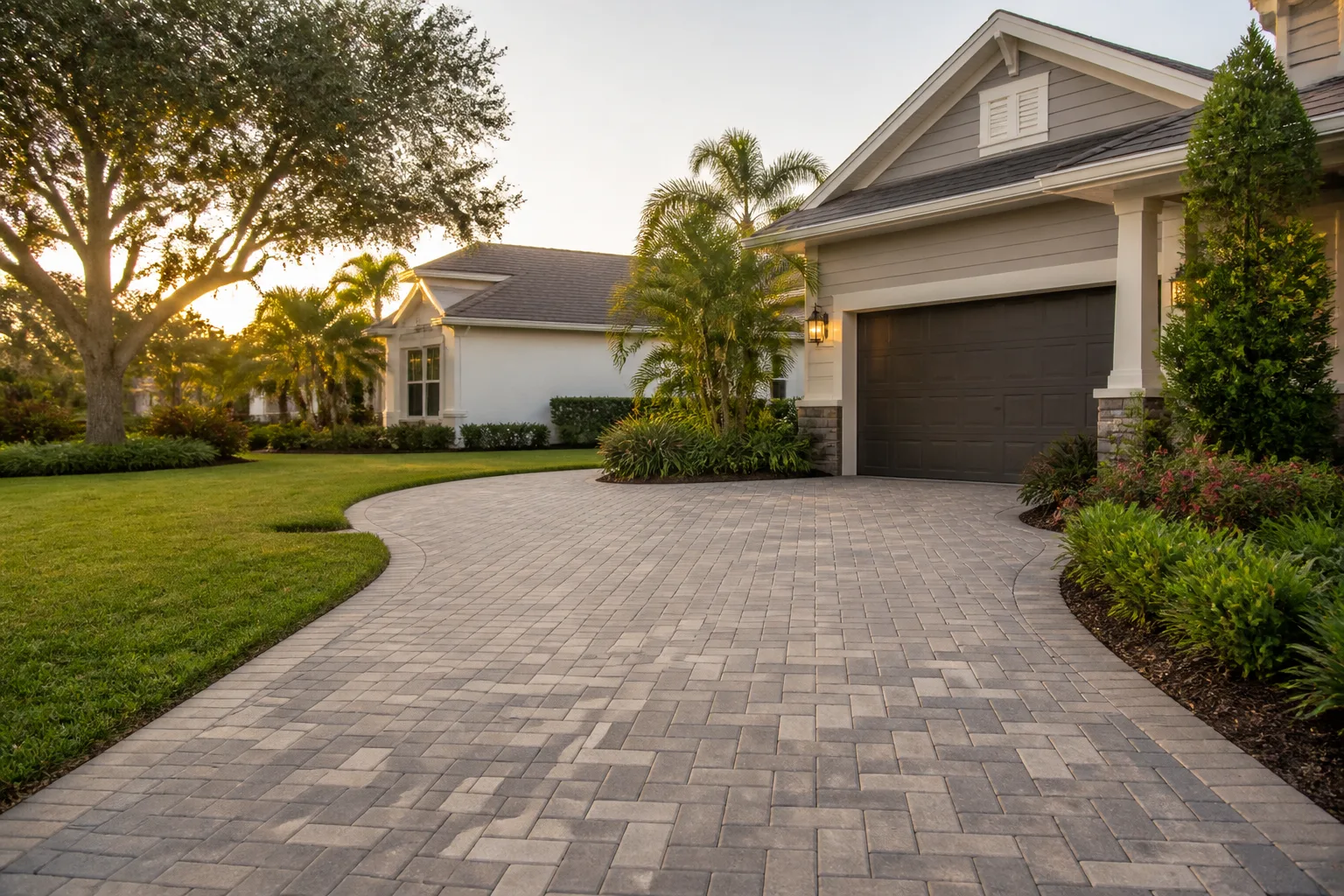
We set a rigid edge restraint, then screed the bedding sand to a consistent depth. You’ll confirm the paver pattern and the border detail on this day, before anything gets glued down. Herringbone, running bond, and basketweave all behave differently in a turning radius. If your driveway has a curve into the garage, the pattern choice matters more than it looks on paper.
Day 4 – 5: Laying pavers and cuts
Field pavers go down fast. The cuts are slow. Every edge, every garage-door threshold, every transition to the sidewalk gets a saw cut, and cut quality is one of those things you notice every day for twenty years. On these lots, expect more cuts than average because there’s less room for full-paver fields.
Day 5 – 6: Compaction, polymeric sand, final walk
We compact the finished surface, sweep polymeric sand into the joints, mist it to set, and then walk the whole job with you. Any cut that doesn’t sit flush gets reset before we leave. Nothing gets covered up and called done.
Styles & brands we work with
- Kitchen remodeling
- Bathroom remodeling
- Home additions & ADU
- Roofing
- Windows & doors
- Driveway & pavers
- Fence
The Choices You’ll Actually Make on This Job
For a paver driveway, most of the decision-making happens before demolition. Here’s the honest trade-off on each one.
- Paver material. Concrete pavers sit at the low end of the range and handle South Bay sun and marine-layer damp well. Clay brick pavers cost more but hold color longer and suit the older mid-century stucco houses on these streets. Natural stone is the premium end, heavier to work, and it needs a deeper base.
- Paver thickness. Standard 60mm is fine for a residential driveway. If a heavier truck rolls in regularly, 80mm pavers over a deeper base are worth the upcharge.
- Base depth. A 4-inch base works for foot traffic. Driveways need 6 – 8 inches compacted, and on a lot where the old slab sat on fill, we may need more. We test, not guess.
- Pattern and border. A running bond is the most economical in material and in cuts. A herringbone with a soldier-course border costs more in labor but holds up better under turning wheels.
- Permeable vs. solid. Permeable pavers with open-graded base handle heavy rain events, but they cost more and need periodic vacuum cleaning. On a small lot, solid pavers with a proper slope are usually the better trade.
- Color and finish. Belgard’s catalog covers the standard range most Gardena homeowners want. We work with what fits the house, not what’s on sale.
What Paver Driveways Cost in Gardena, CA
Paver driveway installation in Gardena lands at $7,000 – $18,000 for a typical residential job. That’s the number. What pushes a job to either end comes down to a handful of variables.
- Size. Square footage is the biggest single lever. A short 300-square-foot approach is a different job, and a different price, than a 600-square-foot double-width drive.
- Existing condition. A clean concrete slab breaks out in a day. A slab with rebar, hidden footings, or old tree roots under it adds labor and haul-off.
- Base prep. Poorly compacted fill or a lot that drains toward the house means more excavation and more base material. We’d rather dig it right than bury a problem.
- Paver grade and pattern. Concrete pavers in a running bond sit near the low end. Clay brick or natural stone in herringbone with a border sit at the top.
- Drainage and tie-in scope. Adding a channel drain, a new apron at the sidewalk, or tying into a curb can add cost. Those items get discussed before we start, not after.
Every written estimate we hand over is line-item: demolition, haul-off, base material, edge restraint, pavers, sand, cuts, and disposal. If your project qualifies for our standing offers, $1,000 off projects over $10,000 and 0% financing for 18 months, that shows up in writing too. Upfront pricing, no surprises, and project costs over $10,000 often make the financing worth a look. You won’t get “and additional labor as needed” as a line.
See the difference
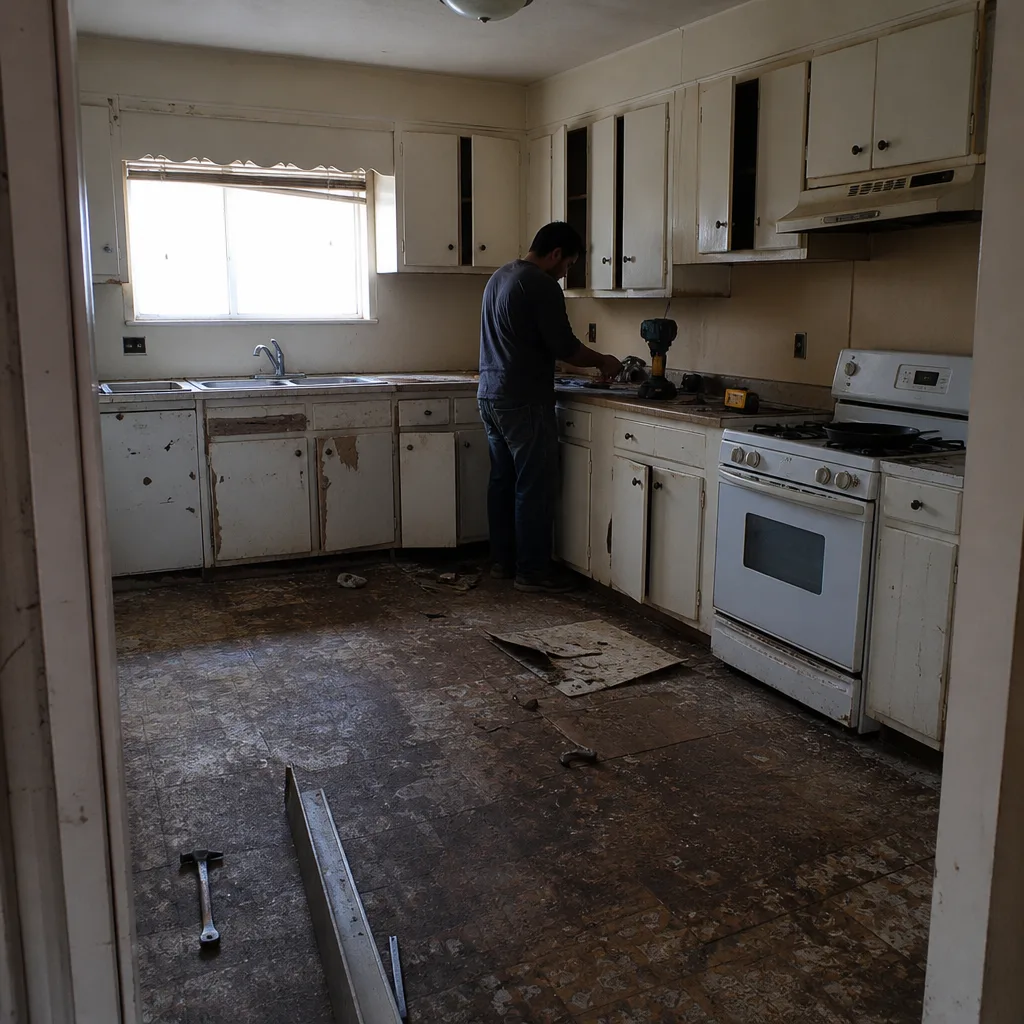 Before
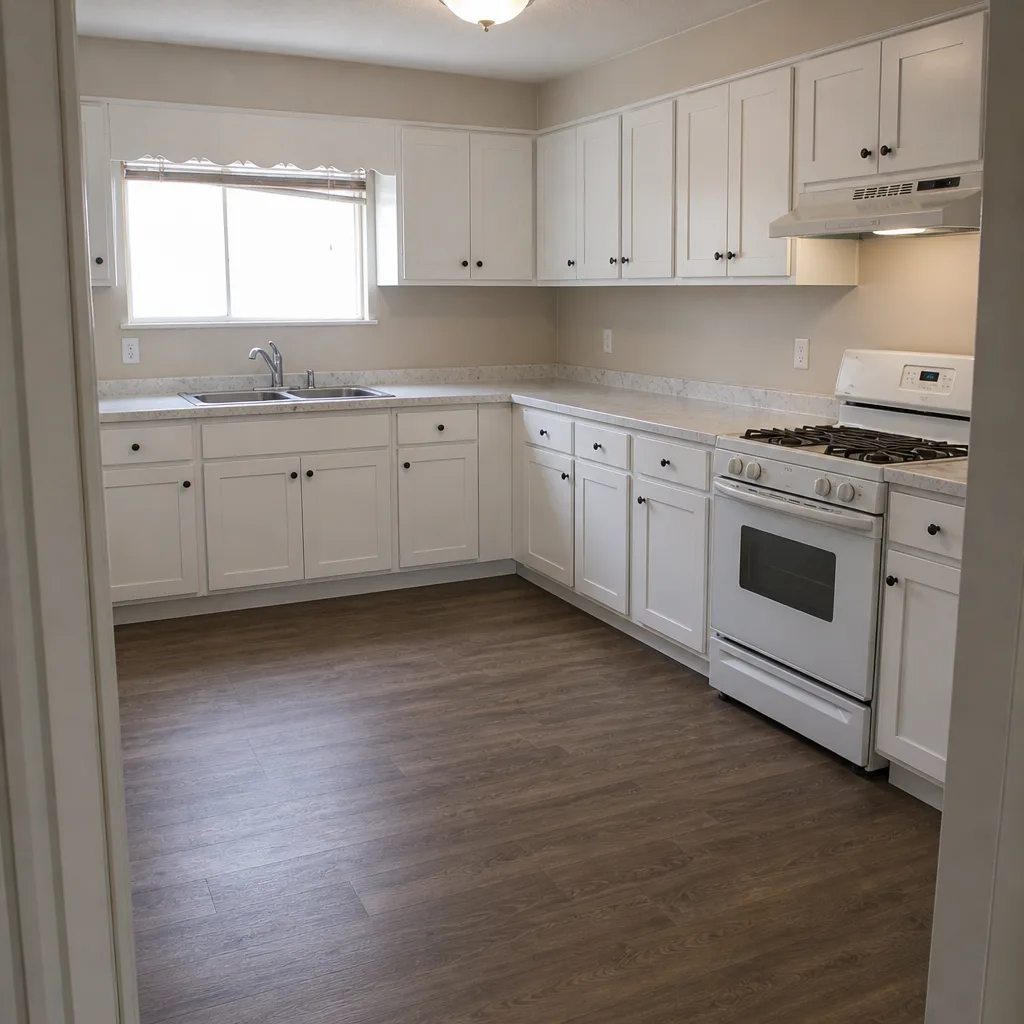 After
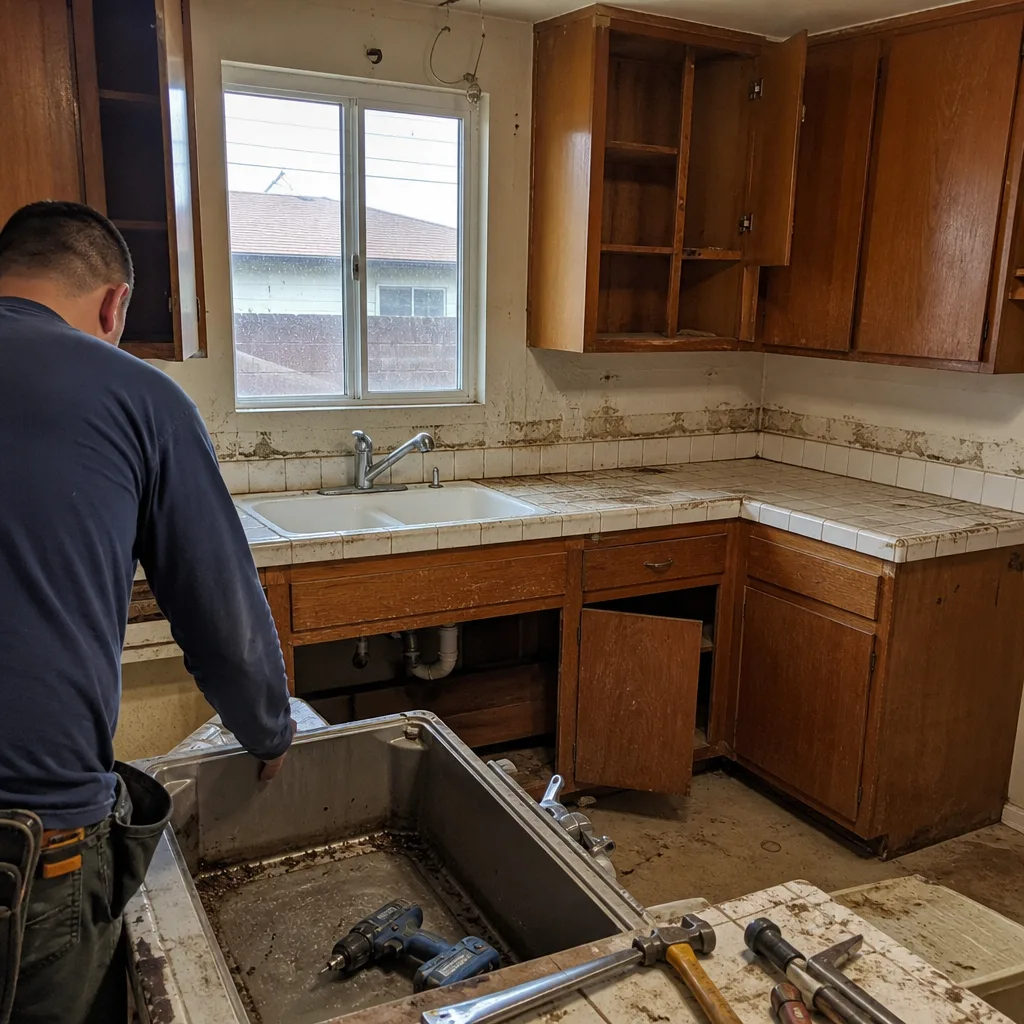 Before
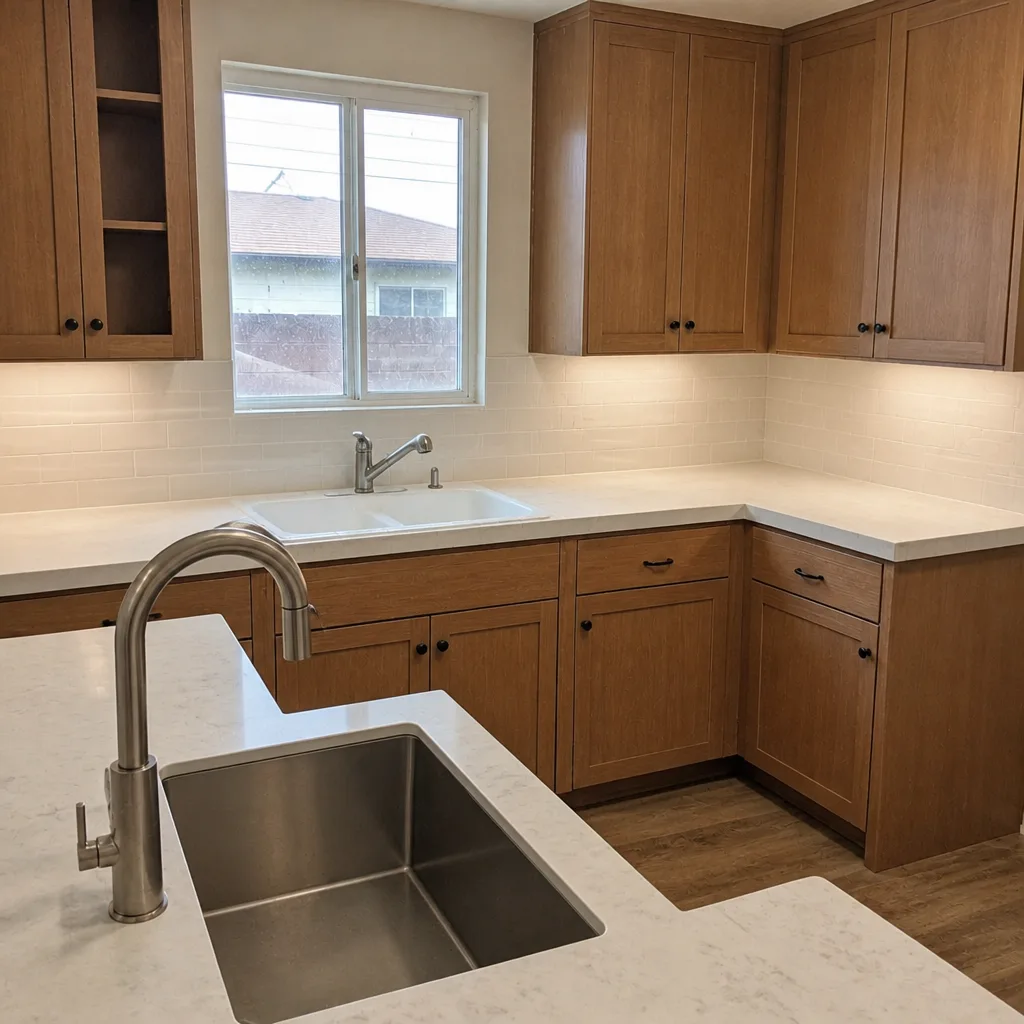 After
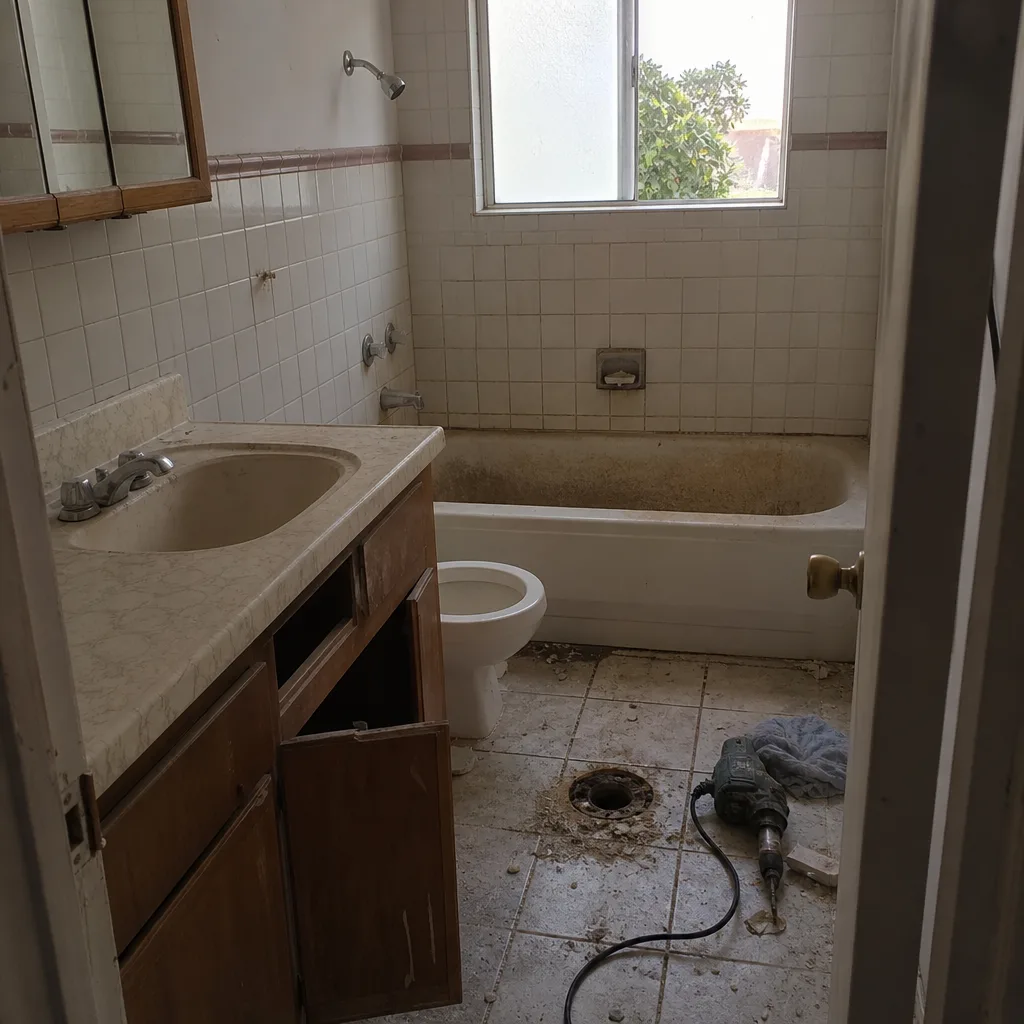 Before
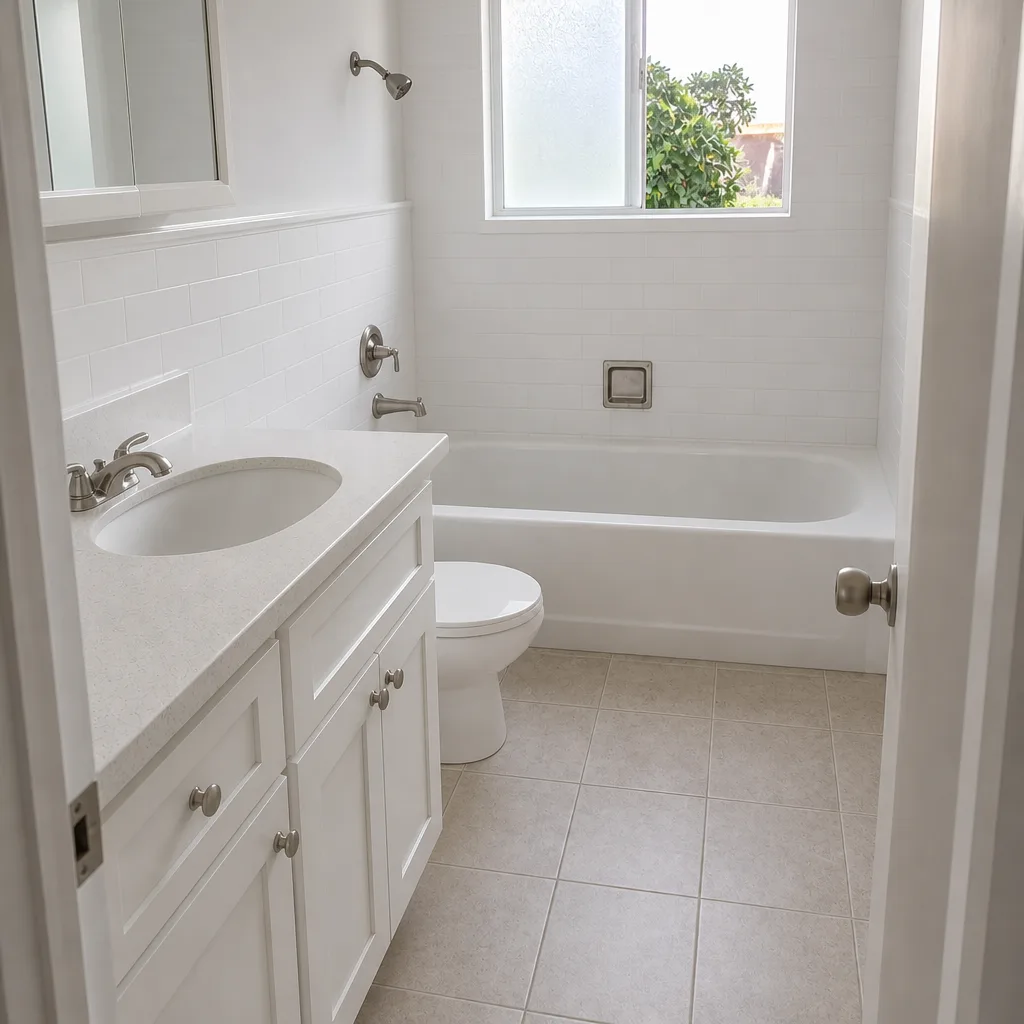 After
What Gardena Lots Do to a Paver Driveway Job
Gardena’s housing stock is largely 1940s – 1960s single-story stucco tract homes on small lots, and that shapes this job more than anything else. The old detached and attached garages sit nearly on the rear and side property lines here, so excavation for a new driveway often runs within inches of a neighbor’s block wall. Where the garage has already been converted to living space, the driveway now needs to serve a different purpose than it did in 1955, and the tie-in at that threshold matters. On the small lots, we also run into the pattern contractors know block by block in 90247 and 90249: a zero-lot-line setback on the garage that makes a survey worth the money before anyone starts cutting. Driveway work itself usually doesn’t need a permit in Gardena, but an apron or curb cut at the right-of-way does get inspected, and we pull what’s required.
The marine layer off the South Bay is the other factor. Damp mornings and coastal fog push moisture into joints and under old slabs, and we regularly see heaved concrete and settled soil near the garage apron where water has pooled for decades. Santa Ana wind events aren’t a paver problem, but they do stress older block walls, and a wall that’s already leaning makes edge restraint tricky. This is a broader job than it looks from the street: Driveway & Pavers in Gardena covers the whole scope, and paver driveways sit alongside patios and walkways in the work we do across Gardena. If the project grows into the surrounding yard, we handle it as part of our Driveway & Pavers service. Homeowners often pair this with Door Installation in Gardena if the garage door has taken the same beating. Some ask about Cabinets & Countertops in Gardena at the same time, usually when a garage conversion becomes part of the plan.
Serving Gardena, CA – Our Local Coverage Area
We serve Gardena and nearby communities. Use the map below to see the area we cover. If you’re nearby, we can almost certainly help.
Frequently Asked: Paver Driveways in Gardena
Most paver driveways in Gardena take four to six working days from demolition to final compaction. Smaller jobs of a few hundred square feet can finish in three. Schedule extends for bigger excavation, a hidden footing, or rain. Call (833) 842-7204 for a timeline specific to your lot.
The paver surface itself generally doesn’t require a building permit, but any change to the curb, apron, or right-of-way at the street does get inspected, and we pull what’s needed. If a survey is required for setback reasons, we’ll flag it before demolition. Call (833) 842-7204 and we’ll walk through your lot’s situation.
We don’t recommend it. Overlaying pavers on old concrete adds weight and hides whatever the slab is doing underneath, and the surface will telegraph every crack within a couple of years. The right job is demo, proper base, and a fresh build-up. Call (833) 842-7204 for an on-site look.
Paver driveways here are covered by the 730-Day Done Right Promise. If something isn’t done right, we make it right. Manufacturer warranties on the pavers themselves come separately and depend on the brand. Call (833) 842-7204 to see what applies to your project.
The number you see in your written estimate is the number you pay. Change orders only happen when something changes in the ground, like a hidden footing or unexpected fill, and we don’t proceed on one without your authorization. Call (833) 842-7204 for a walk-through and a written line-item quote.
Get a Free Paver Driveway Estimate in Gardena
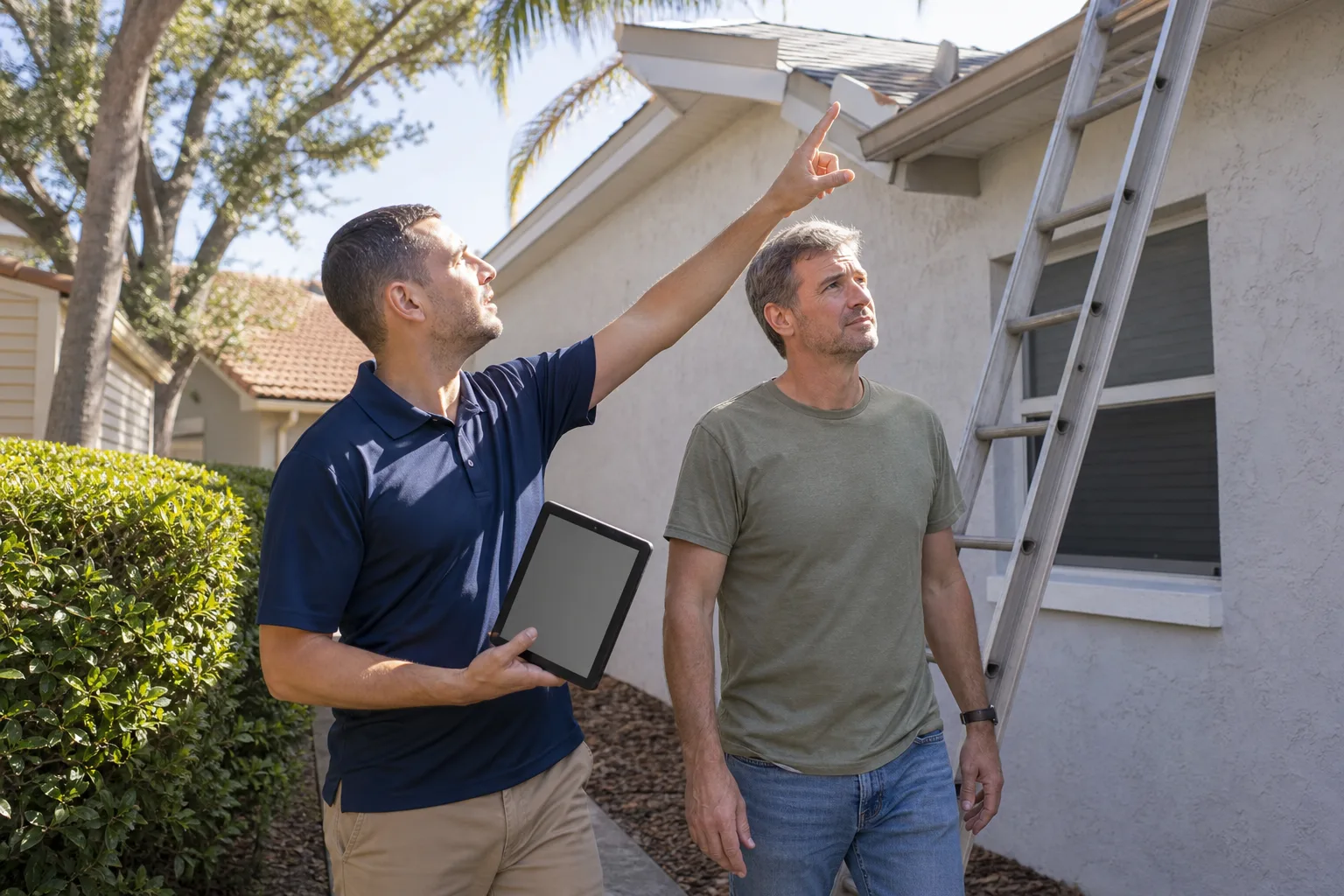
We’ll visit your Gardena property, measure the driveway, look at what’s under the slab, and put a line-item estimate in your hands in writing. Most estimates take about an hour on site. No pressure, no change-order surprises, and financing available if it helps. Call (833) 842-7204 to schedule your free estimate for paver driveways in Gardena.
Written by the team at Groundwork Construction Co.